I'm conducting three two-hour seminars on transhumanism, aimed at postgraduate and honours students, the first of which took place today. In that time, it's only possible to scratch the surface of the huge body of relevant literature, but I did put together a set of relevant readings, avoiding anything of book length except a recommendation of James Hughes's Citizen Cyborg. I wanted a set of materials that would introduce the synchronic and diachronic dimensions of the transhumanist movement, provide participants with a sound basis from which to apply the law of expanding footnotes to get a more comprehensive picture of the literature, introduce some specific aspects of the controversy, and also, I must admit, frame some of the issues from my own particular viewpoint. Here is what I came up with.
World Transhumanist Association, "Transhumanist FAQ",
http://www.transhumanism.org/index.php/WTA/faq21/46/.
Nicholas Agar, "Liberal Eugenics", Public Affairs Quarterly 12 (2) (April 1998): 137-55.
—. "Whereto Transhumanism? The Literature Reaches a Critical Mass", Hastings Center Report 37, No. 3 (2007): 12-17.
G. Annas, L. Andrews, and R. Isasi, "Protecting the Endangered Human: Toward an International Treaty Prohibiting Cloning and Inheritable Alternations", American Journal of Law and Medicine 28, nos. 2/3 (2002): 151-78.
Ronald Bailey "Transhumanism: The Most Dangerous Idea? Why striving to be more than human is human", Reason Online, August 25, 2004. http://www.reason.com/news/show/34867.html
F. Baylis and J. Robert. "The Inevitability of Genetic Enhancement Technologies", Bioethics 2004. 1-26.
Russell Blackford, "Who's Afraid of the Brave New World?" Quadrant 396 (May 2003): 9-15.
—. "Human Cloning and 'Posthuman' Society", Monash Bioethics Review 24 (2005): 10-26.
—. "Sinning against Nature: The Theory of Background Conditions", Journal of Medical Ethics 32 (2006): 629-34.
Nick Bostrom. "Human Genetic Enhancements: A Transhumanist Perspective", Journal of Value Inquiry 37 (2003): 493-506.
—. "A History of Transhumanist Thought", Journal of Evolution and Technology. 14 (2005): 1-25. http://jetpress.org/volume14/bostrom.html
—. "In Defense of Posthuman Dignity", Bioethics 19 (3) (2005), 202-214.
Dov Fox, "The Illiberality of 'Liberal Eugenics'", Ratio 20 (1) (2007), 1-25.
Leon R Kass, "Preventing a Brave New World: Why We Should Ban Human Cloning Now", The New Republic 21 May 2001: 30-39.
Ronald A. Lindsay, "Enhancements and Justice: Problems in Determining the Requirements of Justice in a Genetically Transformed Society", Kennedy Institute of Ethics Journal 15 (1) (March 2005): 3-38.
M.J. McNamee and S.D. Edwards, "Transhumanism, Medical Technology and Slippery Slopes", Journal of Medical Ethics, 32 (2006): 513 - 518.
Michael J. Sandel, "The Case Against Perfection: What’s Wrong with Designer Children, Bionic Athletes, and Genetic Engineering", The Atlantic Monthly, 293 (4) (2004): 51–62.
Next time, we'll look at the bioconservative pieces by Annas et al, Kass, and Sandel, plus Bostrom's "Posthuman Dignity" article. I had a small group, but some interesting discussion, so I hope for more of the same next week.
About Me
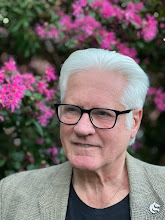
- Russell Blackford
- Australian philosopher, literary critic, legal scholar, and professional writer. Based in Newcastle, NSW. My latest books are THE TYRANNY OF OPINION: CONFORMITY AND THE FUTURE OF LIBERALISM (2019); AT THE DAWN OF A GREAT TRANSITION: THE QUESTION OF RADICAL ENHANCEMENT (2021); and HOW WE BECAME POST-LIBERAL: THE RISE AND FALL OF TOLERATION (2024).
Wednesday, July 25, 2007


Tuesday, July 24, 2007


Sunday, July 22, 2007
Consciousness emerges?
Via David Chalmers' blog,I came across this review by Jerry Fodor of a new book by Galen Strawson and others: Consciousness and Its Place in Nature: Does Physicalism Entail Panpsychism?. As Chalmers puts it, "Fodor comes surprisingly close to endorsing a form of property dualism with fundamental laws connecting physical processes and consciousness."
Now, philosophy of mind is not my research field. I teach some introductory philosophy of mind materials in a couple of the first-year-level subjects that I'm involved in from time to time, but I make no claim at all to being a philosopher of mind or to keeping up with the detail of the debates. I am, however, strongly inclined to an overall position of metaphysical or philosophical naturalism, in which all that exist are the phenomena (entities, properties, forces, space-time geometry, etc.) investigated by science. However, I've never understood why the sort of position that Fodor and Chalmers are describing is not compatible with philosophical naturalism.
The position for which Fodor expresses some sympathy is this:
I suppose one can imagine a world where all the big things are made out of small things, and there are laws about the small things and there are laws about the big things, but some laws of the second kind don’t derive from any laws of the first kind. In that world, it might be a basic law that when you put the right sorts of neurons together in the right sorts of way, you get a subject of consciousness. There would be no explaining why you get a subject of consciousness when you put those neurons together that way; you just do and there’s the end of it. Perhaps Strawson would say that in such a world, emergence would be a miracle; but if it would, why isn’t every basic law a miracle by definition?
Indeed, what we do seem to know is that consciousness actually exists: more precisely, I know that I am conscious, and I am prepared to assume that you are; the world simply makes much more sense if I do not adopt a position of solipsism, but work on the basis that at least those other beings who are much like me are conscious, though it is an open question how far down this extends. Are chimps conscious? Are cows? Alligators? Oysters? Paramecia? Still, the fact that I and the people I find myself associating with have conscious experience does indeed appear to be undeniable.
The next point is that it is difficult to explain how consciousness can emerge from matter merely by way of the kinds of physical laws that we know or are developing. It is hard to see how they can explain consciousness while making no reference to it. As Strawson and Fodor both discuss, it does not seem to be like liquidity, where, in principle, we seem to be able to explain the behaviour of liquid substances via an understanding of how molecules behave, which can be explained by how atoms behave and so on. Liquidity itself need never be mentioned: the basic laws will tell us how certain kinds of substances will coalesce and flow, etc. We can "eliminate" liquidity in a way that consciousness seems to be ineliminable.
All of this seems to entail that laws relating to the circumstances in which consciousness emerges from the functioning of some kinds of complex material substrates will have to refer to consciousness itself. Consciousness is not something that can be eliminated from the most basic equations. This, in turn, suggests that there are fundamental psychophysical laws that cannot be reduced to laws that do not mention consciousness.
But why is that so counterintuitive? It looks as if consciousness depends on matter, as if the nature of the dependence is lawful, and as if laws that never actually mention consciousness could not describe the dependence all by themselves. Does this not suggest that the laws governing the natural universe include irreducibly psychophysical ones?
Perhaps the worry is that these laws will be nothing like the fundamental laws of physics relating to, say, quantum events or the shape of space-time, but I'm not sure that that would trouble us if we were better placed to know more about what the psychophysical laws actually are. If we had some kind of handle on that, they might not seem any more intrinsically bizarre than anything else that science has discovered over the past 400-odd years.
The great difficulty that we face is that no one is in a position to observe consciousness directly (except his or her own). That makes it pretty much impossible to conduct experiments in which we predict that consciousness will be brought into being by such and such physical systems (in accordance with such and such conjectured psychophysical laws). Isn't that, however, just an epistemic limitation that we contingently labour under, no different in principle from the obvious fact that we are not well placed, epistemically, to determine such things as whether an alligator or an oyster is conscious? Yet, we accept the latter limitation on our knowledge and our ability to make progress. We may not like it, but we accept that it exists.
If all this reasoning goes through, the so-called Hard Problem of how to explain consciousness is, indeed, very difficult, but the difficulty is not that mind-boggling, entirely unknown, metaphysical concepts are needed. It is simply that, as an empirical fact, we are poorly situated to investigate (at least in any systematic manner) what regularities apply to the emergence of consciousness. Consciousness may be as much a part of the natural world as anything else, and as open, in principle, to causal explanation in terms of general laws. And yet, we might be in a situation where we are not well-placed to conduct the investigation and work out exactly what those laws are.
That would be unfortunate, of course, since it would mean that some scientific investigations would have to be recognised as very difficult for human beings to pursue to finality (indeed, it is hard to see how they could ever be pursued to finality, at least by us ... but who knows, in advance, the limits of our ingenuity?). It's unfortunate, yes. However, it doesn't seem especially counterintuitive or spooky. It is not letting in the supernatural, or anything as hard to conceive of at all as objective prescriptivity. It does not, for example, entail that full consciousness and all the associated cognitive capacities spring back into existence after a badly damaged brain is totally destroyed, that we are immortal, that there are substantial things ("minds") with no location in space, or more generally that consciousness is a substance that could survive independently of any material substrate (such as organised masses of neurons).
It would just be admitting that consciousness, though a part of the natural universe, cannot be eliminated from our most basic descriptions of how the universe operates, while also admitting something that seems plain anyway: the great contingent difficulty in working out for sure what physical systems are actually conscious and what systems are not. I could live with that. In fact, those admissions seem reasonably intuitive to my particular scientifically-aware sensibility.
This is a rare foray into philosophy of mind by someone who is relatively naive about the field, but I wonder what is actually wrong with the above analysis. Even if what I have sketched is a kind of dualism - a property dualism in that a new category of properties is being considered basic within the most fundamental laws governing the universe - I'm not sure that that is beyond the pale for philosophical naturalists. I am, of course, saying that there could be different degrees to which we are well- or ill-placed to investigate certain kinds of observed phenomena, but that does not seem very surprising, really, and it does not seem to constitute a betrayal of naturalism or of anything that I'd want to build on it.
Now, philosophy of mind is not my research field. I teach some introductory philosophy of mind materials in a couple of the first-year-level subjects that I'm involved in from time to time, but I make no claim at all to being a philosopher of mind or to keeping up with the detail of the debates. I am, however, strongly inclined to an overall position of metaphysical or philosophical naturalism, in which all that exist are the phenomena (entities, properties, forces, space-time geometry, etc.) investigated by science. However, I've never understood why the sort of position that Fodor and Chalmers are describing is not compatible with philosophical naturalism.
The position for which Fodor expresses some sympathy is this:
I suppose one can imagine a world where all the big things are made out of small things, and there are laws about the small things and there are laws about the big things, but some laws of the second kind don’t derive from any laws of the first kind. In that world, it might be a basic law that when you put the right sorts of neurons together in the right sorts of way, you get a subject of consciousness. There would be no explaining why you get a subject of consciousness when you put those neurons together that way; you just do and there’s the end of it. Perhaps Strawson would say that in such a world, emergence would be a miracle; but if it would, why isn’t every basic law a miracle by definition?
Indeed, what we do seem to know is that consciousness actually exists: more precisely, I know that I am conscious, and I am prepared to assume that you are; the world simply makes much more sense if I do not adopt a position of solipsism, but work on the basis that at least those other beings who are much like me are conscious, though it is an open question how far down this extends. Are chimps conscious? Are cows? Alligators? Oysters? Paramecia? Still, the fact that I and the people I find myself associating with have conscious experience does indeed appear to be undeniable.
The next point is that it is difficult to explain how consciousness can emerge from matter merely by way of the kinds of physical laws that we know or are developing. It is hard to see how they can explain consciousness while making no reference to it. As Strawson and Fodor both discuss, it does not seem to be like liquidity, where, in principle, we seem to be able to explain the behaviour of liquid substances via an understanding of how molecules behave, which can be explained by how atoms behave and so on. Liquidity itself need never be mentioned: the basic laws will tell us how certain kinds of substances will coalesce and flow, etc. We can "eliminate" liquidity in a way that consciousness seems to be ineliminable.
All of this seems to entail that laws relating to the circumstances in which consciousness emerges from the functioning of some kinds of complex material substrates will have to refer to consciousness itself. Consciousness is not something that can be eliminated from the most basic equations. This, in turn, suggests that there are fundamental psychophysical laws that cannot be reduced to laws that do not mention consciousness.
But why is that so counterintuitive? It looks as if consciousness depends on matter, as if the nature of the dependence is lawful, and as if laws that never actually mention consciousness could not describe the dependence all by themselves. Does this not suggest that the laws governing the natural universe include irreducibly psychophysical ones?
Perhaps the worry is that these laws will be nothing like the fundamental laws of physics relating to, say, quantum events or the shape of space-time, but I'm not sure that that would trouble us if we were better placed to know more about what the psychophysical laws actually are. If we had some kind of handle on that, they might not seem any more intrinsically bizarre than anything else that science has discovered over the past 400-odd years.
The great difficulty that we face is that no one is in a position to observe consciousness directly (except his or her own). That makes it pretty much impossible to conduct experiments in which we predict that consciousness will be brought into being by such and such physical systems (in accordance with such and such conjectured psychophysical laws). Isn't that, however, just an epistemic limitation that we contingently labour under, no different in principle from the obvious fact that we are not well placed, epistemically, to determine such things as whether an alligator or an oyster is conscious? Yet, we accept the latter limitation on our knowledge and our ability to make progress. We may not like it, but we accept that it exists.
If all this reasoning goes through, the so-called Hard Problem of how to explain consciousness is, indeed, very difficult, but the difficulty is not that mind-boggling, entirely unknown, metaphysical concepts are needed. It is simply that, as an empirical fact, we are poorly situated to investigate (at least in any systematic manner) what regularities apply to the emergence of consciousness. Consciousness may be as much a part of the natural world as anything else, and as open, in principle, to causal explanation in terms of general laws. And yet, we might be in a situation where we are not well-placed to conduct the investigation and work out exactly what those laws are.
That would be unfortunate, of course, since it would mean that some scientific investigations would have to be recognised as very difficult for human beings to pursue to finality (indeed, it is hard to see how they could ever be pursued to finality, at least by us ... but who knows, in advance, the limits of our ingenuity?). It's unfortunate, yes. However, it doesn't seem especially counterintuitive or spooky. It is not letting in the supernatural, or anything as hard to conceive of at all as objective prescriptivity. It does not, for example, entail that full consciousness and all the associated cognitive capacities spring back into existence after a badly damaged brain is totally destroyed, that we are immortal, that there are substantial things ("minds") with no location in space, or more generally that consciousness is a substance that could survive independently of any material substrate (such as organised masses of neurons).
It would just be admitting that consciousness, though a part of the natural universe, cannot be eliminated from our most basic descriptions of how the universe operates, while also admitting something that seems plain anyway: the great contingent difficulty in working out for sure what physical systems are actually conscious and what systems are not. I could live with that. In fact, those admissions seem reasonably intuitive to my particular scientifically-aware sensibility.
This is a rare foray into philosophy of mind by someone who is relatively naive about the field, but I wonder what is actually wrong with the above analysis. Even if what I have sketched is a kind of dualism - a property dualism in that a new category of properties is being considered basic within the most fundamental laws governing the universe - I'm not sure that that is beyond the pale for philosophical naturalists. I am, of course, saying that there could be different degrees to which we are well- or ill-placed to investigate certain kinds of observed phenomena, but that does not seem very surprising, really, and it does not seem to constitute a betrayal of naturalism or of anything that I'd want to build on it.
Friday, July 20, 2007
No demonic attributes
Here's a couple of last photos from the Australasian Association of Philosophy conference: one of Nicole Vincent with, of all people, Russell Blackford, the other of Amanda Hickling (who looked truly demonic before I turned her pupils back to black).


Sandel against perfection
I just submitted a review of Michael J. Sandel's new book, The Case against Perfection, to the Monash Bioethics Review. The book is based on an article by Sandel that was published in The Atlantic Monthly back in 2004.
Sandel tries to convince us that it is a form of hubris to respond to life without recognising its "giftedness", but he flounders (so it seems to me) when he tries to translate this idea into secular terms. It's certainly true that we have not earned or deserved such things as our genetic potential, but that does not make them "gifts" which we'd be ungrateful to reject or to be dissatisfied with. Sandel's approach is totally inadequate as a basis for public policy.
I would like to make an observation that goes beyond the scope of merely reviewing Sandel's book, and which I therefore do not make in the review that I sent off to MBR. The dust-jacket blurb says, "Carrying us beyond the familiar terms of political discourse, this books contends that the genetic revolution will change the way philosophers discuss ethics and will force spiritual questions back onto the political agenda." In fact, The Case against Perfection does not explicitly claim any such thing, but its whole drift is to give support to these views, since it relies on a concept of hubris as failing to appreciate the supposed giftedness of life, surely a "spiritual" idea, even if Sandel does make a weak attempt to find a secular justification for it.
It appears to me that many bioconservative thinkers of the left and the right are, indeed, trying to get religious and quasi-religious ideas onto the political agenda (and they are not alone when one considers the more egregious efforts of such organisations as the Discovery Institute). Furthermore they are achieving a good deal of success. This is nowhere more apparent than with issues relating to bioethics. Fortunately, Sandel is able to offer a defence of stem cell research from his point of view, but many other religious believers and sympathisers have attacked even that entirely benign practice. When it comes to more controversial possibilities, such as reproductive cloning, the temptation is to reach straight for some set of intuitions with an origin in religious or quasi-religious ways of thinking.
But there are a couple of elephants in this particular room. Are secular thinkers really going to be prepared to accept the legitimacy of public policy made from a "spiritual" viewpoint, even if it has electoral support? Once we are confronted with that situation, ideas about the tyranny of the majority come to mind. Furthermore, if political positions are going to be based on "spiritual" viewpoints, can we really continue to ignore the issue of the truth of such viewpoints? I believe that we must, in fact, grapple with the truth claims relied upon by spiritually-based participants in public debate, whether it be someone as generally reasonable as Sandel (I don't have to agree with him to see him as a generally reasonable person) or someone as extreme and dangerous as the world's Jerry Falwells and Ted Haggards. They may not like it, but we are entitled to argue that their policy views have no good foundation because they are based on metaphysical claims that are actually false.
As it is sometimes put, we can no longer avoid grappling with the epistemic content of spirituality and religion. That's why we need a new Enlightenment.
Sandel tries to convince us that it is a form of hubris to respond to life without recognising its "giftedness", but he flounders (so it seems to me) when he tries to translate this idea into secular terms. It's certainly true that we have not earned or deserved such things as our genetic potential, but that does not make them "gifts" which we'd be ungrateful to reject or to be dissatisfied with. Sandel's approach is totally inadequate as a basis for public policy.
I would like to make an observation that goes beyond the scope of merely reviewing Sandel's book, and which I therefore do not make in the review that I sent off to MBR. The dust-jacket blurb says, "Carrying us beyond the familiar terms of political discourse, this books contends that the genetic revolution will change the way philosophers discuss ethics and will force spiritual questions back onto the political agenda." In fact, The Case against Perfection does not explicitly claim any such thing, but its whole drift is to give support to these views, since it relies on a concept of hubris as failing to appreciate the supposed giftedness of life, surely a "spiritual" idea, even if Sandel does make a weak attempt to find a secular justification for it.
It appears to me that many bioconservative thinkers of the left and the right are, indeed, trying to get religious and quasi-religious ideas onto the political agenda (and they are not alone when one considers the more egregious efforts of such organisations as the Discovery Institute). Furthermore they are achieving a good deal of success. This is nowhere more apparent than with issues relating to bioethics. Fortunately, Sandel is able to offer a defence of stem cell research from his point of view, but many other religious believers and sympathisers have attacked even that entirely benign practice. When it comes to more controversial possibilities, such as reproductive cloning, the temptation is to reach straight for some set of intuitions with an origin in religious or quasi-religious ways of thinking.
But there are a couple of elephants in this particular room. Are secular thinkers really going to be prepared to accept the legitimacy of public policy made from a "spiritual" viewpoint, even if it has electoral support? Once we are confronted with that situation, ideas about the tyranny of the majority come to mind. Furthermore, if political positions are going to be based on "spiritual" viewpoints, can we really continue to ignore the issue of the truth of such viewpoints? I believe that we must, in fact, grapple with the truth claims relied upon by spiritually-based participants in public debate, whether it be someone as generally reasonable as Sandel (I don't have to agree with him to see him as a generally reasonable person) or someone as extreme and dangerous as the world's Jerry Falwells and Ted Haggards. They may not like it, but we are entitled to argue that their policy views have no good foundation because they are based on metaphysical claims that are actually false.
As it is sometimes put, we can no longer avoid grappling with the epistemic content of spirituality and religion. That's why we need a new Enlightenment.
Thursday, July 19, 2007
Happy birthday, dear Amanda
Some pics of the birthday girl herself (just the hands in one case) from Amanda Pitcairn's milestone birthday party. I couldn't resist adding one taken with me.
 Birthday girl meets birthday cake.
 The cake.
 Birthday girl with camera.
 Silver and gold: Russell Blackford and Amanda Pitcairn.
 Birthday girl meets birthday cake.
 The cake.
 Birthday girl with camera.
 Silver and gold: Russell Blackford and Amanda Pitcairn.
Wednesday, July 18, 2007
Some photos from the AAP conference
I'll post some more when I manage to de-redeye some that would otherwise be pretty good.
 Wall to wall philosophers.
 Cameras everywhere.
 Paul Biegler and Matt Fisher at the conference dinner.
 Chris Jones.
 Nicole Vincent looking thirsty but happy.
 Bill Lycan and David Chalmers in the thick of things.
 Amanda Hickling and Paul Biegler in serious conversation.
 Paul Griffiths and John Doris.
 The table behind us.
 Even more philosophers.
 Wall to wall philosophers.
 Cameras everywhere.
 Paul Biegler and Matt Fisher at the conference dinner.
 Chris Jones.
 Nicole Vincent looking thirsty but happy.
 Bill Lycan and David Chalmers in the thick of things.
 Amanda Hickling and Paul Biegler in serious conversation.
 Paul Griffiths and John Doris.
 The table behind us.
 Even more philosophers.
Sunday, July 15, 2007
Humean limerick
Though an "is" alone won't give support
To a value, a norm, or an "ought",
If you mix on the fire
Both belief and desire,
You get thought of an "ought" of a sort.
I hope that any students who have been taught meta-ethics by me enjoy the above. It was actually inspired by a conference on norms and analysis (and specifically the relationship between naturalism and normativity) that I had to miss a couple of weeks ago.
To a value, a norm, or an "ought",
If you mix on the fire
Both belief and desire,
You get thought of an "ought" of a sort.
I hope that any students who have been taught meta-ethics by me enjoy the above. It was actually inspired by a conference on norms and analysis (and specifically the relationship between naturalism and normativity) that I had to miss a couple of weeks ago.
Saturday, July 14, 2007
Back in town
After a long day on the road yesterday, Jenny and I are back in town. There's a fair bit of catching up to do here, but when I get a moment to scratch myself I'll post some photographs from the AAP conference and from Amanda Pitcairn's birthday festivities. I see that David Chalmers has a batch of photos from the conference on his site, including one with me looking quite Satanic ... with glowing red eyes.
I've kept up with Monash business by email, but there's a couple of referee reports that are desperately crying out to be written, so that's my task for the weekend. I also see that James Hughes has drafted an article about the IEET that I need to comment on. Next week, I start teaching again, though it's a light load this semester - just two tutorials a week (covering a first-year subject that involves, of all combinations, metaphysics and philosophy of sex) plus running one honours-level series of seminars on transhumanism. That's just as well, since I need to wrap up the Ph.D thesis as quickly as I can, and there's a fair bit of work to do to transform my current raw draft into something worth submitting for assessment (and trying to get published by a good academic press). I also have a scatter of speaking engagements through August - covering topics as diverse as religious vilification, the so-called "New Atheism", and designer babies - so it looks like being an interesting second half of 2007.
I've kept up with Monash business by email, but there's a couple of referee reports that are desperately crying out to be written, so that's my task for the weekend. I also see that James Hughes has drafted an article about the IEET that I need to comment on. Next week, I start teaching again, though it's a light load this semester - just two tutorials a week (covering a first-year subject that involves, of all combinations, metaphysics and philosophy of sex) plus running one honours-level series of seminars on transhumanism. That's just as well, since I need to wrap up the Ph.D thesis as quickly as I can, and there's a fair bit of work to do to transform my current raw draft into something worth submitting for assessment (and trying to get published by a good academic press). I also have a scatter of speaking engagements through August - covering topics as diverse as religious vilification, the so-called "New Atheism", and designer babies - so it looks like being an interesting second half of 2007.
Sunday, July 08, 2007
AAP 2007
I spent last week at the 2007 Australasian Association of Philosophy's annual conference, held in Armidale this year. I'm still on the road, currently seeing loved ones in Newcastle.
When I get home, I'll post a selection of the photos that I took at the dinner on Thursday night. Some other folks, most notably David Chalmers, were also taking lots of photos, so I expect that the net will soon be crawling with pics from the conference.
Just briefly, the conference went well from my viewpoint. My own paper seemed to be well received, and attracted good discussion, though it had only a small audience (about a dozen people). That's always a peril of multi-strand programming, but then again there was always something of interest to me going on. A group of us seemed to form a small conference for moral and political philosophy (and, to some extent, philosophy of religion) within the larger conference.
I renewed some friendships, made some new contacts, and drank my share of Guinness during the evening visits to the White Bull Hotel. All in all, it was well worth taking the time.
When I get home, I'll post a selection of the photos that I took at the dinner on Thursday night. Some other folks, most notably David Chalmers, were also taking lots of photos, so I expect that the net will soon be crawling with pics from the conference.
Just briefly, the conference went well from my viewpoint. My own paper seemed to be well received, and attracted good discussion, though it had only a small audience (about a dozen people). That's always a peril of multi-strand programming, but then again there was always something of interest to me going on. A group of us seemed to form a small conference for moral and political philosophy (and, to some extent, philosophy of religion) within the larger conference.
I renewed some friendships, made some new contacts, and drank my share of Guinness during the evening visits to the White Bull Hotel. All in all, it was well worth taking the time.
Subscribe to:
Posts (Atom)