One thing about Sam, he has certainly provoked the popular conversation that he wanted. We're all now absorbed in metaethics, moral psychology, and fundamental normative theory.
Over on the ABC's religion and ethics portal, you'll find my new piece and a piece by Tim Dean (I'm not sure whether this is the same text as a post by him that I linked to previously ... or maybe a slightly revised version).
About Me
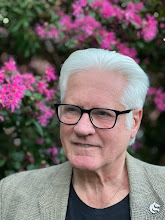
- Russell Blackford
- Australian philosopher, literary critic, legal scholar, and professional writer. Based in Newcastle, NSW. My latest books are THE TYRANNY OF OPINION: CONFORMITY AND THE FUTURE OF LIBERALISM (2019); AT THE DAWN OF A GREAT TRANSITION: THE QUESTION OF RADICAL ENHANCEMENT (2021); and HOW WE BECAME POST-LIBERAL: THE RISE AND FALL OF TOLERATION (2024).
Friday, February 11, 2011


More on Peter Beattie's thread at Butterflies and Wheels
That's a very high quality thread over there - thanks to Peter Beattie for provoking such good discussion and to Ophelia Benson for hosting it. There are a couple of excellent commenters who are ably defending views similar to mine.
But I also find myself nodding along agreeing with the comments made by Paul W. in defence of The Moral Landscape. I don't think they go all the way to defending moral objectivity of the kind that error theorists deny, and nor do they defend a thoroughgoing consequentialism based on maximising something. But he doesn't claim that they do. He puts a very good case that the sorts of things that we usually have in mind when we talk about "well-being" really do lie at the roots of human moral codes. I haven't disagreed with that, but it's a point that I should, perhaps, emphasise more. Again, it doesn't get us all the way to maximising something - for example, it in no way shows that a society must prefer universal well-being in some sense to its own survival, if confronted with that choice. But there's still a lot of scope for convergence here if we can get the non-moral facts all agreed, and that's the strength of what Harris is saying.
I do disagree with the idea, which Harris pushes, that refusing to accept maximisation of well-being as the goal of morality is somehow akin to radical epistemological scepticism. I don't think this is a point where our spade is turned - i.e., where we hit bedrock. What I do think is that most of us value certain things that we can summarise as well-being, and that these things usually correlate with each other, although they can come apart in thought experiments and sometimes in real life. If you try to show that well-being really is just one of these things, or that they can all be reduced to one thing, you'll find that your view is contested, quite legitimately, but most of us can at least agree in a rough sort of way on what we want from laws, customs, policies, moral systems, etc.
It may not be a matter of maximising one of these things, so much as making a variety of judgments about moral systems as to how far they tend to meet them. There is room for legitimate disagreement about how "good" various moral systems are, but judgments like that don't have to be irrational, unreasonable, or arbitrary. They are constrained by the fact that we (meaning almost anyone likely to get involved in such conversations) really do have a lot of underlying shared values. Judged by those values, there will be plenty of clear-cut cases where certain moral systems have gone off the rails in one respect or another, or in many respects.
Obviously, I prefer this way of putting things to the way Harris puts them, but most of the book could be translated into this sort of language. It's mainly in the endnotes, where Harris deals with theoretical objections, that I think he'd need to make considerable changes before I could sign on. E.g., he has a note relating to Mackie that I think is quite wrong, and another note discussing Robert Nozick's "utility monsters" thought experiment where I think his theoretical commitments lead him to the wrong approach. But do read Paul W.'s long comments, because they say better than I could why there is a lot of good sense in what Harris is trying to do, and my arguments about his high theoretical positions don't take away from that.
But I also find myself nodding along agreeing with the comments made by Paul W. in defence of The Moral Landscape. I don't think they go all the way to defending moral objectivity of the kind that error theorists deny, and nor do they defend a thoroughgoing consequentialism based on maximising something. But he doesn't claim that they do. He puts a very good case that the sorts of things that we usually have in mind when we talk about "well-being" really do lie at the roots of human moral codes. I haven't disagreed with that, but it's a point that I should, perhaps, emphasise more. Again, it doesn't get us all the way to maximising something - for example, it in no way shows that a society must prefer universal well-being in some sense to its own survival, if confronted with that choice. But there's still a lot of scope for convergence here if we can get the non-moral facts all agreed, and that's the strength of what Harris is saying.
I do disagree with the idea, which Harris pushes, that refusing to accept maximisation of well-being as the goal of morality is somehow akin to radical epistemological scepticism. I don't think this is a point where our spade is turned - i.e., where we hit bedrock. What I do think is that most of us value certain things that we can summarise as well-being, and that these things usually correlate with each other, although they can come apart in thought experiments and sometimes in real life. If you try to show that well-being really is just one of these things, or that they can all be reduced to one thing, you'll find that your view is contested, quite legitimately, but most of us can at least agree in a rough sort of way on what we want from laws, customs, policies, moral systems, etc.
It may not be a matter of maximising one of these things, so much as making a variety of judgments about moral systems as to how far they tend to meet them. There is room for legitimate disagreement about how "good" various moral systems are, but judgments like that don't have to be irrational, unreasonable, or arbitrary. They are constrained by the fact that we (meaning almost anyone likely to get involved in such conversations) really do have a lot of underlying shared values. Judged by those values, there will be plenty of clear-cut cases where certain moral systems have gone off the rails in one respect or another, or in many respects.
Obviously, I prefer this way of putting things to the way Harris puts them, but most of the book could be translated into this sort of language. It's mainly in the endnotes, where Harris deals with theoretical objections, that I think he'd need to make considerable changes before I could sign on. E.g., he has a note relating to Mackie that I think is quite wrong, and another note discussing Robert Nozick's "utility monsters" thought experiment where I think his theoretical commitments lead him to the wrong approach. But do read Paul W.'s long comments, because they say better than I could why there is a lot of good sense in what Harris is trying to do, and my arguments about his high theoretical positions don't take away from that.
X-Men: First Class - trailer just released
I'm now getting excited about the movie - scheduled for release in early June. I love this trailer. (I need to get used to a young Charles Xavier with hair, but what the hey?)
Thursday, February 10, 2011
Even more discussions of Harris
Massimo Pigliucci has a rather damning review of The Moral Landscape here. Peter Beattie responds with defence of Harris over here at Butterflies and Wheels. In each case, there is already a pretty good thread in response.
Just some quick observations - with more to come tomorrow.
I have some quibbles of my own about the Pigliucci review. The para about how creepy it would be if the state had effective lie detectors and started to use them on us routinely gets some sympathy from me, but it seems out of place. I'm not sure what it contributes at that point in the review, and the review would have been fine without it. Also, I do get sick of the use of this word "scientism" to beat Harris with. In the end, the problems with The Moral Landscape aren't so much about thinking that all problems can be solved by science. Even if Harris may sometimes seems to think that, the real problems are elsewhere. In fact, the endnote in which Harris says that he is not distinguishing sharply between the sciences and other empirically-based areas of study, such as history, seem fair enough to me.
However, I do agree with Pigliucci that Harris has conspicuously failed to derive "ought" from "is" in the way that he sometimes seems to think he can do.
Recall that there really are various ways to derive "ought" validly from "is". The much criticised David Hume was well aware of the most important of these. For example, you can derive an "ought" conclusion from an "is" premise if you also use an "ought" premise. The problem relates to deriving "oughts" without using any "oughts" in your premises. Thus, Hume would have had no problem with an argument such as:
P1. If the sky is white then we ought to slay the purple frog.
P2. The sky is white.
C. We ought to slay the purple frog.
That's perfectly valid reasoning, though the premises are, I take it, not true. P2. might be, I suppose, but P1. sounds implausible.
More importantly, Hume was well aware that you can derive an "ought" of practical rationality if you include premises that relate to someone's goals, values, desires, or something of the kind. Thus, I consider the following to be valid:
P1. Amara's goal is to turn the sky green.
P2. If Amara slays the purple frog, the sky will turn green.
C. (Other things being equal) Amara ought to slay the purple frog.
OR
P1. Bertie desires Amara's love.
P2. Bertie will obtain Amara's love if he gives Amara some chocolate.
C. (Other things being equal) Bertie ought to give Amara some chocolate.
OR
P1. Bertie places a value on obtaining chocolate.
P2. Bertie can obtain chocolate by looking in the cupboard.
C. (Other things being equal) Bertie ought to look in the cupboard.
There are also some logical tricks that I mentioned in an earlier post.
P1. Bertie is amorous.
P2. Bertie is not amorous.
C. Bertie ought to slay the purple frog.
Notoriously, you can derive any proposition validly from contradictory premises. Getting from "is" to "ought" this way isn't a very useful trick, however, since it depends on logically impossible (because internally contradictory) situations obtaining.
OR
P1. Everything Amara says is true.
P2. Amara says, "Bertie ought to slay the purple frog."
P3. Bertie ought to slay the purple frog.
I suppose this might be useful in practice if we actually knew that Amara is always right, but there's still something fishy (if not amphibian) about it. It gives us a method of knowing that some "ought" claims are true. But the conditions in the premises are not what make it true that Bertie ought to slay the purple frog. What might make it true is that slaying the purple frog will achieve some goal of Bertie's, such as causing rain to fall from the white sky. There's also the small issue that we at least had to mention an "ought" claim in our premises, which seems like cheating.
For various reasons, these sorts of arguments do not get us from "is" to "ought" in ways that would amount to solutions of the "is/ought" problem. That's mainly because the problem is how to get from "is" to "ought" in a way that does not presuppose any "oughts" in the premises and does not depend on such things as people's actual values, goals, desiderative sets, affective attitudes, and so on. Also, in this area of philosophy we really want to know what set of "is"-type facts can actually make it true that we ought to do certain things. It's not enough that we can be confident of someone's advice - that's not what we were asking about.
Since Harris presupposes that we ought to maximise the well-being of conscious creatures, he has, indeed, conspicuously failed to get from "is" to "ought" in the way that philosophers mean. He is using an "ought" as a premise. Even if he is right that we ought to maximise the well-being of conscious creatures, he has not provided a solution to the "is/ought" problem. That's pretty fundamental.
This doesn't make the book worthless. It merely doesn't do one of the things that it seemingly claims to do. All of which is unsurprising. At this point in history, we've reached a situation where a claim to have solved the "is/ought" problem should be looked at with much the same scepticism as a claim to have invented a perpetual motion machine. Or a claim to have produced a logically compelling ontological argument for the existence of God. If someone claims to have done any of these things, it's just as well that there are people around to check it out. But you can be pretty sure in advance that the person cannot produce what is advertised.
Just some quick observations - with more to come tomorrow.
I have some quibbles of my own about the Pigliucci review. The para about how creepy it would be if the state had effective lie detectors and started to use them on us routinely gets some sympathy from me, but it seems out of place. I'm not sure what it contributes at that point in the review, and the review would have been fine without it. Also, I do get sick of the use of this word "scientism" to beat Harris with. In the end, the problems with The Moral Landscape aren't so much about thinking that all problems can be solved by science. Even if Harris may sometimes seems to think that, the real problems are elsewhere. In fact, the endnote in which Harris says that he is not distinguishing sharply between the sciences and other empirically-based areas of study, such as history, seem fair enough to me.
However, I do agree with Pigliucci that Harris has conspicuously failed to derive "ought" from "is" in the way that he sometimes seems to think he can do.
Recall that there really are various ways to derive "ought" validly from "is". The much criticised David Hume was well aware of the most important of these. For example, you can derive an "ought" conclusion from an "is" premise if you also use an "ought" premise. The problem relates to deriving "oughts" without using any "oughts" in your premises. Thus, Hume would have had no problem with an argument such as:
P1. If the sky is white then we ought to slay the purple frog.
P2. The sky is white.
C. We ought to slay the purple frog.
That's perfectly valid reasoning, though the premises are, I take it, not true. P2. might be, I suppose, but P1. sounds implausible.
More importantly, Hume was well aware that you can derive an "ought" of practical rationality if you include premises that relate to someone's goals, values, desires, or something of the kind. Thus, I consider the following to be valid:
P1. Amara's goal is to turn the sky green.
P2. If Amara slays the purple frog, the sky will turn green.
C. (Other things being equal) Amara ought to slay the purple frog.
OR
P1. Bertie desires Amara's love.
P2. Bertie will obtain Amara's love if he gives Amara some chocolate.
C. (Other things being equal) Bertie ought to give Amara some chocolate.
OR
P1. Bertie places a value on obtaining chocolate.
P2. Bertie can obtain chocolate by looking in the cupboard.
C. (Other things being equal) Bertie ought to look in the cupboard.
There are also some logical tricks that I mentioned in an earlier post.
P1. Bertie is amorous.
P2. Bertie is not amorous.
C. Bertie ought to slay the purple frog.
Notoriously, you can derive any proposition validly from contradictory premises. Getting from "is" to "ought" this way isn't a very useful trick, however, since it depends on logically impossible (because internally contradictory) situations obtaining.
OR
P1. Everything Amara says is true.
P2. Amara says, "Bertie ought to slay the purple frog."
P3. Bertie ought to slay the purple frog.
I suppose this might be useful in practice if we actually knew that Amara is always right, but there's still something fishy (if not amphibian) about it. It gives us a method of knowing that some "ought" claims are true. But the conditions in the premises are not what make it true that Bertie ought to slay the purple frog. What might make it true is that slaying the purple frog will achieve some goal of Bertie's, such as causing rain to fall from the white sky. There's also the small issue that we at least had to mention an "ought" claim in our premises, which seems like cheating.
For various reasons, these sorts of arguments do not get us from "is" to "ought" in ways that would amount to solutions of the "is/ought" problem. That's mainly because the problem is how to get from "is" to "ought" in a way that does not presuppose any "oughts" in the premises and does not depend on such things as people's actual values, goals, desiderative sets, affective attitudes, and so on. Also, in this area of philosophy we really want to know what set of "is"-type facts can actually make it true that we ought to do certain things. It's not enough that we can be confident of someone's advice - that's not what we were asking about.
Since Harris presupposes that we ought to maximise the well-being of conscious creatures, he has, indeed, conspicuously failed to get from "is" to "ought" in the way that philosophers mean. He is using an "ought" as a premise. Even if he is right that we ought to maximise the well-being of conscious creatures, he has not provided a solution to the "is/ought" problem. That's pretty fundamental.
This doesn't make the book worthless. It merely doesn't do one of the things that it seemingly claims to do. All of which is unsurprising. At this point in history, we've reached a situation where a claim to have solved the "is/ought" problem should be looked at with much the same scepticism as a claim to have invented a perpetual motion machine. Or a claim to have produced a logically compelling ontological argument for the existence of God. If someone claims to have done any of these things, it's just as well that there are people around to check it out. But you can be pretty sure in advance that the person cannot produce what is advertised.
Tim Dean on realism and anti-realism about morality
I think this is very good. The only thing I'd like to add at the moment is that it does have practical effects. I agree with Tim that most of us do value things that we can summarise as well-being, and that this extends to the well-being of others. But even among this "most of us" there will be differences in what we actually value - including what we classify as well-being (is it pleasure and other such feelings, living a life in which our actual preferences are largely satisfied, having the capability of acting in certain ways if we want to, actually living in certain ways, or what?). As a result, it's not surprising that there are intractable disagreements even among "most of us" about the form that morality should take (or, as it's usually seen, about what is really morally right and wrong). Fortunately, most of those disagreements are sufficiently marginal to allow a lot of convergence. Without it, day-to-day life would become a nightmare ... except that day-to-day life in human societies would not be possible at all.
My approach to difficult moral debates is to try to work out what values are stake - values that people actually have, rather than "objective values" - and what convergence seems possible if we engage in rational reflection. This may not seem like enough, but it's all we have. What's more, I suspect (though not in a position to prove this) that the world would function a lot better if we all thought like this, concentrated largely on finding the relevant non-moral facts, and abandoned ideas of some courses of action being absolutely, unconditionally required. Again, this is not how morality is generally thought of, but morality, as it is usually thought of, is an illusion.
My approach to difficult moral debates is to try to work out what values are stake - values that people actually have, rather than "objective values" - and what convergence seems possible if we engage in rational reflection. This may not seem like enough, but it's all we have. What's more, I suspect (though not in a position to prove this) that the world would function a lot better if we all thought like this, concentrated largely on finding the relevant non-moral facts, and abandoned ideas of some courses of action being absolutely, unconditionally required. Again, this is not how morality is generally thought of, but morality, as it is usually thought of, is an illusion.
Wednesday, February 09, 2011
We interrupt transmission
I spent most of the day waiting around at a local hospital to have my routinish six-month follow-up gastroscopy. There were a couple of emergency cases that led to a lot of delay, so here I am several hours hours later.
My specialist has asked me to make an appointment with him in four weeks, so I'm kind of taking it that means nothing, like, horrible is down there. But not a lot else to report today.
My specialist has asked me to make an appointment with him in four weeks, so I'm kind of taking it that means nothing, like, horrible is down there. But not a lot else to report today.
Tuesday, February 08, 2011
Sam Harris on science and human values
If you haven't seen it, the ABC's religion and ethics portal has recently published a piece by Sam Harris on how science can determine human values. This acts as an answer to my piece on the same site - which was essentially a condensed version of my long review of The Moral Landscape over at The Journal of Evolution and Technology. The Harris piece is a slightly shorter version of what he previously published at The Huffington Post, so don't bother with it if you've had a sufficiently close look at the earlier piece. But I'm providing the link for interest.
Monday, February 07, 2011
Anglicans examine their problems
Over in the UK The Telegraph has a story on a new report commissioned by the Church of England. I'm not going to get too excited by this story, as I haven't read the original report, and I'm well aware that newspapers can latch on to whatever they consider most sensational. The report is apparently about the problems the church faces in the immediate future, and amongst it there is some sort of call to respond to the arguments of "New Atheists" such as Richard Dawkins.
I guess that shows they're worried. My immediate response is that of course they're worried about the criticism they're copping, and of course they should respond. I don't expect them to shut up when criticised. Let them defend themselves in public debate - preferably as a routine matter without a lot of fuss about that being what they're doing.
The greater concern here is not that Anglican leaders are concerned about criticisms of the church, and have a natural wish to reply. That's fair enough. But there are plenty of familiar expressions quoted from the report that suggest more worrying aspects of their thinking. Take this para, apparently from the report:
That is misleading. Generally speaking, secularists do not say that faith is a "private" matter in the strict sense that it should not be discussed in public or that religious people should not be able to speak up in public in an effort to convert others. They have freedom of speech, and they should write all the books and make all the public speeches that they want. Let them put their best arguments. The point is that otherworldly considerations should not affect political decisions. Governments should confine themselves to protecting and promoting worldly interests. They should not purport to have knowledge of the truth about otherworldly claims. In that sense, they should be religion-blind.
For their part, religious organisations should voluntarily accept a situation where governments do not claim any otherworldly knowledge. Churches and sects should not claim any expertise in the political sphere, based on their claims to that knowledge. They should not expect governments to be motivated to take certain action because it helps the spiritual salvation of citizens, or because acting in that way is commanded in a holy book, or because it accords with some prophetic utterance, or because it enforces religious canons of conduct. In this sense, church and state should be separate.
The church has worldly interests, obviously, and it has every right to expect the government to protect them. If somebody robs a church, the police should investigate in the same way as if somebody robbed, say, an art gallery. If a cathedral catches fire, the fire brigade should arrive at the scene and try to put out the blaze, just as if a cinema caught fire. Like everyone else, churches should be able to get the ear of the government to protect their worldly interests. And like everyone else, they should pay taxes - with exemptions for charitable work only on the same criteria as apply to everyone else.
While the question of worldly interests gets more complicated (and apropos of our discussion on one of the other threads, there are some complex evaluations here; I'm not talking about some single metric that can be used), the general principle is clear enough. Governments should be looking after secular interests, including those of religious organisations. They should not be deferring to religious organisations' claims of otherwordly authority, including claims of a special moral authority. They should not be in the business of imposing religion on people who don't accept it. The various churches and sects should go along with this.
So, I'm not concerned about the Church of England answering back to criticisms from New Atheist figures like Dawkins and Hitchens. I'm much more concerned when it uses language that suggests it doesn't "get", or does not fully accept, secularism. When a report suggests that the church's views should have some "impact" in the public realm ... that looks awfully like a claim that the government should act on some non-secular basis, deferring to the authority of the church.
I don't, of course, know how far the report goes in that direction. However, I've been immersed, over the past year in particular, in the current literature on separation of church and state, secularism, and related issues. As a result I'm particularly sensitive to the fact that many religious thinkers do not accept the above. They still think that the state should be making decisions partly on the basis that religious beliefs point in a particular direction - rather than relying on whatever information is available about the likely secular harms and benefits from course of action A or course of action B.
In short, much of the language quoted is pretty familiar. It encodes the view, often held by church leaders, that religion is entitled to a special political influence and to special legal privileges. It's about time the Church of England put that view behind it and moved on.
I guess that shows they're worried. My immediate response is that of course they're worried about the criticism they're copping, and of course they should respond. I don't expect them to shut up when criticised. Let them defend themselves in public debate - preferably as a routine matter without a lot of fuss about that being what they're doing.
The greater concern here is not that Anglican leaders are concerned about criticisms of the church, and have a natural wish to reply. That's fair enough. But there are plenty of familiar expressions quoted from the report that suggest more worrying aspects of their thinking. Take this para, apparently from the report:
"There is still work to be done to counter the prevailing tendency of treating faith as a private matter which should not impact on what happens in the public realm."
That is misleading. Generally speaking, secularists do not say that faith is a "private" matter in the strict sense that it should not be discussed in public or that religious people should not be able to speak up in public in an effort to convert others. They have freedom of speech, and they should write all the books and make all the public speeches that they want. Let them put their best arguments. The point is that otherworldly considerations should not affect political decisions. Governments should confine themselves to protecting and promoting worldly interests. They should not purport to have knowledge of the truth about otherworldly claims. In that sense, they should be religion-blind.
For their part, religious organisations should voluntarily accept a situation where governments do not claim any otherworldly knowledge. Churches and sects should not claim any expertise in the political sphere, based on their claims to that knowledge. They should not expect governments to be motivated to take certain action because it helps the spiritual salvation of citizens, or because acting in that way is commanded in a holy book, or because it accords with some prophetic utterance, or because it enforces religious canons of conduct. In this sense, church and state should be separate.
The church has worldly interests, obviously, and it has every right to expect the government to protect them. If somebody robs a church, the police should investigate in the same way as if somebody robbed, say, an art gallery. If a cathedral catches fire, the fire brigade should arrive at the scene and try to put out the blaze, just as if a cinema caught fire. Like everyone else, churches should be able to get the ear of the government to protect their worldly interests. And like everyone else, they should pay taxes - with exemptions for charitable work only on the same criteria as apply to everyone else.
While the question of worldly interests gets more complicated (and apropos of our discussion on one of the other threads, there are some complex evaluations here; I'm not talking about some single metric that can be used), the general principle is clear enough. Governments should be looking after secular interests, including those of religious organisations. They should not be deferring to religious organisations' claims of otherwordly authority, including claims of a special moral authority. They should not be in the business of imposing religion on people who don't accept it. The various churches and sects should go along with this.
So, I'm not concerned about the Church of England answering back to criticisms from New Atheist figures like Dawkins and Hitchens. I'm much more concerned when it uses language that suggests it doesn't "get", or does not fully accept, secularism. When a report suggests that the church's views should have some "impact" in the public realm ... that looks awfully like a claim that the government should act on some non-secular basis, deferring to the authority of the church.
I don't, of course, know how far the report goes in that direction. However, I've been immersed, over the past year in particular, in the current literature on separation of church and state, secularism, and related issues. As a result I'm particularly sensitive to the fact that many religious thinkers do not accept the above. They still think that the state should be making decisions partly on the basis that religious beliefs point in a particular direction - rather than relying on whatever information is available about the likely secular harms and benefits from course of action A or course of action B.
In short, much of the language quoted is pretty familiar. It encodes the view, often held by church leaders, that religion is entitled to a special political influence and to special legal privileges. It's about time the Church of England put that view behind it and moved on.
Sunday, February 06, 2011
Canberra Times review of The Australian Book of Atheism
I've just read the review by James Grieve of The Australian Book of Atheism in this weekend's Canberra Times (more specifically in its Panorama magazine). It's not available online, so I can't link to it, but it's very positive. Grieve suggests that it would be beneficial for thousands of copies to be made available, at government expense, to schools, "Especially to the faith-based."
Sounds good to me!
(The book will go very nicely on your bookshelf beside your copy of 50 Voices of Disbelief ... and vice versa, of course.)
Sounds good to me!
(The book will go very nicely on your bookshelf beside your copy of 50 Voices of Disbelief ... and vice versa, of course.)
Gilbert Achcar on the future of Egypt
Interesting interview on the situation. We can really only watch as this plays out, while trying to understand the situation as best we can. It's nice to be optimistic, but there's a long way to go before this is resolved, and even longer until we see whether Egypt is really going to go forward rather than backward. Achcar is notably guarded in his predictions.
None of which is to suggest that the status quo, or some minor fiddling with it, is an option.
None of which is to suggest that the status quo, or some minor fiddling with it, is an option.
Subscribe to:
Posts (Atom)