Lots of debate on the free will thread two posts down, so I've been making comments there rather than creating new posts on related topics.
Meanwhile, I'm currently reading Thomas Pynchon's newest book, Inherent Vice (2009) and judging Jerry Coyne's kitteh contest (with Ophelia Benson and Miranda Hale).
Oh, and working on proofreading of a book manuscript. Hmmm, a fair bit happening, actually.
About Me
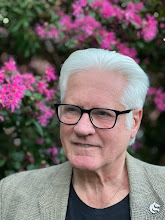
- Russell Blackford
- Australian philosopher, literary critic, legal scholar, and professional writer. Based in Newcastle, NSW. My latest books are THE TYRANNY OF OPINION: CONFORMITY AND THE FUTURE OF LIBERALISM (2019); AT THE DAWN OF A GREAT TRANSITION: THE QUESTION OF RADICAL ENHANCEMENT (2021); and HOW WE BECAME POST-LIBERAL: THE RISE AND FALL OF TOLERATION (2024).
Saturday, December 04, 2010


Friday, December 03, 2010
Finished!!!
Well ... a stage is finished. As of yesterday morning, I finished a respectable version of the last chapter of the new book - and I've since been sweeping back through the entire manuscript, tweaking here, pruning there, clarifying somewhere else, and generally doing a copyedit/proofread as I go. And I'm now declaring the first draft finished.
In a moment, I'll start printing it out, as there's no substitute for someone checking through a hard copy. I'll hand it over to long-suffering Jenny to do a layer of proofreading, and she's bound to catch some stuff that I missed.
This is, as mentioned, only the first draft, though I think it's a pretty good one. You'll be getting updates as things move along. For now, at least a tiny celebration is order while I think of the next task.
In a moment, I'll start printing it out, as there's no substitute for someone checking through a hard copy. I'll hand it over to long-suffering Jenny to do a layer of proofreading, and she's bound to catch some stuff that I missed.
This is, as mentioned, only the first draft, though I think it's a pretty good one. You'll be getting updates as things move along. For now, at least a tiny celebration is order while I think of the next task.
Wednesday, December 01, 2010
Clark on Sam Harris and free will
Over here, Tom Clark has a review of The Moral Landscape cum discussion of libertarian free will. I expect to return to this in the next few days. For now, here's a large sample (with material in bold quoted from Harris):
Harris rightly and crucially points out that there are viable conceptions of moral responsibility and moral judgment that survive the death of the little god. Wrongful acts are still wrong and condemnable in a world where their perpetrators are fully caused, and we are justified in holding perpetrators responsible since doing so is essential for an ordered society. But this essentially consequentialist notion of responsibility has major implications since it calls into question what Harris calls “the logic of retribution.” As he puts it:
Clearly, we need to build prisons for people who are intent on harming others. But if we could incarcerate earthquakes and hurricanes for their crimes, we would build prisons for them as well. The men and women on death row have some combination of bad genes, bad parents, bad ideas and bad luck – which of these quantities, exactly, were they responsible for? No human being stands as author to his own genes or own upbringing, and yet we have every reason to believe that these factors determine his character throughout his life. Our system of justice should reflect our understanding that each of us could have been dealt a very different hand in life…The urge for retribution…seems to depend upon our not seeing the underlying causes of human behavior. (109)
Harris also makes a broader point, connecting a naturalistic understanding of ourselves to compassion:
Despite our attachment to the notion of free will, most of us know that disorders of the brain can trump the best intentions of the mind. This shift in understanding represents progress toward a deeper, more consistent, and more compassionate view of our common humanity – and we should note that this is progress away from religious metaphysics. It seems to me that few concepts have offered greater scope for human cruelty than the idea of an immortal soul that stands independent of all material influences, ranging from genes to economic systems. (110)
Harris acknowledges the strength of the retributive impulse – a natural endowment present in all of us to greater or lesser extent – and speculates about how it can best be managed in a future culture, one fully cognizant of the causes and cures of evil. Might we continue to punish perpetrators simply to satisfy the thirst for retribution? From a humanitarian standpoint let’s hope not, since once that thirst no longer serves its original social function, now taken over by prevention and rehabilitation, its satisfaction simply imposes unnecessary suffering. Harris again: “…it seems quite clear that the retributive impulse, based on the idea that each person is the free author of his thoughts and actions, rests on a cognitive and emotional illusion, and perpetuates a moral one.”
I'm on board with both Harris and Clark that the kind of free will that they're talking about doesn't exist. I'm also on board with the claim that this doesn't eliminate responsibility for our actions, though it may require that we nail down what "responsibility" really means. I'm not sure we really know what we're talking about when we use the word unreflectively, and it may not be straighforward to get to a considered understanding of it while also (at least approximately) tracking what work the word does in our ordinary discourse. Still, to adapt some phrasing from Dan Dennett, a sort of responsibility that is compatible with our being the products of natural forces, traceable beyond our wills, may be the only responsibility worth having.
I sometimes think that Clark overreaches a li'l in his views about the social and political implications of all this, but that's for another day. As I say, I'll return to it. Meanwhile have a look at his review and at the whole site of Naturalism.Org, which is well worth keeping up with if you're interested in such issues.
Harris rightly and crucially points out that there are viable conceptions of moral responsibility and moral judgment that survive the death of the little god. Wrongful acts are still wrong and condemnable in a world where their perpetrators are fully caused, and we are justified in holding perpetrators responsible since doing so is essential for an ordered society. But this essentially consequentialist notion of responsibility has major implications since it calls into question what Harris calls “the logic of retribution.” As he puts it:
Clearly, we need to build prisons for people who are intent on harming others. But if we could incarcerate earthquakes and hurricanes for their crimes, we would build prisons for them as well. The men and women on death row have some combination of bad genes, bad parents, bad ideas and bad luck – which of these quantities, exactly, were they responsible for? No human being stands as author to his own genes or own upbringing, and yet we have every reason to believe that these factors determine his character throughout his life. Our system of justice should reflect our understanding that each of us could have been dealt a very different hand in life…The urge for retribution…seems to depend upon our not seeing the underlying causes of human behavior. (109)
Harris also makes a broader point, connecting a naturalistic understanding of ourselves to compassion:
Despite our attachment to the notion of free will, most of us know that disorders of the brain can trump the best intentions of the mind. This shift in understanding represents progress toward a deeper, more consistent, and more compassionate view of our common humanity – and we should note that this is progress away from religious metaphysics. It seems to me that few concepts have offered greater scope for human cruelty than the idea of an immortal soul that stands independent of all material influences, ranging from genes to economic systems. (110)
Harris acknowledges the strength of the retributive impulse – a natural endowment present in all of us to greater or lesser extent – and speculates about how it can best be managed in a future culture, one fully cognizant of the causes and cures of evil. Might we continue to punish perpetrators simply to satisfy the thirst for retribution? From a humanitarian standpoint let’s hope not, since once that thirst no longer serves its original social function, now taken over by prevention and rehabilitation, its satisfaction simply imposes unnecessary suffering. Harris again: “…it seems quite clear that the retributive impulse, based on the idea that each person is the free author of his thoughts and actions, rests on a cognitive and emotional illusion, and perpetuates a moral one.”
I'm on board with both Harris and Clark that the kind of free will that they're talking about doesn't exist. I'm also on board with the claim that this doesn't eliminate responsibility for our actions, though it may require that we nail down what "responsibility" really means. I'm not sure we really know what we're talking about when we use the word unreflectively, and it may not be straighforward to get to a considered understanding of it while also (at least approximately) tracking what work the word does in our ordinary discourse. Still, to adapt some phrasing from Dan Dennett, a sort of responsibility that is compatible with our being the products of natural forces, traceable beyond our wills, may be the only responsibility worth having.
I sometimes think that Clark overreaches a li'l in his views about the social and political implications of all this, but that's for another day. As I say, I'll return to it. Meanwhile have a look at his review and at the whole site of Naturalism.Org, which is well worth keeping up with if you're interested in such issues.
Benjamin Law on gay rights and anti-gay attitudes
A nice article over here.
Sample:
Straight guys, it turns out, are interesting. One study from the 1980s examined the behaviour of hundreds of primary school boys, and how homophobic language affected their interactions. When they started school, young boys were observed holding hands on their way to class, or hugging each other at recess. By the age of 10 — when epithets such as queer and faggot were starting to creep in — they were mock-punching each other and high-fiving instead. By the time they were teenagers, the amount of anti-gay slurs had reached a peak. Boys would go to cinemas together but sit separately, in case they were seen as gay.
Even now, in Brisbane, it’s common for me to get on a bus and see boys sitting with the entire aisle between them, in case people get the wrong idea. Homophobia, as I told the crowd, doesn’t just affect gay people. If “gay” is still one of the worst things you can be in the schoolyard, that inevitably affects the way we behave and interact. We stop listening to certain music, in case it’s gay. We stop playing certain sports, in case it’s gay. We stop talking to each other in certain ways — and avoid making friends with certain people — in case it’s gay.
As counter-intuitive as it sounds, straight people get the raw end of homophobia too.
Sample:
Straight guys, it turns out, are interesting. One study from the 1980s examined the behaviour of hundreds of primary school boys, and how homophobic language affected their interactions. When they started school, young boys were observed holding hands on their way to class, or hugging each other at recess. By the age of 10 — when epithets such as queer and faggot were starting to creep in — they were mock-punching each other and high-fiving instead. By the time they were teenagers, the amount of anti-gay slurs had reached a peak. Boys would go to cinemas together but sit separately, in case they were seen as gay.
Even now, in Brisbane, it’s common for me to get on a bus and see boys sitting with the entire aisle between them, in case people get the wrong idea. Homophobia, as I told the crowd, doesn’t just affect gay people. If “gay” is still one of the worst things you can be in the schoolyard, that inevitably affects the way we behave and interact. We stop listening to certain music, in case it’s gay. We stop playing certain sports, in case it’s gay. We stop talking to each other in certain ways — and avoid making friends with certain people — in case it’s gay.
As counter-intuitive as it sounds, straight people get the raw end of homophobia too.
X-Men Q&A with Kieron Gillen
Here's a lengthy interview with Kieron Gillen, newly appointed as co-writer for Uncanny X-Men, with plenty of reflections about the meaning and future of the franchise.
Sample:
Marvel.com: [...] do you feel like the perception of mutants in the Marvel Universe has shifted from the traditional "hated and feared" to something else resembling more how we treat heiresses and celebrity television stars? Have they gone from being one form of curiosity to another? And if that's the case, are they really any closer to achieving Xavier's dream of acceptance, or has Cyclops just, like you said, settled for survival?
Kieron Gillen: Hated, feared and the object of total fascination. I think that's the fair description of the position of mutants in 2010, and, no, it's not enormously better. And I do think it's interesting that the character who most believed in the idea of Hope-as-Messiah, Cyclops, is the one whose cynical, pessimistic instincts most lean him away from trying to live like that. And totally understandably.
The X-Men as alienation/prejudice metaphor is something that's always been present. But I think we're interested in what actually underlies the metaphor, rather than tying it to a specific real-world struggle. The mutants are the future of humanity. What people hate and fear is that it makes them obsolete; the mutants will be the end of us and our power. It's the sort of thinking which underlies a whole load of prejudice anyway—that giving equal rights to a group who's been suppressed means that, relatively speaking, the power of the dominant group also falls. Mutants are that writ large. If they gain power, we will lose everything. But that's a lie. The mutants are us. They're us with talents we don't understand or really comprehend—which [is] where we get to celebrity. If the X-Men are celebrities, they're the ones whose abilities have put them in this insane position of world-wide fame rather than heiresses. They are the future. And we're trying to crush them or control them or ruin them. It's the old versus the new, and hurting the future just to keep the drip in the arm of the present. We make the new the Other because we're afraid of what it says about us, how obsolete it makes us.
Sample:
Marvel.com: [...] do you feel like the perception of mutants in the Marvel Universe has shifted from the traditional "hated and feared" to something else resembling more how we treat heiresses and celebrity television stars? Have they gone from being one form of curiosity to another? And if that's the case, are they really any closer to achieving Xavier's dream of acceptance, or has Cyclops just, like you said, settled for survival?
Kieron Gillen: Hated, feared and the object of total fascination. I think that's the fair description of the position of mutants in 2010, and, no, it's not enormously better. And I do think it's interesting that the character who most believed in the idea of Hope-as-Messiah, Cyclops, is the one whose cynical, pessimistic instincts most lean him away from trying to live like that. And totally understandably.
The X-Men as alienation/prejudice metaphor is something that's always been present. But I think we're interested in what actually underlies the metaphor, rather than tying it to a specific real-world struggle. The mutants are the future of humanity. What people hate and fear is that it makes them obsolete; the mutants will be the end of us and our power. It's the sort of thinking which underlies a whole load of prejudice anyway—that giving equal rights to a group who's been suppressed means that, relatively speaking, the power of the dominant group also falls. Mutants are that writ large. If they gain power, we will lose everything. But that's a lie. The mutants are us. They're us with talents we don't understand or really comprehend—which [is] where we get to celebrity. If the X-Men are celebrities, they're the ones whose abilities have put them in this insane position of world-wide fame rather than heiresses. They are the future. And we're trying to crush them or control them or ruin them. It's the old versus the new, and hurting the future just to keep the drip in the arm of the present. We make the new the Other because we're afraid of what it says about us, how obsolete it makes us.
Tuesday, November 30, 2010
More on ways of finding out stuff
Jerry Coyne has a thread over here with some interesting discussion. I'm not too fazed by the issue of some people having perfect pitch, since I don't doubt that some people are better than others at a whole range of perceptual skills. We all perform some pretty impressive feats, such as recognising faces and voices, when, in the scheme of things, most human beings look and sound very alike. Even our ability to tell at glance whether a particular four-legged critter is a cat or a small dog is a rather impressive feat. And then, of course, there's all the complexity of language. Our brains do process sensory data in complex ways that we're not aware of.
But if someone tells me that she has highly reliable intuitions as to whether we live in a world with a divine creator or one without ... I'm going to be very suspicious. If it turns out that she's experienced a large number of worlds with such a creator and a large number without, and she can now reliably sense which sort she's currently in without necessarily knowing how she did it ... well, it goes without saying that I'll be impressed. :D
Without independent evidence or some kind of highly impressive story like that, however, I'm not going to take other people as reliable God detectors. I'm very happy, though, that there are reliable pitch detectors, face recognisers, cat/dog distinguishers, and so on.
But if someone tells me that she has highly reliable intuitions as to whether we live in a world with a divine creator or one without ... I'm going to be very suspicious. If it turns out that she's experienced a large number of worlds with such a creator and a large number without, and she can now reliably sense which sort she's currently in without necessarily knowing how she did it ... well, it goes without saying that I'll be impressed. :D
Without independent evidence or some kind of highly impressive story like that, however, I'm not going to take other people as reliable God detectors. I'm very happy, though, that there are reliable pitch detectors, face recognisers, cat/dog distinguishers, and so on.
Poly this, poly that
Last time we got on to the topic of polygamy and polyamory, things did not go smoothly. It's a topic that I raise with trepidation. Still, I'm working on exactly that issue today in my current effort to get a good draft of The Book completed. I have to say something about marriage, and specifically about how the state should respond to Muslim polygamy. It will be briefish, because this could be a large study in itself, and I doubt that I know the best policy response. But something has to be said, however tentative.
By coincidence, there's an article up over at Butterflies and Wheels, by Homa Arjomand, arguing for the retention of a Canadian law that apparently prohibits polygamist relationships. It's created some interesting discussion, including my own contribution to the debate. You might like to have a look and add your two cents' worth.
By coincidence, there's an article up over at Butterflies and Wheels, by Homa Arjomand, arguing for the retention of a Canadian law that apparently prohibits polygamist relationships. It's created some interesting discussion, including my own contribution to the debate. You might like to have a look and add your two cents' worth.
New JET article by Nicholas Agar
Over at The Journal of Evolution and Technology we've published a new article by Nicholas Agar, in which he summarises some of the argument from his new book, Humanity's End.
Agar argues against what he classifies as radical enhancement, while distancing himself from bioconservative positions that oppose enhancement on principle. The abstract reads:
This paper summarizes a couple of the main arguments from my new book, Humanity’s End. In the book I argue against radical enhancement - the adjustment of human attributes and abilities to levels that greatly exceed what is currently possible for human beings. I’m curious to see what reaction this elicits in a journal whose readership includes some of radical enhancement’s most imaginative and committed advocates.
We'll be interested in receiving responses. Meanwhile, another sample:
In 2004 I published a book with the title Liberal Eugenics. It was a defense of genetic enhancement. So what’s a defender of enhancement doing turning around and attacking enhancement. Did I get religion?
Earlier in this piece, I suggested that the debate about human enhancement should mature beyond a simple duel between its opponents and defenders. A realistic, scientifically-informed presentation enables us to discriminate morally between different varieties and degrees of human enhancement. It reveals enhancement to be a way of treating human beings that can be good if practiced in moderation but dangerous if taken to extremes. Many of the influences humans direct at themselves fall into this category - drinking alcohol, exposure to direct sunlight, exercising, consuming saturated fats, and so on. Too much sun substantially elevates the risk of skin cancer. A moderate amount furnishes the body with requisite vitamin D. Alcoholism is a disease that destroys lives. But moderate drinking offers enjoyable experiences, promotes certain forms of sociability, and may reduce the risk of heart disease.
Agar argues against what he classifies as radical enhancement, while distancing himself from bioconservative positions that oppose enhancement on principle. The abstract reads:
This paper summarizes a couple of the main arguments from my new book, Humanity’s End. In the book I argue against radical enhancement - the adjustment of human attributes and abilities to levels that greatly exceed what is currently possible for human beings. I’m curious to see what reaction this elicits in a journal whose readership includes some of radical enhancement’s most imaginative and committed advocates.
We'll be interested in receiving responses. Meanwhile, another sample:
In 2004 I published a book with the title Liberal Eugenics. It was a defense of genetic enhancement. So what’s a defender of enhancement doing turning around and attacking enhancement. Did I get religion?
Earlier in this piece, I suggested that the debate about human enhancement should mature beyond a simple duel between its opponents and defenders. A realistic, scientifically-informed presentation enables us to discriminate morally between different varieties and degrees of human enhancement. It reveals enhancement to be a way of treating human beings that can be good if practiced in moderation but dangerous if taken to extremes. Many of the influences humans direct at themselves fall into this category - drinking alcohol, exposure to direct sunlight, exercising, consuming saturated fats, and so on. Too much sun substantially elevates the risk of skin cancer. A moderate amount furnishes the body with requisite vitamin D. Alcoholism is a disease that destroys lives. But moderate drinking offers enjoyable experiences, promotes certain forms of sociability, and may reduce the risk of heart disease.
Sunday, November 28, 2010
Kenneth Lipp on Islamophobia
Further to my recent discussion of this issue, Kenneth Lipp now has a solid post on the subject.
Sample:
The term Islamophobia dates back to the late 1980s, but came into prolific usage after the September 11, 2001 attacks in the United States, to refer to types of political dialogue that appeared prejudicially resistant to “pro-Islamic argument."
Professor Anne Sophie Roald writes that steps were taken toward official acceptance of the term in January 2001 at the "Stockholm International Forum on Combating Intolerance", where Islamophobia was recognized as a form of intolerance alongside Xenophobia and Antisemitism.
In 1997, the British Runnymede Trust defined Islamophobia as the "dread or hatred of Islam and therefore, to the fear and dislike of all Muslims," stating that it also refers to the practice of discriminating against Muslims by excluding them from the economic, social, and public life of the nation. It purports to include the perception that “Islam has no values in common with other cultures, is inferior to the West and is a violent political ideology rather than a religion.” The trust’s website boasts the accomplishment-
“Through the work of the Commission on British Muslims and Islamophobia, Runnymede achieved tangible response from policy makers and the general public. For example, the Government approved the first state funding for specifically Muslim schools in late 1997, and there has been some improvement in media portrayals of Islam. The UK National Census in 2001 contained a question on religion.”
I chose this sample because it is useful to have a reminder that the current widespread use of the term "Islamophobia" has a history, and particularly a history of deliberate politicking for its acceptance. Now, that's not to deny that there can be elements of racism or cultural xenophobia feeding into criticisms of Islam (or even that criticism of Islam can sometimes feed back into racism and cultural xenophobia). I don't think we should forget this, especially when we see the criticism emanating from right-wing groups with faux-traditionalist stances on cultural issues and a general dislike of immigrants.
But nor is the idea of Islamophobia entirely innocent. It is all too easy to use to beat up on people who are attempting to engage in genuine dialogue about the nature of Islam - particularly its more extreme or political forms - and how non-Muslim citizens of liberal democracies should respond to it.
I should also oberve that earmarking government funds to specifically religious schools and including a question about religion on a census don't necessarily seem like great policy outcomes. I can definitely see arguments for the latter, from a town planning viewpoint, but these are not the sorts of policies that knock my socks off. Just sayin'.
Sample:
The term Islamophobia dates back to the late 1980s, but came into prolific usage after the September 11, 2001 attacks in the United States, to refer to types of political dialogue that appeared prejudicially resistant to “pro-Islamic argument."
Professor Anne Sophie Roald writes that steps were taken toward official acceptance of the term in January 2001 at the "Stockholm International Forum on Combating Intolerance", where Islamophobia was recognized as a form of intolerance alongside Xenophobia and Antisemitism.
In 1997, the British Runnymede Trust defined Islamophobia as the "dread or hatred of Islam and therefore, to the fear and dislike of all Muslims," stating that it also refers to the practice of discriminating against Muslims by excluding them from the economic, social, and public life of the nation. It purports to include the perception that “Islam has no values in common with other cultures, is inferior to the West and is a violent political ideology rather than a religion.” The trust’s website boasts the accomplishment-
“Through the work of the Commission on British Muslims and Islamophobia, Runnymede achieved tangible response from policy makers and the general public. For example, the Government approved the first state funding for specifically Muslim schools in late 1997, and there has been some improvement in media portrayals of Islam. The UK National Census in 2001 contained a question on religion.”
I chose this sample because it is useful to have a reminder that the current widespread use of the term "Islamophobia" has a history, and particularly a history of deliberate politicking for its acceptance. Now, that's not to deny that there can be elements of racism or cultural xenophobia feeding into criticisms of Islam (or even that criticism of Islam can sometimes feed back into racism and cultural xenophobia). I don't think we should forget this, especially when we see the criticism emanating from right-wing groups with faux-traditionalist stances on cultural issues and a general dislike of immigrants.
But nor is the idea of Islamophobia entirely innocent. It is all too easy to use to beat up on people who are attempting to engage in genuine dialogue about the nature of Islam - particularly its more extreme or political forms - and how non-Muslim citizens of liberal democracies should respond to it.
I should also oberve that earmarking government funds to specifically religious schools and including a question about religion on a census don't necessarily seem like great policy outcomes. I can definitely see arguments for the latter, from a town planning viewpoint, but these are not the sorts of policies that knock my socks off. Just sayin'.
Keeping the humanities alive - and a bit on "other ways of knowing"
I missed this post by Jerry Coyne over at Why Evolution is True last week. It's a great post, and I'm totally on board with it - except I'm going to add a caveat or a gloss to the very last para. Meanwhile, sample:
I don’t know where I’d be now had I not gone to The College of William and Mary, a liberal arts school that enforced a wide education on everyone, even prospective scientists. It was there that I took a fantastic fine arts course from a charismatic professor who absolutely awakened my interest in art, leading to gazillions of museum visits in the last four decades. I had courses in Old English, Beowulf, Greek tragedy, ethics, Indian (i.e., Asian) art, economics, German scientific literature, and modern American fiction. Every one of these left a residuum in my neurons. I still can’t pass up an article on Beowulf.
Once again, I have to rub in the point that those horrible Gnu Atheists like Jerry, Richard, and Ophelia are not philistines or scientismists, if scientism is supposed to be some kind of devaluing of the humanities and of human experience in general.
But I do need to comment on this:
And I don’t give two hoots for a scientist who cares nothing for music, art, literature—or food! They’re missing a great swath of the world’s wonder. Those other disciplines aren’t really “ways of knowing,” but they’re ways of experiencing, and to die without that panoply of experience, had it been available to you, is to have lived in vain.
Absolutely right! And I have to reciprocate by saying that I don't give two hoots for humanities scholars who are ignorant of or hostile to the science disciplines.
But this whole "other ways of knowing" is a pain in the arse. It's a phrase that tends to be used by people who want to devalue scientific knowledge, treating it as just one more interpretation of the world, no more true than that contained in mythology, holy books, reports of mystical experiences, etc., or at least by people who want to be able to say that whatever is contained in mythology, holy books, reports of mystical experiences, etc., may be true, and that human reason cannot check up on it.
I don't believe there are "other ways of knowing" in the sense that is usually intended. What I believe is simply that there are many techniques that are used to find out stuff. All of those techniques are available to scientists, just as they are to everyone else. However, science has refined some techniques to unprecedented levels of precision, control, systematicity, and so on, and has thus made progress with problems that were intractable for thousands of years ... but started to become more tractable around about the beginning of the seventeenth century.
It should also be pointed out that the techniques that science has refined to this extent are also available to humanities scholars, just as those used by humanities scholars are available to scientists. There's just one world and there's no clear demarcation as to what techniques are going to be useful to find out stuff about it.
However, it's important to emphasise that humanities scholars frequently do find out new stuff, or at least stuff that is new to the academy. You won't really discover entirely new stuff in an undergraduate course in the humanities, but I doubt that you will in an undergraduate science course either.
Why did I say "or at least new to the academy"? It's because humanities scholars are generally dealing with human experience on Earth, so the stuff they find out will often be stuff that is or was known to somebody. If textual-historical scholarship on the Bible reveals that the Gospel of Matthew relies heavily on the Gospel of Mark and must have been written later, that is finding out something that was once known (very likely by whoever authored the Gospel of Matthew!). If someone manages to resolve what happened to Queen Zenobia after the fall of Palmyra (was she beheaded, as some sources say, or was she taken back to Rome, led in triumph, but ultimately set free, as other sources say?), that will be finding out something that we don't currently know. Obviously, however, it was once known, for example to the Emperor Aurelian, who defeated her in battle.
I don't think there is any sharp line between the sciences and the humanities, but you can see, I hope, how humanistic scholars are often trying to find out stuff that was once known by human beings who are not around to ask but have left traces, or sometimes by human beings who are still around but have not organised their knowledge in a sufficiently systematic and public way for the purposes of the academy.
That's not all that humanities scholars do, of course: often they are trying to find rich, integrated, convincing ways to interpret such different things that are open to interpretation as novels, paintings, and statutes. But it's a big part of what they do. Scientists are often trying to find out stuff about the non-human world, particularly the workings of phenomena that are too small or too large or too distant for direct observation with our senses. Or about things that happened so long ago that there are no human records that provide a sort of memory of them.
That's not all that scientists do - I'm not forgetting psychology, human physiology, human genetics, etc., and I realise that science also studies human beings. I'm not using it as a definition of science. However, it's a big part of what really got science going in the seventeenth century and of what the sciences are focused on even now. Even when human beings are studied by scientists, it is likely to be different aspects of human beings from those that interest humanities scholars.
However, there's nothing spooky about the fact that humanities scholars and scientists are often trying to find out different things and that different techniques are likely to work for finding out these different things. An advanced knowledge of mathematics may be much more useful to a physicist than to an historian trying to settle what really happened to Zenobia. The latter may need to develop advanced skills in understanding a raft of ancient languages that are used in our conflicting records of poor Zenobia's fate. These languages may be of little use to a physicist.
There are no "other ways of knowing", if this refers to esoteric techniques that get us in touch with a supernatural realm. There are, however, numerous techniques for finding out stuff. Some of these techniques require no unusual training (I can look out the window and find out various things). Others may require advanced training, whether in mathematics, languages, the acquisition of extensive knowledge bases, developing certain ways of thinking about problems (yes, lawyers really are trained to think in a certain way, but there's nothing spooky about it ... it's continuous with how we're all trained in critical thinking), and so on.
A wide variety of techniques that are available as needed for all disciplines, but with different, sometimes dramatically different, disciplinary emphases on which are important? Yes. Spooky "other ways of knowing"? No.
I don’t know where I’d be now had I not gone to The College of William and Mary, a liberal arts school that enforced a wide education on everyone, even prospective scientists. It was there that I took a fantastic fine arts course from a charismatic professor who absolutely awakened my interest in art, leading to gazillions of museum visits in the last four decades. I had courses in Old English, Beowulf, Greek tragedy, ethics, Indian (i.e., Asian) art, economics, German scientific literature, and modern American fiction. Every one of these left a residuum in my neurons. I still can’t pass up an article on Beowulf.
Once again, I have to rub in the point that those horrible Gnu Atheists like Jerry, Richard, and Ophelia are not philistines or scientismists, if scientism is supposed to be some kind of devaluing of the humanities and of human experience in general.
But I do need to comment on this:
And I don’t give two hoots for a scientist who cares nothing for music, art, literature—or food! They’re missing a great swath of the world’s wonder. Those other disciplines aren’t really “ways of knowing,” but they’re ways of experiencing, and to die without that panoply of experience, had it been available to you, is to have lived in vain.
Absolutely right! And I have to reciprocate by saying that I don't give two hoots for humanities scholars who are ignorant of or hostile to the science disciplines.
But this whole "other ways of knowing" is a pain in the arse. It's a phrase that tends to be used by people who want to devalue scientific knowledge, treating it as just one more interpretation of the world, no more true than that contained in mythology, holy books, reports of mystical experiences, etc., or at least by people who want to be able to say that whatever is contained in mythology, holy books, reports of mystical experiences, etc., may be true, and that human reason cannot check up on it.
I don't believe there are "other ways of knowing" in the sense that is usually intended. What I believe is simply that there are many techniques that are used to find out stuff. All of those techniques are available to scientists, just as they are to everyone else. However, science has refined some techniques to unprecedented levels of precision, control, systematicity, and so on, and has thus made progress with problems that were intractable for thousands of years ... but started to become more tractable around about the beginning of the seventeenth century.
It should also be pointed out that the techniques that science has refined to this extent are also available to humanities scholars, just as those used by humanities scholars are available to scientists. There's just one world and there's no clear demarcation as to what techniques are going to be useful to find out stuff about it.
However, it's important to emphasise that humanities scholars frequently do find out new stuff, or at least stuff that is new to the academy. You won't really discover entirely new stuff in an undergraduate course in the humanities, but I doubt that you will in an undergraduate science course either.
Why did I say "or at least new to the academy"? It's because humanities scholars are generally dealing with human experience on Earth, so the stuff they find out will often be stuff that is or was known to somebody. If textual-historical scholarship on the Bible reveals that the Gospel of Matthew relies heavily on the Gospel of Mark and must have been written later, that is finding out something that was once known (very likely by whoever authored the Gospel of Matthew!). If someone manages to resolve what happened to Queen Zenobia after the fall of Palmyra (was she beheaded, as some sources say, or was she taken back to Rome, led in triumph, but ultimately set free, as other sources say?), that will be finding out something that we don't currently know. Obviously, however, it was once known, for example to the Emperor Aurelian, who defeated her in battle.
I don't think there is any sharp line between the sciences and the humanities, but you can see, I hope, how humanistic scholars are often trying to find out stuff that was once known by human beings who are not around to ask but have left traces, or sometimes by human beings who are still around but have not organised their knowledge in a sufficiently systematic and public way for the purposes of the academy.
That's not all that humanities scholars do, of course: often they are trying to find rich, integrated, convincing ways to interpret such different things that are open to interpretation as novels, paintings, and statutes. But it's a big part of what they do. Scientists are often trying to find out stuff about the non-human world, particularly the workings of phenomena that are too small or too large or too distant for direct observation with our senses. Or about things that happened so long ago that there are no human records that provide a sort of memory of them.
That's not all that scientists do - I'm not forgetting psychology, human physiology, human genetics, etc., and I realise that science also studies human beings. I'm not using it as a definition of science. However, it's a big part of what really got science going in the seventeenth century and of what the sciences are focused on even now. Even when human beings are studied by scientists, it is likely to be different aspects of human beings from those that interest humanities scholars.
However, there's nothing spooky about the fact that humanities scholars and scientists are often trying to find out different things and that different techniques are likely to work for finding out these different things. An advanced knowledge of mathematics may be much more useful to a physicist than to an historian trying to settle what really happened to Zenobia. The latter may need to develop advanced skills in understanding a raft of ancient languages that are used in our conflicting records of poor Zenobia's fate. These languages may be of little use to a physicist.
There are no "other ways of knowing", if this refers to esoteric techniques that get us in touch with a supernatural realm. There are, however, numerous techniques for finding out stuff. Some of these techniques require no unusual training (I can look out the window and find out various things). Others may require advanced training, whether in mathematics, languages, the acquisition of extensive knowledge bases, developing certain ways of thinking about problems (yes, lawyers really are trained to think in a certain way, but there's nothing spooky about it ... it's continuous with how we're all trained in critical thinking), and so on.
A wide variety of techniques that are available as needed for all disciplines, but with different, sometimes dramatically different, disciplinary emphases on which are important? Yes. Spooky "other ways of knowing"? No.
Subscribe to:
Posts (Atom)