We're kind of living at two addresses at the moment, one in Melbourne and one 600 miles away in Newcastle. Most of our stuff is still in Melbourne, but this will all change within two weeks when we move it all up.
Tomorrow we have a housecooling party for the Melbourne place. See some of you there ... er, here.
About Me
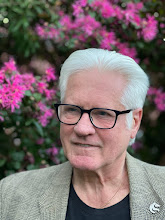
- Russell Blackford
- Australian philosopher, literary critic, legal scholar, and professional writer. Based in Newcastle, NSW. My latest books are THE TYRANNY OF OPINION: CONFORMITY AND THE FUTURE OF LIBERALISM (2019); AT THE DAWN OF A GREAT TRANSITION: THE QUESTION OF RADICAL ENHANCEMENT (2021); and HOW WE BECAME POST-LIBERAL: THE RISE AND FALL OF TOLERATION (2024).
Saturday, November 28, 2009


Friday, November 27, 2009
Greta Christina on converting the religious
Greta Christina has an excellent piece on AlterNet. She argues persuasively against the silly idea that there's something inherently intolerant about attempts by atheists to persuade the religious to become atheists. While this should go without saying, it's useful for her to put the detail of the argument. Basically, it goes like this: religion is one hypothesis - or, rather, a set of numerous hypotheses - about how the world works; and there is nothing wrong with testing such hypotheses, arguing about them, and attempting to reach agreement on their epistemic status.
I totally agree, and I add that there is no great benefit to diversity if it means a diversity of false beliefs. Diversity of art forms, cuisines, literary traditions and so on can be aesthetically pleasing, but it's rather different with beliefs. We should look kindly on diversity of beliefs insofar as it is evidence that no one belief is being imposed by political power, something we all have reason to fear. However, this kind of diversity is not something to be pursued for its own sake. We should prefer true beliefs to a diversity of (mostly false) beliefs.
Where I do have a quibble is that I think Greta goes close to something like a logical positivist position, with all its inherent paradoxes. Once you start saying that hypotheses are unacceptable unless they are empirically falsifiable, the obvious rejoinder is to ask whether what you just said is itself an empirically falsifiable hypothesis - if it's not, what is it? It doesn't, for example, look like an analytically true claim (something that must be correct as a matter of logic). You need an epistemological position that is at least rich enough to accommodate its own claims.
But I don't think she needs to go down a path that involves any paradoxes. All that needs to be said is the following.
The senses of human beings are limited, so there are many truths about the world that we can't observe directly. Indeed, our senses often mislead us. When it comes to events that happened a long time ago, or which are very distant from us, or which take place on a very small scale, it is extremely difficult for us to obtain knowledge. Direct observation won't do the job.
However, for the past 400 years science has become increasingly able to obtain robust knowledge about very ancient, very distant, and very small-scale events. In principle, its methods can be useful in assessing many kinds of hypotheses about events that are hidden from direct observation. The techniques it uses involve, among other things, the rigorous application of an everyday method of reasoning, namely hypothetico-deductive reasoning. By combining this with mathematical modelling, arguments from consilience, and instruments that extend the senses (telescopes, cloud chambers, geiger counters, etc.), science is able to develop powerful lines of convergent evidence to support hypotheses that would otherwise be no more than arbitrary speculations.
Some religious claims - for example those about the Earth's past - can be tested and falsified by these distinctively scientific means. Others, however, are left in the category of arbitrary speculation, since we have no way to tell whether they are true or false. They are not like logical principles (such as modus ponens) or epistemological principles (such as "prima facie, believe what you see with your own eyes under good conditions") that are widely and inter-culturally accepted and can be discussed, clarified, and refined, as happens in philosophy. They are more like speculations that were made about very distant events at a time in history when human beings had no real evidence to ground such speculations and no real way to test them. Religious claims fitting in this category are, indeed, useless, because it is possible to imagine an infinite number of them without having any reason to believe that any particular one is true, or any way at all to choose among them. It would be freakishly unlikely for any particular one of these arbitary claims to be true.
No paradoxical epistemological principles are required here, just the true observation that it is arbitrary to believe in any particular one of the infinite number of claims that could be made about unobservable and unevidenced events.
With that caveat, I'll send you off to read Greta Christina's wonderful essay.
Tuesday, November 24, 2009
Does anyone reading this live in Higgins?
If so, I urge you to vote #1 Fiona Patten in the by-election on Saturday, 5 December. I don't know her personally, and I realise that the name of her party, the Australian Sex Party, makes it sound as if she's a loopy one-issue candidate. But her party's platform looks as sensible as anything I've ever seen from a political party. We certainly do need a voice in Canberra against the unremitting wowserism that has become so prevalent in Australian politics. I don't support every single item in the party's platform, but it makes good sense overall. I agree with the general direction it indicates.
If Patten and her group seem too "out there", consider the Australian Democrats. They can really do with some votes.
Whatever you do, don't vote for Clive Hamilton, even if (like me) you agree with him about the urgency of responding to climate change. Send a strong message to the Greens by putting him last when you mark your ballot. It is a very disappointing act by the Greens to field a social conservative candidate who is, among things, a leading proponent of internet censorship. We expect the Greens to be among the guardians of free speech in Australia, not among its attackers. It doesn't matter how articulate he may or may not be about environmental issues, the choice of Hamilton as a candidate was a monumental misjudgment. I hope the Greens will be made to answer for it, and that they'll be wiser next time.
Sunday, November 22, 2009
In the bolshevik cabaret - John Gray
I'm not usually a big fan of the depressing, pessimistic philosopher John Gray, but I do like some of his individual observations from time to time - and I relished this review of a couple of new books by adherents of the secular religion of Marxism.
I haven't read the particular books, so I can't say whether or not Gray is on the money with his opinion of them. But he's certainly right to worry about Marxism making a comeback. As a matter of fact, I think he should be a bit more worried, because his attitude seems to be that no one serious (or with real social support) actually wants a communist revolution, and that such books as those he's reviewing provide an irrelevant spectacle for our amusement, something like a cabaret act. Perhaps ... but, then again, maybe not. Marxism is at best a distraction from the real job of building truly liberal and rational societies - societies in which individual freedom replaces conformity to any conventional template for living our lives. It would be better if Marxism withered away, much like the state is supposed to do in Marxist fantasies about the future.
It's unfortunate that this religion-like belief system, with its in-built apocalypticism, authoritarianism, and allegiance to dogma, and its quasi-God of History, still persists. The need for critique of Marxism (and its various flavours) has been less urgent in recent times than the need for critique of more clearly supernaturalist religions, such as Christianity and Islam ... mainly because the latter are still deferred to in Western countries: for some reason, it's widely imagined that religious leaders are our moral leaders and have something of value to say about how we ought to be governed. By contrast, Marxism is thoroughly discredited in the eyes of most people in the West.
But Marxism is every bit as much an irrational, comprehensive belief system as Christianity or Islam, and its tendencies to totalitarianism and apocalypticism make it especially dangerous. Of course, Marx may well have had some genuine insights (such as the way economic circumstances can shape beliefs and values). In a trivial sense, we are all Marxists now, in that we've absorbed whatever is of lasting value in Marx's writings. But that doesn't justify treating those writings - or those of Lenin or Mao or others of the sick crew - like holy books.
Marxism as we've known it over the past 100 years or so - as a sort of political religion espoused by fanatics such as Stalin, Mao, and Pol Pot - has been a disaster. People of reason should regard revolutionary Marxists with the same horror that they feel for fundamentalist Christians, or radical Islamists, or nutjob followers of Ayn Rand. Sure, there are some important distinctions to be made (in favour of the Randians, they are usually not inclined to personal acts of violence; in favour of the fundamentalist Christians, at least some of them are prepared to live within a liberal state side by side with people who disagree with them). But really, they're all pretty much as bad as each other.
If they are sometimes each other's enemies, that doesn't make any of them our friends.
Saturday, November 21, 2009
Muslim countries seek blasphemy ban
This story by Frank Jordan for Associated Press is well worth reading.
GENEVA — Four years after cartoons of the prophet Muhammad set off violent protests across the Muslim world, Islamic nations are mounting a campaign for an international treaty to protect religious symbols and beliefs from mockery — essentially a ban on blasphemy that would put them on a collision course with free speech laws in the West.
Documents obtained by The Associated Press show that Algeria and Pakistan have taken the lead in lobbying to eventually bring the proposal to a vote in the U.N. General Assembly.
If ratified in countries that enshrine freedom of expression as a fundamental right, such a treaty would require them to limit free speech if it risks seriously offending religious believers. The process, though, will take years and no showdown is imminent.
Go to the link above to read on.
I don't know what extra documents AP may have, since it is widely known that Pakistan has been taking the running in pushing for a UN ban on "defamation of religions", but the analysis looks pretty good. The issue will grind on over time, but it is clear that the nations forming the Organization of the Islamic Conference have long-term plans - plans which they will pursue tenaciously - to gain the moral high ground in their own draconian restrictions on freedom of speech, and to obtain what further restrictions they can, even in the West, on speech that criticises or satirises religion. The aim is to silence serious criticism of Islam, and if that means silencing serious criticism of other religions, too ... well, the OIC nations are happy to make common cause with anyone who is prepared to support their aim.
This is an issue that we should not lose sight of. Deep concern about the implications for freedom of speech - especially for freedom of speech that criticises religious doctrines, practices, leaders, organisations, etc. - is totally appropriate. This is not just paranoia on the part of some scattered free speech advocates; it's very serious.
The push to ban "defamation of religion(s)" was the topic of my talk at this year's Atheist Alliance International convention (in Los Angeles, back in October), and I'll continue to come back to it. It's easy even for civil rights activists to overlook the importance of this issue, and we must do what we can to make sure there is never any acquiescence from the West.
Thursday, November 19, 2009
Tuesday, November 17, 2009
Interview coming up on Radio Australia
Feel free to listen in on Thursday at 11.50 am, Melbourne time, to Radio Australia, where I'll be doing a live interview about 50 Voices of Disbelief.
Monday, November 16, 2009
Reminder about IEET seminar: biopolitics of popular culture
I really wish I could get to this, and indeed take part in such a spectacular program. Don't miss it, if you can be in sunny California early in December:
SCHEDULE:
8:00 AM - Doors open, sign-in and continental breakfast
8:45 AM - Mike Treder, IEET managing director - Opening remarks
9:00 AM - Dr. James Hughes, IEET executive director
“Is There a Pro-Mutant Trend in Popular Culture?”
9:25 AM - Alex Lightman, executive director, Humanity Plus
“The Future Engine: How Science Fiction Catalyzes Technology and Transforms Society”
9:50 AM - Professor Michael LaTorra, New Mexico State University
“The Ultimate City: Urban and Rural Values in Science Fiction”
10:15 AM - Break
10:30 AM - Richard Eskow, Huffington Post
“Zero-Sum Superheroes: A Marketing Plan to Counter Centuries of Cultural Programming”
10:55 AM - P.J. Manney, writer for television and film
“How Yucky Got Yummy: The Evolution of Empathy in SF”
11:20 AM - Kristi Scott, IEET intern
“Constructing the Future through the Cinematic Lens of Dystopic Science Fiction Futures”
11:45 AM - EON Reality Facility demonstration
12:10 PM - Lunch (provided)
12:30 PM - Moderated group discussion
1:00 PM - Panel - “Immersion: The Coming Fusion of Life and Entertainment”
Natasha Vita-More, media artist/designer and theorist
Jeannie Novak, founder of Indiespace
Matthew Patrick, director of feature films and TV movies
Michael Masucci, writer, producer, director, photographer, editor, musician
2:10 PM - Edward Miller, Network for Open Scientific Innovation
“Beyond Utopia and Dystopia: A Critical Examination of the Ecology of Science Fiction”
2:35 PM - Richard Kadrey, science fiction and fantasy author
“New Flesh A GoGo”
3:00 PM - Jess Nevins, expert on comic book culture
“Those Who Cannot Remember Doc Savage Are Condemned to Repeat Him”
3:25 PM - Break
3:40 PM - David Brin, best-selling author
“Myths That Help the Enlightenment … and Others That Tear It Down”
4:05 PM - Brian Cross, co-founder of Posthuman Studios
“Talking Transhumanism at the Table: Designing Games for Non-Transhumanist Audiences”
4:30 PM - Annalee Newitz, editor of i09
“Will Mind-Controlled, Genetically-Engineered Sexbots Want to Play Videogames?”
4:55 PM - Jamais Cascio, IEET Senior Fellow - Closing remarks
5:30 PM - Conclusion
Melbourne!!
Okay, back in Melbourne for the next three to four weeks. This is getting a bit crazy, but never mind. The time in Newcastle, with our first days in our new house, went pretty well. Now for the arrangements to move everything up, including Felix ... while juggling a few other things.
Saturday, November 14, 2009
Normblog profile published
Voila!
Russell Blackford was born in Sydney, Australia, and grew up near Newcastle, 100 miles north. He will be returning to Newcastle at the end of 2009, after 30 years in Melbourne. He is a philosopher, literary critic, and (sometimes) creative writer. His books include Strange Constellations: A History of Australian Science Fiction (1999, co-written with Van Ikin and Sean McMullen); 50 Voices of Disbelief: Why We Are Atheists (2009, co-edited with Udo Schuklenk), and several novels. Russell is editor-in-chief of The Journal of Evolution and Technology. He blogs at Metamagician and the Hellfire Club.
Read on ...
Subscribe to:
Posts (Atom)