From March 2004 to August 2008 - when I submitted my dissertation to be examined - I undertook a Ph.D. in philosophy at Monash University under the supervision of Justin Oakley (with Dirk Baltzly filling in at one point while Justin was on sabbatical leave). My associate supervisors were Jeanette Kennett (briefly) and Rob Sparrow.
(During this time, I also did a lot of sessional lecturing and tutoring across the philosophy and bioethics curriculum at Monash; this, in fact, continued almost until I shifted house from Melbourne to Newcastle in late 2009. I still have many friends at Monash, though some have moved on to other institutions or to retirement.)
The title of my doctoral dissertation was "Human Enhancement: The Challenge to Liberal Tolerance." It was passed without revisions in November 2008, and I formally graduated in absentia at a ceremony in early 2009. Subsequently, I revised, updated, and slightly expanded it for publication as a book with MIT Press. This appeared at the beginning of 2014 under the title Humanity Enhanced: Genetic Choice and the Challenge for Liberal Democracies.
In both the dissertation and the book, I argue that the nations of the world, and particularly the liberal democracies of the West, have been too hasty to enact draconian laws against a range of "genetic choices", such as human therapeutic and reproductive cloning, certain uses of pre-implantation genetic diagnosis, and genetic modification of human embryos. Not only that, the illiberal approach taken in this case augurs badly for the likely political responses to any future innovations that might cause widespread outrage and fear.
Throughout, I attempt to distinguish between, on one hand, moral arguments that might be made from various contestable viewpoints that should not prevail in lawmaking within liberal democracies and, on the other hand, widely accepted liberal principles such as the Millian harm principle. I consider various arguments against genetic choices that might plausibly pass muster under liberal principles - and while I find various grains of merit in some of them, I don't find enough to justify the regimes of restrictions and bans that are currently in place, many of them enacted in response to the announcement, in early 1997, of the birth of Dolly the Sheep.
I'm linking to my article "Dr. Frankenstein meets Lord Devlin: Genetic engineering and the principle of intangible harm." This was published in The Monist, a prestigious peer-reviewed philosophy journal, during my stint at Monash. It was one of several journal articles that I wrote while completing the Ph.D. I've recently uploaded a copy at Academia.edu - so you might want to check it out if you have access.
The point of the article is to consider whether technologies such as genetic engineering of human embryos could cause some kind of "intangible harm" to human societies such as described by the great British jurist Lord Patrick Devlin. I ask about the possible social effects if genetic engineering is used to produce dramatic enhancements of human capacities.
Devlin notoriously put forward the argument about intangible harm during debates in the late 1950s, and into the 1960s, about legalisation of prostitution and homosexual acts. He was replying to the Wolfenden Report, which recommended liberal reforms to the law in Britain. The overall judgment of history has been that Devlin's arguments in defence of a conservative position - and what is now called legal moralism - failed (though of course there is still much opposition to prostitution, often on independent grounds based largely on paternalism).
For all that, might Devlin have something to teach us? His suggestion that allowing some practices could cause so-called "intangible harm", by destroying social bonds in some way, is not obviously ridiculous, even if fails badly as a justification for prohibition of, in particular, homosexual acts. In "Dr. Frankenstein meets Lord Devlin", I try to sort out whether the argument does any better with more futuristic practices such as genetic engineering (something that we are now closer to being able to do effectively, with the recent development of CRISPR-Cas9 technology). In the end, I'm rather sceptical, despite trying to give the argument a good run.
To be honest, I think I do a better job with this in Humanity Enhanced, based on my dissertation written a few years after the article. My later accounts have a sharper, and more comprehensive, analysis of the jurisprudential principles involved.
But I'm fond of "Dr. Frankenstein meets Lord Devlin." Although it represents a relatively early stage of my thinking - published, as it was, about seven years before Humanity Enhanced - I still feel that I managed to lend some clarity to difficult issues. Do check it out if the policy issues surrounding genetic science interest you. As its (memetic) parent, I'm certainly biased, but I think it deserves some more readers.
Postscript: Having just re-read the article, I think the above even sells it a bit short. At any rate, if you don't have the time to read, or money to buy, Humanity Enhanced, "Dr. Frankenstein meets Lord Devlin" might be worth your while. It lays out a lot of my thinking about these issues in fairly extended form. Also, it gives an idea of where I am coming from in debates about genetic choice and much else.
About Me
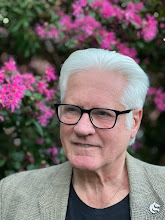
- Russell Blackford
- Australian philosopher, literary critic, legal scholar, and professional writer. Based in Newcastle, NSW. My latest books are THE TYRANNY OF OPINION: CONFORMITY AND THE FUTURE OF LIBERALISM (2019); AT THE DAWN OF A GREAT TRANSITION: THE QUESTION OF RADICAL ENHANCEMENT (2021); and HOW WE BECAME POST-LIBERAL: THE RISE AND FALL OF TOLERATION (2024).
Showing posts with label bioethics. Show all posts
Showing posts with label bioethics. Show all posts
Saturday, August 13, 2016


Saturday, July 02, 2016
Saturday self-promotion - "The Supposed Rights of the Fetus"
This piece, "The Supposed Rights of the Fetus", was first published by Quadrant in 2002. (It received some minor pushback there, since it challenged the views held by many people in the magazine's largely socially conservative audience.) I argued that a human fetus does not have rights - such as a right to life - but please note that the idea was to examine what I took to be the philosophically strongest arguments for a view contrary to mine. In the article, I attempt to represent the opposed arguments fairly and to show in an analytical, rather than polemical, way why they leave me unpersuaded.
"The Supposed Rights of the Fetus" can also be seen as a precursor to my "Stem-cell research on other worlds" article published a few years later by the Journal of Medical Ethics. The overall approaches are consistent, but there is not a lot of overlap. I see the two articles as complementary rather than as one subsuming the other.
"The Supposed Rights of the Fetus" can also be seen as a precursor to my "Stem-cell research on other worlds" article published a few years later by the Journal of Medical Ethics. The overall approaches are consistent, but there is not a lot of overlap. I see the two articles as complementary rather than as one subsuming the other.
Saturday, June 18, 2016
Saturday self-promotion - "Who's Afraid of the Brave New World?"
This article, "Who's Afraid of the Brave New World", was originally published in Quadrant magazine, back in 2003, and it was something of a milestone for me. Let me explain...
The previous year I'd completed a Masters degree in bioethics at Monash University, but my default plan at the time was to return to legal practice as a barrister (a specialist trial lawyer, for US readers). The good feedback that I received for some of the articles that I published around that time - and for "Who's Afraid of the Brave New World?", in particular - influenced my eventual decision to commence a doctoral program in philosophy at Monash. This emphasized philosophical bioethics, but also the issues in legal and political philosophy surrounding regulation of emerging biotechnologies.
During this whole period I was also chipping away at completing a philosophy major through Open Learning, which I did at the end of 2003 with an unbroken run of High Distinction results. I'd studied some philosophy here and there at earlier phases in my academic career, with good results, but it had not previously been my main focus.
So this was the time, around 2002-2004 that set me on my current direction - rather than the one I'd been assuming, tied to professsional legal practice - and "Who's Afraid of the Brave New World?" was a big part of the change.
Check out the article for yourself, if you're interested and haven't already read it. I argue against what I see as the facile view that permitting, say, human cloning would set us on a slippery slope to some sort of horrible society, a sort of Huxleyan Brave New World. I concede that there may be some legitimate, rational concerns surrounding these technologies, especially concerns relating to distributive justice. However, I argue that much of the opposition is irrational, and that these irrational elements should not drive public policy with regulation of biotech. Overall, the argument still seems good to me, although I've delved into the issues far more deeply in subsequent publications, especially my 2014 book Humanity Enhanced (which is, itself, a slightly expanded and considerably modified version of my doctoral dissertation).
I expect to keep returning to these issues.
The previous year I'd completed a Masters degree in bioethics at Monash University, but my default plan at the time was to return to legal practice as a barrister (a specialist trial lawyer, for US readers). The good feedback that I received for some of the articles that I published around that time - and for "Who's Afraid of the Brave New World?", in particular - influenced my eventual decision to commence a doctoral program in philosophy at Monash. This emphasized philosophical bioethics, but also the issues in legal and political philosophy surrounding regulation of emerging biotechnologies.
During this whole period I was also chipping away at completing a philosophy major through Open Learning, which I did at the end of 2003 with an unbroken run of High Distinction results. I'd studied some philosophy here and there at earlier phases in my academic career, with good results, but it had not previously been my main focus.
So this was the time, around 2002-2004 that set me on my current direction - rather than the one I'd been assuming, tied to professsional legal practice - and "Who's Afraid of the Brave New World?" was a big part of the change.
Check out the article for yourself, if you're interested and haven't already read it. I argue against what I see as the facile view that permitting, say, human cloning would set us on a slippery slope to some sort of horrible society, a sort of Huxleyan Brave New World. I concede that there may be some legitimate, rational concerns surrounding these technologies, especially concerns relating to distributive justice. However, I argue that much of the opposition is irrational, and that these irrational elements should not drive public policy with regulation of biotech. Overall, the argument still seems good to me, although I've delved into the issues far more deeply in subsequent publications, especially my 2014 book Humanity Enhanced (which is, itself, a slightly expanded and considerably modified version of my doctoral dissertation).
I expect to keep returning to these issues.
Subscribe to:
Posts (Atom)