About Me
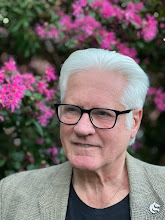
- Russell Blackford
- Australian philosopher, literary critic, legal scholar, and professional writer. Based in Newcastle, NSW. My latest books are THE TYRANNY OF OPINION: CONFORMITY AND THE FUTURE OF LIBERALISM (2019); AT THE DAWN OF A GREAT TRANSITION: THE QUESTION OF RADICAL ENHANCEMENT (2021); and HOW WE BECAME POST-LIBERAL: THE RISE AND FALL OF TOLERATION (2024).
Saturday, June 27, 2015


Wednesday, June 24, 2015
Follow up article on Singer
I have a follow-up article on Peter Singer on the Cogito blog: "I Stand With Peter Singer". This deals with a misguided campaign for Singer's resignation or dismissal from Princeton University. More generally, it deals with illiberal attempts to punish and deter unwanted speech on issues of public importance, as opposed to meeting it with criticism.
Monday, June 22, 2015
Shakespeare, Science Fiction, and all that...
Gregory Benford has republished (with my permission) our exchange from 2000 on greatness in science fiction, what works might stand the test of time, and similar issues. As Greg notes, we are presenting the discussion as it happened, not updating our views. Still, the issues remain topical and what we wrote back then may have its ongoing merit and interest. Check it out!
Note: I wrote several media tie-in novels myself, not all that long after my contribution to this discussion was first published. As a result of that experience, I'd now be less snarky about media tie-in work. That said, I worked hard in my Terminator books in an attempt to achieve an equivalent of the movies' "knowingness and high production values". I don't always see this in media tie-in work, but I have a much better understanding of the exigencies of that kind of writing, especially of what can be involved in producing novelisations. Successful tie-in writers are highly skilled people. It remains the case that they are unlikely to produce work comparable to that of Milton, Shelley, or Shakespeare.
Note: I wrote several media tie-in novels myself, not all that long after my contribution to this discussion was first published. As a result of that experience, I'd now be less snarky about media tie-in work. That said, I worked hard in my Terminator books in an attempt to achieve an equivalent of the movies' "knowingness and high production values". I don't always see this in media tie-in work, but I have a much better understanding of the exigencies of that kind of writing, especially of what can be involved in producing novelisations. Successful tie-in writers are highly skilled people. It remains the case that they are unlikely to produce work comparable to that of Milton, Shelley, or Shakespeare.
Saturday, June 20, 2015
The Monsters of Jurassic World (post at Cogito)
New post on the Cogito blog. This is also a small taste of the sort of thing that may get into the discussion in my book that I'm writing for Springer.
Edit (6 September): I have now republished my Cogito post on this blog.
Edit (6 September): I have now republished my Cogito post on this blog.
Thursday, June 18, 2015
My work cut out for me!
The good, if slightly daunting, news today is that my proposal for a book on the tyranny of (public) opinion looks like it has been picked up by Bloomsbury's academic line. Right now, in fact, it seems that all four(!) book proposals that I've been discussing with publishers over the last year or so are going to come to fruition. Unless there's an unanticipated glitch, that means I am going to be very, very busy. Stay tuned for more on the details in forthcoming posts.
For now, here are the four books, that I have at various stages of discussion with publishers and various stages of work in progress.
1. A short monograph on fundamental moral theory for Palgrave Pivot. This is now written, but still has to go through the pipeline. It should, however, appear later this year.
2. A book on moral philosophy and science fiction - particularly about the representation of various moral themes in SF - for which I have signed a contract with Springer. This is not due with the publisher until late next year, so we're looking at a publication date no sooner than 2017.
3. An edited (with Damien Broderick) collection under discussion with Wiley-Blackwell, where the current situation is very positive. More about this another time.
4. The book mentioned above with Bloomsbury.
Again, the manuscript of the Palgrave Pivot book is already complete - so it is far ahead of the others in the process. In all cases, I am not starting entirely from scratch. Much effort has gone into each of them already over a period of years, and fairly intensively in the past year during the development of proposals. All the same, there is much writing/editing/associated work to come.
With large projects coming to fruition here, or just getting off the ground, there will have to be some shuffling of other priorities. I have some book chapters and talks scheduled, and will go ahead with those. But for example, my pet, or boutique, project of reading much of the Hugo nominated material for 2015 - and commenting on it here - will probably be even less complete than I might have expected. I'd hoped to read all the nominees in the "Best Novel" category and to comment on them before the voting date, but that now looks unrealistic. I might have to restrict myself to discussing one or two of those books, and I may not even manage all the novellas in time to write about them before voting time.
Still, all these green lights that I seem to be getting of late add up to wonderful news for me. They are all exciting projects, and I think these books, when (all going well) they all eventually emerge, are going to constitute some of the best work I've done.
For now, here are the four books, that I have at various stages of discussion with publishers and various stages of work in progress.
1. A short monograph on fundamental moral theory for Palgrave Pivot. This is now written, but still has to go through the pipeline. It should, however, appear later this year.
2. A book on moral philosophy and science fiction - particularly about the representation of various moral themes in SF - for which I have signed a contract with Springer. This is not due with the publisher until late next year, so we're looking at a publication date no sooner than 2017.
3. An edited (with Damien Broderick) collection under discussion with Wiley-Blackwell, where the current situation is very positive. More about this another time.
4. The book mentioned above with Bloomsbury.
Again, the manuscript of the Palgrave Pivot book is already complete - so it is far ahead of the others in the process. In all cases, I am not starting entirely from scratch. Much effort has gone into each of them already over a period of years, and fairly intensively in the past year during the development of proposals. All the same, there is much writing/editing/associated work to come.
With large projects coming to fruition here, or just getting off the ground, there will have to be some shuffling of other priorities. I have some book chapters and talks scheduled, and will go ahead with those. But for example, my pet, or boutique, project of reading much of the Hugo nominated material for 2015 - and commenting on it here - will probably be even less complete than I might have expected. I'd hoped to read all the nominees in the "Best Novel" category and to comment on them before the voting date, but that now looks unrealistic. I might have to restrict myself to discussing one or two of those books, and I may not even manage all the novellas in time to write about them before voting time.
Still, all these green lights that I seem to be getting of late add up to wonderful news for me. They are all exciting projects, and I think these books, when (all going well) they all eventually emerge, are going to constitute some of the best work I've done.
Wednesday, June 17, 2015
Matthew Beard on vigilante justice
In another post at Cogito, Matthew Beard discusses the philosophy of vigilante justice - using as his springboard the TV series Arrow (based on DC's character The Green Arrow). I'm looking forward to seeing more in the promised series of posts on this.
Post at Cogito re Peter Singer and disinvitations
This post was prompted by Peter Singer's disinvitation as a speaker at the Cologne Philosophy Festival. More generally, no one has a right to chosen as a conference speaker - but once invited (and having accepted) people do have a legitimate expectation of not being disinvited for controversial views and on the basis of pressure on the conference organisers.
Tuesday, June 16, 2015
Jurassic World is a monster
Box Office Mojo reports that Jurassic World has broken records for the biggest ever box-office openings in the US (formerly held by the first Avengers movie) and worldwide (formerly held by Harry Potter and the Deathly Hallows, Part 2).
Although there was some buzz about Jurassic World as its release date approached, I don't think anyone, including the studio bosses, foresaw success on this astonishing scale. There's also reason to think it can hold on well - reviews (including my own) have been positive, even if not overwhelmingly so. The general idea from reviewers and from people I've talked to seems to be that the movie does a good job of following the formula that made the original Jurassic Park a record smasher in its own day, that it injects enough original ideas to breathe new life into the franchise, and that, above all, it is simply (though scarily) fun. Perhaps that last is underappreciated at a time when even superhero movies are often dark, troubling, and morally ambiguous.
It seems that there was a hunger for this kind of movie. It was probably helped by circumstances, with no serious blockbuster competition around its June opening date - furthermore, there is no serious competition coming up over the next two weeks. It's also the sort of movie that is inherently more likely to hold at the box office than a superhero flick (these tend to be very front-end loaded).
At the start of July, we'll see the newest instalment from the Terminator franchise, Terminator: Genisys. This also looks like an effort to breathe new life into a flagging franchise - the last two movies never attained the commercial success of Terminator 2: Judgment Day, or anything like the critical acclaim and iconic status of the first two movies. The creators of Terminator Salvation made a brave decision to deal with the future post-Judgment Day, which could have set in train a new line of movies, but they failed to capture the public's imagination. Terminator Salvation was a relative flop by Hollywood blockbuster standards, especially in the US market. Terminator: Genisys is clearly designed to get back to basics, but with new twists. We'll see whether that appeals.
Although there was some buzz about Jurassic World as its release date approached, I don't think anyone, including the studio bosses, foresaw success on this astonishing scale. There's also reason to think it can hold on well - reviews (including my own) have been positive, even if not overwhelmingly so. The general idea from reviewers and from people I've talked to seems to be that the movie does a good job of following the formula that made the original Jurassic Park a record smasher in its own day, that it injects enough original ideas to breathe new life into the franchise, and that, above all, it is simply (though scarily) fun. Perhaps that last is underappreciated at a time when even superhero movies are often dark, troubling, and morally ambiguous.
It seems that there was a hunger for this kind of movie. It was probably helped by circumstances, with no serious blockbuster competition around its June opening date - furthermore, there is no serious competition coming up over the next two weeks. It's also the sort of movie that is inherently more likely to hold at the box office than a superhero flick (these tend to be very front-end loaded).
At the start of July, we'll see the newest instalment from the Terminator franchise, Terminator: Genisys. This also looks like an effort to breathe new life into a flagging franchise - the last two movies never attained the commercial success of Terminator 2: Judgment Day, or anything like the critical acclaim and iconic status of the first two movies. The creators of Terminator Salvation made a brave decision to deal with the future post-Judgment Day, which could have set in train a new line of movies, but they failed to capture the public's imagination. Terminator Salvation was a relative flop by Hollywood blockbuster standards, especially in the US market. Terminator: Genisys is clearly designed to get back to basics, but with new twists. We'll see whether that appeals.
Monday, June 15, 2015
Seth Baum's movie review of Transcendence
For a change, I'm linking to a movie review by someone else: Seth Baum's review of Transcendence, which we published in the Journal of Evolution and Technology last year. Warning: This is (a bit) more like a full-scale academic discussion than an ordinary review, so it gives away the plot. Don't read it unless you've seen the movie or don't mind spoilers for it.
Transcendence flopped at the box office, which may be understandable for such a cerebral movie (even if the ideas were slightly dumbed down, and, indeed, could not have been dumbed down much further without becoming risible). It was never going to make the same kind of profit as an action blockbuster or even an SF movie - like Gravity or Interstellar - that combines a certain amount of genuine science with relentless scenes of intense danger and trauma.
More worryingly, Transcendence was also a failure with the critics; only a minority praised it. I can pick fault with it myself, but it's an involving, intelligent, thought provoking piece of cinema that deserved more sympathy and attention. Its failure with the critics and at the box office has to be a disincentive to others who might try something similar. If you're among those who are fond of Transcendence, you'll be interested in what Baum has to say.
Transcendence flopped at the box office, which may be understandable for such a cerebral movie (even if the ideas were slightly dumbed down, and, indeed, could not have been dumbed down much further without becoming risible). It was never going to make the same kind of profit as an action blockbuster or even an SF movie - like Gravity or Interstellar - that combines a certain amount of genuine science with relentless scenes of intense danger and trauma.
More worryingly, Transcendence was also a failure with the critics; only a minority praised it. I can pick fault with it myself, but it's an involving, intelligent, thought provoking piece of cinema that deserved more sympathy and attention. Its failure with the critics and at the box office has to be a disincentive to others who might try something similar. If you're among those who are fond of Transcendence, you'll be interested in what Baum has to say.
Sunday, June 14, 2015
Concluding comments on "Best novelette" category - Hugo Awards voting 2015
The nominated works in this category are (in no particular order):
1. "Ashes to Ashes, Dust to Dust, Earth to Alluvium" by Gray Rinehart (which I reviewed briefly here).
2. "Championship B'tok" by Edward M. Lerner
3. "The Triple Sun: A Golden Age Tale" by Rajnar Vajra (I reviewed this and the Lerner story here; I thought Vajra's story was the stronger of the two).
4. "The Journeyman: In the Stone House" by Michael F. Flynn (one of the best-written of the nominated stories; perhaps my number two choice, though again with the feel of being an episode in something larger).
5. "The Day the World Turned Upside Down" by Thomas Olde Heuvelt.
And the winner is...
well, I don't know who will win this award. I will not be voting "no award" ahead of any of them. However, the standout is Heuvelt's surrealistic fantasy story, "The Day the World Turned Upside Down". This has enormous energy, wit, and emotional kick. It can be seen as one long metaphor for the shock and pain of a breakup. It would be a worthy winner in any year, and I recommend that you read it, if you have access to the Voter Packet, and give it serious consideration.
It's also the only story of the five that was not on the Sad Puppies slate. Make of that what you will - it did not influence my choice, since I really do think it's a much stronger, more distinguished, story than any of the others. But I'm sure, in current circumstances when assuming good faith is fairly uncommon, there'll be people who won't believe me about that.
1. "Ashes to Ashes, Dust to Dust, Earth to Alluvium" by Gray Rinehart (which I reviewed briefly here).
2. "Championship B'tok" by Edward M. Lerner
3. "The Triple Sun: A Golden Age Tale" by Rajnar Vajra (I reviewed this and the Lerner story here; I thought Vajra's story was the stronger of the two).
4. "The Journeyman: In the Stone House" by Michael F. Flynn (one of the best-written of the nominated stories; perhaps my number two choice, though again with the feel of being an episode in something larger).
5. "The Day the World Turned Upside Down" by Thomas Olde Heuvelt.
And the winner is...
well, I don't know who will win this award. I will not be voting "no award" ahead of any of them. However, the standout is Heuvelt's surrealistic fantasy story, "The Day the World Turned Upside Down". This has enormous energy, wit, and emotional kick. It can be seen as one long metaphor for the shock and pain of a breakup. It would be a worthy winner in any year, and I recommend that you read it, if you have access to the Voter Packet, and give it serious consideration.
It's also the only story of the five that was not on the Sad Puppies slate. Make of that what you will - it did not influence my choice, since I really do think it's a much stronger, more distinguished, story than any of the others. But I'm sure, in current circumstances when assuming good faith is fairly uncommon, there'll be people who won't believe me about that.
Subscribe to:
Posts (Atom)