I guess it's worth recording these things.
The temperature here today passed 44 degrees Celsius - that's well over 110 Fahrenheit for all of you guys who think in the Fahrenheit scale. This is the hottest day in Melbourne since a long time before I was born, let alone lived here in Melb (the record was actually back in 1939), and I'm sure I've never experienced a day this hot anywhere else. When I was a kid, back in Newcastle where I grew up, and we still thought in Fahrenheit in Australia, there were sometimes heatwaves with day after day over 100 degrees, but never a day that hit 110 degrees or more. In more recent times, I've experienced 43 degree Celsius days. But this has got to be my personal record. Some other cities in Australia hit even higher temperatures at different times in the last few days.
So I guess I have a good excuse for the lethargy that I'm feeling at the moment as I sit here with sweat dripping.
About Me
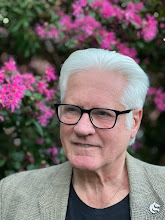
- Russell Blackford
- Australian philosopher, literary critic, legal scholar, and professional writer. Based in Newcastle, NSW. My latest books are THE TYRANNY OF OPINION: CONFORMITY AND THE FUTURE OF LIBERALISM (2019); AT THE DAWN OF A GREAT TRANSITION: THE QUESTION OF RADICAL ENHANCEMENT (2021); and HOW WE BECAME POST-LIBERAL: THE RISE AND FALL OF TOLERATION (2024).
Thursday, January 29, 2009


Crackpot of the day
I think I'll provide examples of amusing crackpots writing to the freedom of religion exercise. Here's a good one.
Do bear in mind that such naive submissions, even if not taken seriously, accumulate to give some impression of current community anxieties. So I encourage the sensible readers of this blog (yes, I mean the sensible ones!) to have their say. It shouldn't be too difficult now that you have until the end of February.
****
Edit: I've now read almost all of the submissions that have been published so far, and I must observe that the standard really isn't high. But a few are worth reading, like this one.
Do bear in mind that such naive submissions, even if not taken seriously, accumulate to give some impression of current community anxieties. So I encourage the sensible readers of this blog (yes, I mean the sensible ones!) to have their say. It shouldn't be too difficult now that you have until the end of February.
****
Edit: I've now read almost all of the submissions that have been published so far, and I must observe that the standard really isn't high. But a few are worth reading, like this one.
Teaching for first semester - "The ethics of global conflict"
I've just accepted some part-time teaching for first semester this year, starting in a month or so. I'll be taking three tutes in a subject called "The ethics of global conflict". It's a very timely issue to be examining in an undergraduate course, so I'm really looking forward to sinking my teeth into this one.
The course description says: "When, if ever, is warfare justified? What about humanitarian intervention? What about violent revolution and terrorism? Why should civilians be protected in conflict? This unit will introduce students to theoretical approaches to the ethics of conflict that will allow them to answer these difficult questions. It will also serve to introduce students to basic ideas in moral and political philosophy. No background in philosophy is required: merely an interest in rational argument applied to global conflict."
In second semester, I'm planning not to take on any teaching, as I want to spend a lot of time overseas. Where life will lead me after that is entirely unknown, so this may be my last stint of teaching for awhile.
The course description says: "When, if ever, is warfare justified? What about humanitarian intervention? What about violent revolution and terrorism? Why should civilians be protected in conflict? This unit will introduce students to theoretical approaches to the ethics of conflict that will allow them to answer these difficult questions. It will also serve to introduce students to basic ideas in moral and political philosophy. No background in philosophy is required: merely an interest in rational argument applied to global conflict."
In second semester, I'm planning not to take on any teaching, as I want to spend a lot of time overseas. Where life will lead me after that is entirely unknown, so this may be my last stint of teaching for awhile.
Submissions to the review re freedom of religion and belief
The submissions going in to this review are now gradually appearing on the site. Without singling any of them out, I suggest you go and browse them. You'll be glad you did because you'll get some laughs - there are some real crackpots.
The deadline for submissions has been extended from 30 January to 28 February, so, fellow Aussies, please do take the time to make a submission now that it's opened up a bit. At the very least, support the idea of freedom of speech, because one outcome of this review could easily be new laws that chill legitimate criticism of religion.
The deadline for submissions has been extended from 30 January to 28 February, so, fellow Aussies, please do take the time to make a submission now that it's opened up a bit. At the very least, support the idea of freedom of speech, because one outcome of this review could easily be new laws that chill legitimate criticism of religion.
Wednesday, January 28, 2009
Russell in the wars
I've been having a problem with my right hand over the last three months, and it hasn't responded much to physiotherapy. After some ultrasound scans the other day, it now turns out to be an early case of Dupuytren's contracture - yet another of those delights that you can develop in middle age (hollow laugh). It's nowhere near as bad as the case illustrated in the Wikipedia article I've linked to, but it'll get worse and I'll eventually need an operation to get it fixed. Just what I needed. Not. But at least it's nice to know it's something diagnosable and sort of fixable.
Monday, January 26, 2009
Bombs away!
Well, apropos of my previous post, I spent the day tinkering with that submission to the Human Rights Consultation ... and have now sent it off. Bombs away! We'll see what it accomplishes, if anything, but it was worth the effort to get so much research done. It won't go to waste.
Meanwhile, for a bit of daily religious nuttiness - go here. In a sense, I can understand this. There's actually a kind of logic to Indonesian Muslim leaders telling their faithful not to practice Hindu chanting. Hinduism is a rival brand.
I merely observe that we sometimes think that religion is all nice and forget that the religions of the world are involved against each other - as well as against reason-guided people, to borrow a phrase from Udo Schuklenk - in a struggle of ideas. Just as long it's only ideas, not swords, guns, and explosives, I'm happy.
Meanwhile, for a bit of daily religious nuttiness - go here. In a sense, I can understand this. There's actually a kind of logic to Indonesian Muslim leaders telling their faithful not to practice Hindu chanting. Hinduism is a rival brand.
I merely observe that we sometimes think that religion is all nice and forget that the religions of the world are involved against each other - as well as against reason-guided people, to borrow a phrase from Udo Schuklenk - in a struggle of ideas. Just as long it's only ideas, not swords, guns, and explosives, I'm happy.
Sunday, January 25, 2009
Submission accomplished
Well, almost. I've completed my submission to the National Human Rights Consultation - all 55,000 words of it. That's the equivalent of a small book written over the past five weeks or whatever it's been (in which time I also wrote a 24,000 word submission to the Australian Human Rights Commission freedom of religion project; to be honest, though, there's considerable overlap between the two documents).
This year will see the publication of Voices of Disbelief, and I'll be doing whatever I can to publicise it (e.g., giving talks everywhere I can, in Australia and overseas, in the second half of the year). I'll also be looking for a publisher for my thesis on human enhancement - which may lead to a lot of rewriting if I find a publisher who'll have faith in me.
Over the next year or two, I also have the ambition of writing a book about freedom of religion, relating it to other fundamental political freedoms, such as freedom of speech, and to liberal principles such as the harm principle. Writing these two lengthy submissions gave me the impetus to do a lot of research on the issues (and to recycle whatever words I could from older publications, in an effort to get it all together quickly). I also think it was important for someone to address the issues at length, and with as much rigour as possible, from the kind of Millian liberal viewpoint that I take, but which is seldom defended explicitly by anyone else in public debate in Australia.
There are many topical issues that potentially fall under the heading of freedom of religion. Should we have religious vilification laws? If so, what should their content be? What rights (and what protections) should apply if private individuals want to use religious law, such as Sharia law, to settle their commercial disputes? Or their marital disputes? Should these practices be regulated or even banned? What do we think of claims by Catholic doctors and pharmacists to exemption from laws of general application relating to, say, carrying out abortions or selling contraceptives?
I know of only two really comprehensive, recent books on the subject - one of which is by two evangelical Christians (Ahdar & Leigh) and the other by a liberal Jew (Martha Nussbaum). As I said, these are good books, full of useful scholarship. The Ahdar and Leigh book contains excellent technical analysis that even someone hostile to their religious viewpoint should look up if they want to deepen their understanding of the legal aspects. But my selection of issues would be a bit different from either of the books I've mentioned ... there's a lot of room for scholarly work by someone who looks at the issues with a more cynical eye.
If any publishers see this post before I'm in a position to put some kind of proposal together, you know where to come.
Meanwhile, my submission to the National Human Rights Consultation will be accomplished when I actually send it off. That might be tomorrow. At the moment I'm just checking through it all, looking out for typos and infelicities. Then it'll be bombs away!
This year will see the publication of Voices of Disbelief, and I'll be doing whatever I can to publicise it (e.g., giving talks everywhere I can, in Australia and overseas, in the second half of the year). I'll also be looking for a publisher for my thesis on human enhancement - which may lead to a lot of rewriting if I find a publisher who'll have faith in me.
Over the next year or two, I also have the ambition of writing a book about freedom of religion, relating it to other fundamental political freedoms, such as freedom of speech, and to liberal principles such as the harm principle. Writing these two lengthy submissions gave me the impetus to do a lot of research on the issues (and to recycle whatever words I could from older publications, in an effort to get it all together quickly). I also think it was important for someone to address the issues at length, and with as much rigour as possible, from the kind of Millian liberal viewpoint that I take, but which is seldom defended explicitly by anyone else in public debate in Australia.
There are many topical issues that potentially fall under the heading of freedom of religion. Should we have religious vilification laws? If so, what should their content be? What rights (and what protections) should apply if private individuals want to use religious law, such as Sharia law, to settle their commercial disputes? Or their marital disputes? Should these practices be regulated or even banned? What do we think of claims by Catholic doctors and pharmacists to exemption from laws of general application relating to, say, carrying out abortions or selling contraceptives?
I know of only two really comprehensive, recent books on the subject - one of which is by two evangelical Christians (Ahdar & Leigh) and the other by a liberal Jew (Martha Nussbaum). As I said, these are good books, full of useful scholarship. The Ahdar and Leigh book contains excellent technical analysis that even someone hostile to their religious viewpoint should look up if they want to deepen their understanding of the legal aspects. But my selection of issues would be a bit different from either of the books I've mentioned ... there's a lot of room for scholarly work by someone who looks at the issues with a more cynical eye.
If any publishers see this post before I'm in a position to put some kind of proposal together, you know where to come.
Meanwhile, my submission to the National Human Rights Consultation will be accomplished when I actually send it off. That might be tomorrow. At the moment I'm just checking through it all, looking out for typos and infelicities. Then it'll be bombs away!
Saturday, January 24, 2009
Anyone for tennis?
I love this time of the year in Melbourne. In the hot summer sunshine, the city becomes a giant carnival as the Australian Open tennis championships capture imaginations, spare time, and TV ratings. For two weeks, every conversation is full of the names of tennis stars, and no one even gets too upset when the local hopefuls get knocked out by the superstars of the men's and women's tours. In fact, everyone seems to be full of joy and goodwill.
Jenny and I managed to get along to a couple of days at the Open this week, in between all the work she is doing and my stint as a guest blogger for George Dvorsky (which was great, by the way ... at least from my point of view). We just bought ground passes, rather than tickets for either of the two big arenas, but that was enough to let us watch some of the most exciting players in the world, including Marat Safin in his second-round match (before he unfortunately encountered Roger Federer in the third round).
It's one thing that I'll miss big-time if (or really, when) we leave Melbourne.
Jenny and I managed to get along to a couple of days at the Open this week, in between all the work she is doing and my stint as a guest blogger for George Dvorsky (which was great, by the way ... at least from my point of view). We just bought ground passes, rather than tickets for either of the two big arenas, but that was enough to let us watch some of the most exciting players in the world, including Marat Safin in his second-round match (before he unfortunately encountered Roger Federer in the third round).
It's one thing that I'll miss big-time if (or really, when) we leave Melbourne.
Friday, January 23, 2009
Deriving "ought" from "is"
I often see it claimed that you can't derive an "ought" from an "is", and I have some sympathy for that view, which is often referred to as "Hume's Law". But I'm reminded by a discussion on Facebook, where I just chipped in, that Hume's point was more subtle.
His complaint seems to be that many philosophers go along piling up "is" statements; then you notice that somewhere along the way they've slipped into "ought" language. But how is that possible? As we'd put it in modern lingo, it seems that no number of statements using the copula "is" can ever (just as a matter of propositional logic) entail a statement with the copula "ought". So it appears that, if these philosophers have arguments that are valid (just as a matter of propositional logic), then they must be relying somewhere on one or more unstated premises that contain "ought". But, I take it Hume is suggesting, such premises are likely to be controversial. Accordingly, we shouldn't be persuaded by the arguments of these other philosophers.
But I think it can be taken a bit further when the famous passage in Hume's Treatise of Human Nature is read in the context of the entire meta-ethical discussion that precedes it. It appears that Hume believes you can derive an "ought" from an "is" in some cases. You can't do it as a matter of propositional logic, but if you understand the meaning of "ought" you can do it as a matter of semantics.
Compare the following:
Premise: Foo is a bachelor.
Conclusion: Foo is male and is not married.
Given the meaning of the word "bachelor", this deduction is perfectly valid. It's a matter of semantics - of meanings - not a matter of using the rules of propositional logic, such as modus ponens, modus tollens, etc.
Hume seems to have a similar idea about how we ground "ought" statements. For Hume, the meaning of "ought" is such that the following (or something like it) is a valid argument:
Premise 1.: Professor Snark has a desire for chocolate.
Premise 2.: Professor Snark believes (or should it be "correctly believes"?) that there is chocolate in the cupboard.
Conclusion: Professor Snark has a reason to go to the cupboard to find the chocolate.
Further conclusion: All other things being equal, Professor Snark ought to go to the cupboard to find the chocolate.
I.e., for Hume to say that somebody "ought" to do something is just to say that they have a reason to do it, or perhaps a reason that actually prevails over any contrary reasons that they might also have.
And we can then look at various kinds of "oughts". Perhaps, for Hume, a moral ought is a reason that is based not just on any old desire but a desire for the welfare or the non-suffering of others, a kind of sympathy for others' pain. Thus, Hume would probably accept something like this as a valid argument.
Premise 1.: Jill Bloggs sympathises with the suffering of Joe Sixpack.
Premise 2.: If Jill Bloggs stops the torturer stretching Joe Sixpack on the rack, Joe Sixpack's suffering will be relieved.
Conclusion: Jill Bloggs has a (moral) reason to stop the torturer stretching Joe Sixpack on the rack.
Further conclusion: Jill Bloggs (morally) ought to stop the torturer stretching Joe Sixpack on the rack.
Obviously, things get a bit more complicated than this. What if Jill doesn't feel any sympathy Joe? We might still want to say that she ought to do what she can to prevent his torture. I think that Hume, at least in his later work, realised that it gets a bit messy, and that the above analysis might be too simple. But he'd still insist that somewhere along the line the various kinds of "oughts" that we recognise will always involve something like a desire and that moral "oughts" will always involve something like sympathy (or desire for another being's non-suffering).
This is all putting the point in modern language, and of course I don't know exactly how Hume would phrase things if he had absorbed modern ways of discussing such issues, but I'm confident that he'd consider the above to be at least a reasonable first approximation of his position. His real point is not to say that "ought" claims are totally ungrounded, but to say that we need to understand the character of "ought" claims and to see how they can't be grounded in just any old "is" ... but must be grounded in certain contingent features of human psychology such as desire and sympathy. He'd insist that morality could never motivate us unless it were grounded in desires (in a broad sense) as well as reason.
Although the theory says that oughts can be grounded, and are not just mysterious, it's importantly a subjectivist theory. Hume doesn't think "ought" claims are altogether ungrounded, but he thinks that they are grounded in the desires and so on that people actually have, so some reference will need to be made to those people and their psychological characteristics. There are no objective "ought" statements in the sense of "ought" statements that are true, totally independently of the psychological characteristics that various human subjects actually have. On the other hand, he thought we were sufficiently similar psychologically to be able to reach agreement on what people (morally) ought to do in various situations. He'd have loved the modern idea that there is an evolved human psychology that underpins our responsiveness to other human beings and our sympathy towards any creature that we can imagine suffering pain.
I happen to think that the views that I've attributed to Hume are more or less correct, but that's not such much my point. My point is more to emphasise that Hume was saying something much richer - more subtle and complex - than just the fact that you can't, as a matter of propositional logic, deduce an "ought" statement from an "is" statement.
But, of course, he realised that too.
His complaint seems to be that many philosophers go along piling up "is" statements; then you notice that somewhere along the way they've slipped into "ought" language. But how is that possible? As we'd put it in modern lingo, it seems that no number of statements using the copula "is" can ever (just as a matter of propositional logic) entail a statement with the copula "ought". So it appears that, if these philosophers have arguments that are valid (just as a matter of propositional logic), then they must be relying somewhere on one or more unstated premises that contain "ought". But, I take it Hume is suggesting, such premises are likely to be controversial. Accordingly, we shouldn't be persuaded by the arguments of these other philosophers.
But I think it can be taken a bit further when the famous passage in Hume's Treatise of Human Nature is read in the context of the entire meta-ethical discussion that precedes it. It appears that Hume believes you can derive an "ought" from an "is" in some cases. You can't do it as a matter of propositional logic, but if you understand the meaning of "ought" you can do it as a matter of semantics.
Compare the following:
Premise: Foo is a bachelor.
Conclusion: Foo is male and is not married.
Given the meaning of the word "bachelor", this deduction is perfectly valid. It's a matter of semantics - of meanings - not a matter of using the rules of propositional logic, such as modus ponens, modus tollens, etc.
Hume seems to have a similar idea about how we ground "ought" statements. For Hume, the meaning of "ought" is such that the following (or something like it) is a valid argument:
Premise 1.: Professor Snark has a desire for chocolate.
Premise 2.: Professor Snark believes (or should it be "correctly believes"?) that there is chocolate in the cupboard.
Conclusion: Professor Snark has a reason to go to the cupboard to find the chocolate.
Further conclusion: All other things being equal, Professor Snark ought to go to the cupboard to find the chocolate.
I.e., for Hume to say that somebody "ought" to do something is just to say that they have a reason to do it, or perhaps a reason that actually prevails over any contrary reasons that they might also have.
And we can then look at various kinds of "oughts". Perhaps, for Hume, a moral ought is a reason that is based not just on any old desire but a desire for the welfare or the non-suffering of others, a kind of sympathy for others' pain. Thus, Hume would probably accept something like this as a valid argument.
Premise 1.: Jill Bloggs sympathises with the suffering of Joe Sixpack.
Premise 2.: If Jill Bloggs stops the torturer stretching Joe Sixpack on the rack, Joe Sixpack's suffering will be relieved.
Conclusion: Jill Bloggs has a (moral) reason to stop the torturer stretching Joe Sixpack on the rack.
Further conclusion: Jill Bloggs (morally) ought to stop the torturer stretching Joe Sixpack on the rack.
Obviously, things get a bit more complicated than this. What if Jill doesn't feel any sympathy Joe? We might still want to say that she ought to do what she can to prevent his torture. I think that Hume, at least in his later work, realised that it gets a bit messy, and that the above analysis might be too simple. But he'd still insist that somewhere along the line the various kinds of "oughts" that we recognise will always involve something like a desire and that moral "oughts" will always involve something like sympathy (or desire for another being's non-suffering).
This is all putting the point in modern language, and of course I don't know exactly how Hume would phrase things if he had absorbed modern ways of discussing such issues, but I'm confident that he'd consider the above to be at least a reasonable first approximation of his position. His real point is not to say that "ought" claims are totally ungrounded, but to say that we need to understand the character of "ought" claims and to see how they can't be grounded in just any old "is" ... but must be grounded in certain contingent features of human psychology such as desire and sympathy. He'd insist that morality could never motivate us unless it were grounded in desires (in a broad sense) as well as reason.
Although the theory says that oughts can be grounded, and are not just mysterious, it's importantly a subjectivist theory. Hume doesn't think "ought" claims are altogether ungrounded, but he thinks that they are grounded in the desires and so on that people actually have, so some reference will need to be made to those people and their psychological characteristics. There are no objective "ought" statements in the sense of "ought" statements that are true, totally independently of the psychological characteristics that various human subjects actually have. On the other hand, he thought we were sufficiently similar psychologically to be able to reach agreement on what people (morally) ought to do in various situations. He'd have loved the modern idea that there is an evolved human psychology that underpins our responsiveness to other human beings and our sympathy towards any creature that we can imagine suffering pain.
I happen to think that the views that I've attributed to Hume are more or less correct, but that's not such much my point. My point is more to emphasise that Hume was saying something much richer - more subtle and complex - than just the fact that you can't, as a matter of propositional logic, deduce an "ought" statement from an "is" statement.
But, of course, he realised that too.
Subscribe to:
Posts (Atom)