(So much for my blog break. Well, it can start tomorrow. I wrote this long comment over on John Wilkins' Evolving Thoughts blog, and thought it was worth being a post in its own right - here it is with tiny alterations. Please comment, as the theory, when expressed like this, is provisional and could do with some kicking around.)
It does seem that traditional cultures have their "eternal verities" - things that seem to be immutably true about fundamental aspects of the human condition. I put the words "eternal verities" in scare quotes because some of these things may not be verities at all, and certainly not eternal ones. And they won't be identical across all cultures. In modern, pluralistic societies, you'll get different verities believed in by different people - some may still be operating with an "eternal verity" that women are intellectually inferior to men, for example, even though this is neither true nor even a universally-shared illusion. Nonetheless, there are various fundamental "verities" that are likely to be widely accepted even within a pluralistic society. Sometimes, philosophers challenge them directly by arguing that they are not true or well-founded. Sometimes science and technology challenge them less directly. Either way, many people are going to be made very uncomfortable. They execute Socrates, try to deny women the vote, ban human cloning, beat homosexuals, get queasy about interracial marriage, etc.
There may be some deeper explanation as to why the world is like this, but in any event I think it probably is like this.
The theory isn't mine by the way; I borrowed it from Richard Norman. It's Norman's theory of background conditions, or my restatement thereof. I wonder whether it's compatible with Gigerenzer's work, with which I'm unfamiliar. Maybe there's a way of putting Norman's theory on a more rigorous basis.
What role does religion play? I'm not sure that I have the full answer, but I think that a culture's religious beliefs and its pet "eternal verities" will co-evolve. As a result, the religion will be heavily invested in the local set of eternal verities. It will have influenced them and been influenced by them. It tends to preserve them and to resist challenges to them, whether from science or from experimental lifestyles, or wherever else. Religious images of the world will be chock full of these eternal verities, whether it's the eternal verity of human exceptionalism, the eternal verity of free will (in a very strong sense), the eternal verity that women should act in such and such a way in relation to men, the eternal verity that sex is nasty and only redeemed by its procreative potential, the eternal verity that we have only three score years and ten, or whatever it is that the locals believe to be an immutable truth about the world and our condition within it.
Any attack on the local eternal verities, even if not actually intended as an attack on religion, is likely to receive strong counter-attacks from religious sources. Moreover, because religion has picked up a whole lot of these traditional fundamental beliefs that made some sort of sense once but are largely not true, it is always likely to imagine the world in a different way from the way it is imagined by the majority of people who are highly scientifically literate and are keeping up with the developing scientific image of the world. (This para and the immediately preceding one are my addition to the theory.)
If we really want to challenge the eternal verities (as they are imagined to be in our place and time), we can expect opposition from at least some - probably many - religionists. If we are serious, we may feel that we have to counterattack our religious opponents head-on, by pointing out that the religion that gives them their mantle of seeming authority is just not true in the first place.
E.g. to defend the morality of homosexuality, it may not be enough to argue that, by some secular principle, it does no harm. It may not be enough to put pressure on religion to reinterpret its doctrines to accept homosexuality. The best way of getting homosexuality socially accepted, and to stop people defending the local eternal verity that "homosexuality is evil", may be for at least some people to stop talking so much homosexuality itself, and about secular moral theories, or new theology ... and to spend more time promulgating scepticism about religion.
If you really want a transvaluation of values, according to which many things once considered virtues in your society (such as chastity and certain kinds of pietistic humility) are now considered vices, and certain things that were once considered sins are now considered good or at least neutral (e.g. homosexual acts; so-called scientific "hubris"), one of the best things you can do is spread scepticism about religion.
Of course, the fundies and the Vatican are already well aware of this last point, but whereas they call spreading scepticism about religion bad, I call it good.
About Me
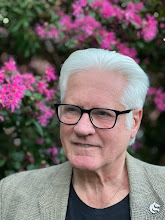
- Russell Blackford
- Australian philosopher, literary critic, legal scholar, and professional writer. Based in Newcastle, NSW. My latest books are THE TYRANNY OF OPINION: CONFORMITY AND THE FUTURE OF LIBERALISM (2019); AT THE DAWN OF A GREAT TRANSITION: THE QUESTION OF RADICAL ENHANCEMENT (2021); and HOW WE BECAME POST-LIBERAL: THE RISE AND FALL OF TOLERATION (2024).
Monday, April 28, 2008


Sunday, April 27, 2008
Blog break!
Time to take a week or so away from writing new posts - though I'll check whether there's any action on the long transhumanism thread a couple of posts below.
I'm not going anywhere; I just need a bit of time out. I've been slogging away very hard for the past two or three months - working double full-time as I've put it to some people - trying to finish my PhD thesis, doing stuff for JET, doing other stuff for Voices of Disbelief, plus my teaching (and a huge load of associated marking), and being at least peripherally involved in various other projects such as the Meteor project which I'll blog about some time. Although I'm keeping my head above water, I need to find a bit of time to relax, pay attention to loved ones, catch up on some reading, actually have some social life, and generally avoid a nervous breakdown.
Thursday, April 24, 2008
Russell signs a contract (more on Voices of Disbelief)
Contract for Voices of Disbelief (working title) now signed and sent back to the publisher. We now officially have a deal here.
Okay, so it's time to start (a) celebrating (though who has time for that?), and (b) doing some more cat-herding. And what a fine cat herd of non-believers we'll have for your delectation come 2009. Those readers who are signed up to contribute ... and I just know you all read this ... do remember to spread the good news. We want to generate some buzz, though it strikes me that this is a bit incongruous when I've just been comparing non-believers to cats.
Okay, so it's time to start (a) celebrating (though who has time for that?), and (b) doing some more cat-herding. And what a fine cat herd of non-believers we'll have for your delectation come 2009. Those readers who are signed up to contribute ... and I just know you all read this ... do remember to spread the good news. We want to generate some buzz, though it strikes me that this is a bit incongruous when I've just been comparing non-believers to cats.
Tuesday, April 22, 2008
Transhumanism still at the crossroads
 In 2004, I wrote a piece called "Transhumanism at the Crossroads", which has been one of my most popular essays. It was originally published as part of my old "Eye of the Storm" irregular column on the Betterhumans site. (And hey, I'm always prepared to revive "Eye of the Storm" if someone would pay me even a token amount to cover some of the time I'd need to do it properly; but it doesn't appear that that will ever happen.)
Nearly four years later, I'm sufficiently distant from this essay that it almost reads as if it was written by someone else, though I suppose I still agree with its main sentiments: I'm prepared to be counted in as part of the transhumanist movement if it is going to be an inclusive social movement, but not if it is going to be something narrow, cultish, and (not to put too fine a point on it) suitable only for techno-libertarian nerds. How transhumanism will develop currently remains to be seen, but for the foreseeable future I'd rather be inside the tent exerting some influence on it, rather than abandoning, rejecting, or disavowing it as some people among its one-time allies have done.
There is still a place for a strong transhumanist movement, if this is going to be a movement that is rational about technology and favourable to technology as long as it used in ways that are beneficial (or at least not harmful). Much of the Luddite opposition to cloning (not to mention something as obvious as stem-cell research) has nothing to do with any secular harms that it may cause, and I favour the emergence of a strong movement that says this loud and clear. It that is what transhumanism is going to become, then count me in. At the same time, I've often applied the phrase "anti-anti-transhumanist" to myself to identify that I am opposed to irrationalist opponents of transhumanism, not to rational and informed criticism of the movement, and to signal that I am not locked into any superlative ambitions that may be associated with transhumanism in people's minds.
Many self-identified transhumanists go much further than I do in what they want. I don't necessarily agree with them on any particular issue, but I do defend their right to advocate their ideas - and more than that, I think it is healthy for these ideas to be brought forward and debated without irrationalist fears or feelings of repugnance distorting the exchanges. I support some transhumanist ideas, but not others ... but above all I aim to do what I can to facilitate rational, rigorous, but lively debate about them. That was the purpose of "Eye of the Storm"; it was meant to be a place for calm philosophical reflection amidst all the raging bioethical (and similar) controversy. It is also how I see my role more generally when talking about transhumanist ideas; I'd rather introduce light than heat, though I'll sometimes be passionate when confronted by what strike as me plainly illiberal or irrational views.
In particular, I believe that it's important to discuss such ideas as personality uploading, advanced AI, the technological Singularity, and so on, and I am prepared to consider them all with a degree of sympathy. Moreover, I have defended advocates of these things against what I consider ill-informed attacks. I've even explored some of these ideas sympathetically, if a bit ambiguously, in works of fiction.
But at the same time, these specific ideas are not among those that I have actively advocated and there are reasons for that.
Okay, here's what I said in 2004, which may or may not still make sense. Feel free to discusss.
============================
TRANSHUMANISM AT THE CROSSROADS
For as long as I can remember, I've been fascinated by prospects for the future of our society and our species. This has kept me actively involved in the science fiction field, which has likely provoked sighs and raised eyebrows from my staider colleagues in academia and legal practice.
Yet this is nothing compared to the social stigma of being involved in the transhumanist movement. Since about 1997, much of my thinking, reflected in my fiction and nonfiction writing, has focused on issues that concern transhumanists: the prospects of artificial intelligence and uploading; the rights and wrongs of reproductive cloning, genetic engineering and radical life extension; and the general merits of human enhancement technologies. My viewpoint has generally been sympathetic to transhumanist approaches and at least one commentator has labeled me a "transhumanist technophile," which is fair enough.
Even so, I have not identified strongly with the organized transhumanist movement. After a brief period of enthusiasm, I declined to apply the label "transhumanist" to myself, and still feel some residual discomfort with it. But I am now more actively associated with transhumanism, especially through this site [i.e. Betterhumans], and my main project at the moment involves research on the social implications of enhancement technologies. With my working life centering around transhumanist issues, the time has come to take stock of where I stand, and of how I view transhumanism. One thing I know for sure is that transhumanism must become a far more inclusive, broadly based and mainstream social movement if it is to flourish.
Transhumanism and its discomforts
One good reason to feel slightly uncomfortable with transhumanism is its unmistakable nerdy aura, the sense that it appeals to a particular demographic, essentially young white males with computers. Its restricted demographic appeal is, indeed, part of the problem.
But the discomfort goes far beyond nerdiness or restricted appeal. It is one thing, I feel, to use science fiction to explore possible changes to human nature, and the prospects for enhanced human capabilities. (In any case, science fiction has often approached those possibilities and prospects with hostility.) It is another thing to use images of enhancement or cyborgification as metaphors for contemporary social reality, or for an agenda of political change. It is something else again, and something far more radical, to propose that we should quite literally upgrade our human biology. For many thoughtful, intelligent people in the professions and the academic world, this is a frightening idea. Now that transhumanism is getting media attention, it is not surprising some conservative commentators (such as Francis Fukuyama) are starting to brand it as dangerous.
To understand this reaction, we need to remember that the wider intellectual culture is still focused on the horrors perpetrated in the first half of the 20th century by those who carried out programs of racist eugenics. I cannot make the point any better than by quoting at some length from Walter Glannon's book Genes and Future People: Philosophical Issues in Human Genetics:
"Eugenics" is almost universally regarded as a dirty word, owing largely to its association with the evil practice of human experimentation in Nazi Germany and the widespread sterilization of certain groups of people in the United States and Canada, earlier in the twentieth century. One cannot help but attribute some eugenic aspects to genethical questions about the number and sort of people who should exist. But there is a broader conception of eugenics (literally "good creation" in Greek) that need not have the repugnant connotation of improving the human species.
Glannon goes on from here to discuss gene therapy, which he considers acceptable in principle because its aim is to prevent or treat disease in particular people. But he is implacably opposed to genetic engineering for the purpose of enhancement.
What strikes me as most remarkable is his unsupported assumption that improving the human species has a "repugnant connotation." It is symptomatic of something important in our intellectual culture that a reputable academic philosopher fails to put forward any argument at all for the supposed repugnance of species enhancement, contenting himself by referring to an "association" with the evil practices of the Nazis, and forced sterilizations in North America. After this point, Glannon's book simply assumes, still with no attempt at argument, that any proposal to improve human capabilities for a "perfectionist" reason is beyond the pale of respectful consideration.
Of course, it is worth reminding ourselves of the danger (not to mention irrationality) of guilt by association. To take the example of the Nazis, what made their practices so evil was their extreme prejudice, cruelty and violence. As Philip Kitcher has said, "The repeated comparison between Jews and vermin and the absurd - but monstrous - warnings about the threats to Nordic 'racial health' display the extent to which prejudice pervaded their division of human characteristics. Minor, by comparison, is the fact that much of their genetics was mistaken." None of this bears the slightest resemblance to what contemporary advocates of genetic enhancement have in mind.
But the point is not that Glannon can be debunked. Of course he can be. It is more important to understand that he is able to write in such a sloppy way because he can take for granted that his audience will start with similar assumptions. The situation may be changing, as more books and articles call for a sympathetic assessment of human enhancement. One straw in the wind is a new book [in 2004] from Nicholas Agar: Liberal Eugenics: In Defence of Human Enhancement. Still, until very recently, even the relatively modest idea of gene therapy has attracted expressions of concern. In this intellectual environment, the goals of transhumanism are ruled out of discussions from the start, except as targets for attack. To associate yourself with them is to be perceived as at best idiosyncratic and naive and at worst the sort of person who would happily consort with Nazi doctors and mad scientists. It is far easier to associate yourself with movements that project the picture of a caring person, dedicated to benevolence and justice.
Stand up and be counted
It would be nice if opponents of transhumanism were open to rational debate. However, I have gradually been learning some important, not terribly palatable lessons. One is this: We have moved beyond the point where liberal arguments about individual freedom and personal choice have much impact. I have argued in many forums that there is little intellectual basis for laws against innovations such as human cloning, which liberals should accept as a legitimate option for those who feel a need or preference for it. It is already too late to argue in that way, at least exclusively, for the cloning debate has demonstrated again and again that transhumanism's main opponents have abandoned traditional liberal ideals. John Stuart Mill's claim that experiments in living are to be welcomed now receives short shrift in public policy. The tone and content of the debate show that we are up against a scarcely disguised wish to impose certain moral ideals as legal norms, and a fear of strange directions that society might take in the future. [My thinking has changed a bit since 2004 in that I now think that the defence of our liberties necessitates an element of head-on confrontation with religion. I have only gradually come to think this.]
While there will be different outcomes in different societies, anti-cloning laws have created the precedent to abandon liberalism in areas of legislative policy relating to bioethics. We can go on complaining about this - and I believe that we should [and I'm still doing so] - but our complaints have a small likelihood of success.
What else can we do? The main thing is simply to stand up and be counted. Transhumanist ideas cannot be suppressed forever, since they appeal to deep-seated urges to improve our own capabilities and those of the people we love or identify with. But the movement can be frustrated for years or decades. The only answer I see is that transhumanism must develop rapidly into a movement of committed people in large numbers, including many articulate, prominent people who are prepared to identify with transhumanism in public. We must grow to the point where it would not merely be illiberal but also irrational for the state to try suppressing activities of which we approve or that we wish to try - whether we are talking about longevity research, technological methods of cognitive enhancement, or anything else that falls into the category of distinctively transhumanist acts.
As John Locke pointed out in his call for religious toleration more than 300 years ago, the state cannot coerce people's beliefs, as opposed to their outward actions. Doubtless, censorship and propaganda can accomplish much, probably far more than Locke realized. But, to adapt a point that Susan Mendus has made in her writings, it is still irrational for the state to buy into this, because popular belief systems get too strong a hold on too many minds. Once the state starts trying to suppress belief systems with wide appeal, it takes on tasks beyond even its vast resources. There is no limit to what might be needed to suppress beliefs, and it is not rational to try.
Mendus herself might confine her point to religious belief, which is sustained by powerful irrational forces. But the same argument applies beyond the area of freedom of religion. It is difficult to believe that the state could ever suppress the entirety of modern science or philosophy, for example, and it would be foolishness to try. As for social movements, the gay rights movement is a good example of one that has mobilized in recent decades and become so strong, visible and mainstream that it would simply be irrational for any Western state to attempt to stigmatize and destroy it. While some conservative governments continue to resist the idea of gay marriage, the actual persecution of people for homosexual practices is now almost unthinkable in Western societies. Now and then, Western governments will indeed take on missions that are completely irrational because they are destructive, never-ending and futile (the War on Drugs in the US is a deplorable example), but they usually know better.
The transhumanist movement now has a competent formal organization, which is increasingly active in pushing its message. It is getting media coverage, and there is the opportunity to gain increasing mainstream social acceptance. That's what we must do. We must go mainstream. We need to create a culture that is visible, proud and energetic. This is one lesson.
Arguing for equality
But this is not the only lesson. Are we sometimes our own worst enemies? It is all very well wanting to stand up for the transhumanist movement, but what will the movement be like in 10 years' time, or 20, or 50? How can I be sure that it will develop in a way that will make it a movement with which I am still pleased to be linked?
If transhumanism is to deserve our support, it must flourish as something that is humane and philosophically plausible. This does not mean that we should abandon any key ideas - at least not yet - but it does mean that we must accept that the availability of transhumanist technologies could have downsides.
I do believe that the overall effects will be positive. Consider, for example, the first great transhumanist technology that our society has embraced: the contraceptive pill, a biomedical innovation that alters bodily functioning in a way that is clearly enhancing rather than therapeutic. The pill's social impact has been far-reaching, and mainly for the better. Few of us would dream of going back to a time when there was no powerful technology available for women to control the fertility of their own bodies.
I expect we will come to feel the same way about technologies that help us increase our lifespan or our cognitive abilities. But the issue of social justice looms larger here than it does with the pill, since there are more obvious competitive advantages. Even if we do not accept a thoroughgoing egalitarian approach to questions of distributive justice - and I don't - we must avoid the exacerbation of existing social divisions that might arise if enhancement technologies became differentially available to the rich and the poor. Likewise we must avoid the alternative scenario of a mollycoddled, superficially "happy" genetic underclass whose ambitions and social contributions would be stunted.
As George Dvorsky argues, benefits are likely to trickle down even if enhancement technologies are initially taken up only by the wealthy. But we need to make sure it turns out that way. I've come to believe that transhumanists should go beyond arguing that enhancement technologies should be widely available. I now think that we should support political reforms to society itself, to make it more an association of equals. I am not planning to give away my own modest wealth, and I am only prepared to give two cheers for egalitarian political theory, but we have to find ways to narrow the gap between the haves and the have-nots.
Of late, I've seen more and more acknowledgments that transhumanism must be inclusive, both for our sake and for the sake of society. Nick Bostrom has recently emphasized that transhumanism must "ensure that enhancement options are made available as widely and as affordably as possible." I would go even further. We should actively promote a more egalitarian society, and a more equal world order.
This might not be a popular message for some people who identify with transhumanism. To date, part of the appeal has been to techno-libertarians who oppose regulating the market. If transhumanism became a more inclusive movement, it might actually alienate some of its current support base: people whose ideas are in many ways of great value. I hope this can be avoided, but we must become an inclusive, mainstream movement even if it leads to more fragmentation between "Left" and "Right" transhumanists. The forging of a humane and socially aware transhumanism is not only intellectually justified, it is necessary for transhumanism to survive and flourish.
Count me in.
Monday, April 21, 2008
Ben Stein's thesis is hardly original
 One thing that no one else seems to have noticed in the current back-and-forth about Expelled is that Ben Stein and the rest of the film's fundamentalist shills are not the first enemies of reason to argue for a connection between Darwin (or modern biological science in general) and Hitler. Anti-science intellectuals have been trying to establish such connections for some time. One of the worst offenders is the anti-science British journalist Bryan Appleyard.
As I discuss over here, Appleyard argues that Hitler was influenced by Eugene Fischer's The Principles of Human Heredity and Race Hygiene and by the work of Ernst Haeckel. Appleyard advances the thesis that Nazism was not a misuse of science but somehow exemplary of it.
It's one thing to suggest that something Hitler got from Fischer or Haeckel influenced his bizarre worldview (along with many other things, including the traditional anti-Semitism that pervaded Christendom for hundreds of years). In taking the line that he does, Appleyard ignores the various kinds of race hatred and xenophobia that have existed through most or all of known history, and which were certainly not a product of the scientific revolution in Europe in the sixteenth and seventeenth centuries, or of the revolution in biology, geology, and other sciences in the nineteenth and twentieth. Nonetheless, Appleyard's fevered thinking - with all the Luddite diatribes it has generated throughout the man's lengthy career in highbrow irrationalism - is coloured by his perception of science in general as somehow tainted by the monstrosity of the Holocaust.
I'm afraid that Bryan Appleyard is not the only one. You can be pretty sure that many intellectuals on the humanities side of things have similar beliefs. Call it trahison des clercs, as I do, but it's there.
Ben Stein and the whole sick crew of Expelled have grabbed on to a thesis that is not original to them, and which will resonate in (parts of) the academy. This thesis has been lying around like an ugly length of wood, just waiting for the fundies to pick it up and use it as a club against science.
A lot more needs to be done to debunk such distortions and misconceptions, which is one reason why I'm particularly pleased to see recent efforts by Richard Dawkins and others to explain the facts.
Sunday, April 20, 2008
How about a 2050 Summit?
With all the current fuss about the 2020 Summit, it's easy to forget how close 2020 actually is. It's only twelve years away, the same number of years as the life of the 1995-2007 John Howard era of government or the 1983-95 Hawke-Keating era. For baby boomers like me who still remember the 1983 election vividly, that's not long.
The 2020 Summit is really looking at stuff that's quite short term, though at least its thinking will go beyond one electoral cycle. This is a good start in imagining the future (and not just the next three or five years) as something that will be different ... yet in ways that we can actually influence. But why not think beyond that?
Admittedly, a point arrives when there's so much contingency that it scarcely helps to speculate, but surely we can think at least a few decades ahead. One bright idea that the 2020 Summit probably won't think of (though maybe it'll surprise me in the morning!) is to follow up, not too long down the track, with a 2050 summit. That would give us all a chance to think in a much more visionary way about Australia's future, not just about what might be done during the forthcoming Rudd era (if Rudd ends up being as resilient a politician as Howard).
How about it?
The 2020 Summit is really looking at stuff that's quite short term, though at least its thinking will go beyond one electoral cycle. This is a good start in imagining the future (and not just the next three or five years) as something that will be different ... yet in ways that we can actually influence. But why not think beyond that?
Admittedly, a point arrives when there's so much contingency that it scarcely helps to speculate, but surely we can think at least a few decades ahead. One bright idea that the 2020 Summit probably won't think of (though maybe it'll surprise me in the morning!) is to follow up, not too long down the track, with a 2050 summit. That would give us all a chance to think in a much more visionary way about Australia's future, not just about what might be done during the forthcoming Rudd era (if Rudd ends up being as resilient a politician as Howard).
How about it?
Blake Stacey sets the record straight
 There's nothing I can really add to this post by Blake over at his Sunclipse blog. It tells, in great detail, who are the real victims of intellectual suppression in the United States and elsewhere - and I'll hint that it's not the supposed martyrs to ID thinking who are portrayed misleadingly in Expelled.
 At least in America, teaching well-corroborated science is more likely to lose you your job or your career or your quiet enjoyment of your home than trying to propose ID-idiocy. People have suffered death threats for no more. And of course, products like Expelled contribute to this poisonous atmosphere. While I'm busy defending the right of its producers to make the travesty that they have, and to express their views, let's remember the folk who have really been expelled, or worse, because of their intellectual honesty and commitment to science. As Blake reminds us, many of them are strong Christians whose faith is reasonable enough to be compatible with the facts of biological evolution.
Let's try to be strategic
I guess this is an impossible demand. It may well be that my allies on particular issues don't actually share my overall worldview, and can't be expected to agree with me on an overall strategy. Nonetheless, whatever any of us are attempting to achieve by way of advancing the cause of freedom and reason, let's at least try to go about it strategically.
That doesn't mean hiding some of what we believe, as with the framing strategy of advancing the credibility of science by hiding any anti-religious views we have when we're talking to the faithful. We shouldn't hide who we are or what we believe. But it does mean identifying what we actually stand for and then defending it in a principled, consistent way.
We are better off doing that than being blown about by every wind of expediency in particular situations that arise day by day. For example, I will defend the freedom of speech of my opponents because part of what I want to do is advance the cause of free speech. I can't do that while making exceptions for people whom I dislike. If I see someone I dislike, or disagree with fundamentally, being denied her freedom of speech, I will defend her. I'm not going to respond to the situation emotionally on the basis of my attitude to her or the views that she wants to express.
This is totally different from a strategy of hiding my own worldview. To hell with that.
My worldview is a naturalistic one. I'd be happier if more people shared it, or at the very least, tempered their supernaturalist beliefs with an element of doubt and self-criticism. For me, defending the life of freedom and reason includes promulgating scepticism about religion (though it goes far beyond that; for example, it includes working out the naturalistic underpinnings of morality).
As previously announced, with my pal Udo Schuklenk, I'm even editing a book designed to promulgate scepticism about religious doctrine, to the extent that I can without having the fame and clout of a Richard Dawkins or Christopher Hitchens: working title, once again, Voices of Disbelief, to be published by Blackwell in 2009.
(The idea for this book was Udo's, incidentally. So while I think of it, I should thank him publicly for coming up with the idea, thinking of me as someone who could help, and getting such a fine publisher on board with us.)
The bottom line is that I yield to no one in my concern to fight againt unreason, rather than appeasing it. But, strategically, it's always going to be better to go about that fight in an intellectually principled way than to judge every day-to-day issue by whether taking a particular stance that day will put you on the side of the "good guys" or the "bad guys". I see the latter happening all too often in the current culture wars, in which knee-jerk atheists often forget their principles and won't give any credit at all to genuinely moderate religious folks, and won't concede that their real enemies - the fundamentalists and theocrats, and the Vatican-based cult of misery - can ever be in the right on any day-to-day issue at all. It doesn't work like that. Sometimes even our enemies will be denied freedom of speech, for example, and when that happens we should defend them.
My plea is that we all try to think like strategists, rather than responding to every issue that arises on the basis that the "bad" guys must be in the wrong every time on every issue. Or that it's fun to gloat when our opponents are in trouble (even though it sometimes is fun to gloat a little). Or that anyone who disagrees with us on anything must be one of the bad guys. It just doesn't work like that.
That doesn't mean hiding some of what we believe, as with the framing strategy of advancing the credibility of science by hiding any anti-religious views we have when we're talking to the faithful. We shouldn't hide who we are or what we believe. But it does mean identifying what we actually stand for and then defending it in a principled, consistent way.
We are better off doing that than being blown about by every wind of expediency in particular situations that arise day by day. For example, I will defend the freedom of speech of my opponents because part of what I want to do is advance the cause of free speech. I can't do that while making exceptions for people whom I dislike. If I see someone I dislike, or disagree with fundamentally, being denied her freedom of speech, I will defend her. I'm not going to respond to the situation emotionally on the basis of my attitude to her or the views that she wants to express.
This is totally different from a strategy of hiding my own worldview. To hell with that.
My worldview is a naturalistic one. I'd be happier if more people shared it, or at the very least, tempered their supernaturalist beliefs with an element of doubt and self-criticism. For me, defending the life of freedom and reason includes promulgating scepticism about religion (though it goes far beyond that; for example, it includes working out the naturalistic underpinnings of morality).
As previously announced, with my pal Udo Schuklenk, I'm even editing a book designed to promulgate scepticism about religious doctrine, to the extent that I can without having the fame and clout of a Richard Dawkins or Christopher Hitchens: working title, once again, Voices of Disbelief, to be published by Blackwell in 2009.
(The idea for this book was Udo's, incidentally. So while I think of it, I should thank him publicly for coming up with the idea, thinking of me as someone who could help, and getting such a fine publisher on board with us.)
The bottom line is that I yield to no one in my concern to fight againt unreason, rather than appeasing it. But, strategically, it's always going to be better to go about that fight in an intellectually principled way than to judge every day-to-day issue by whether taking a particular stance that day will put you on the side of the "good guys" or the "bad guys". I see the latter happening all too often in the current culture wars, in which knee-jerk atheists often forget their principles and won't give any credit at all to genuinely moderate religious folks, and won't concede that their real enemies - the fundamentalists and theocrats, and the Vatican-based cult of misery - can ever be in the right on any day-to-day issue at all. It doesn't work like that. Sometimes even our enemies will be denied freedom of speech, for example, and when that happens we should defend them.
My plea is that we all try to think like strategists, rather than responding to every issue that arises on the basis that the "bad" guys must be in the wrong every time on every issue. Or that it's fun to gloat when our opponents are in trouble (even though it sometimes is fun to gloat a little). Or that anyone who disagrees with us on anything must be one of the bad guys. It just doesn't work like that.
Friday, April 18, 2008
New York Times review of Expelled
 Don't take my word for it that Expelled is a meretricious propaganda piece - after all I haven't even seen it and have to draw inferences about it from what I read (and my own knowledge of its subject matter ... oh, and the trailer on YouTube; don't forget that). Here's a review of Expelled in the New York Times.
Good for their reviewer, Jeanette Catsoulis. She doesn't mince words: "Mixing physical apples and metaphysical oranges at every turn 'Expelled' is an unprincipled propaganda piece that insults believers and nonbelievers alike. In its fudging, eliding and refusal to define terms, the movie proves that the only expulsion here is of reason itself."
Russell has his say on the 2020 Summit
I just did a Drive Time radio interview with ABC Illawarra about the 2020 Summit - an opportunity that came to me out of left field this morning.
They wanted to talk about how I see it all as a science fiction scholar, so, putting that hat on, I talked a bit about how the concept of "the future" that we have is something that's quite new, historically. We now see societies as existing in time with a past - and with a future that will actually be different from the past and present (not just more of the same, or as coming to an end when a god winds up the show one day). I also managed to say a bit about how science fiction imagines futures that we don't want and seek to avert (mentioning Nineteen Eighty-Four and stories of nuclear holocaust), as well as futures that we might aspire to. But it also uses depictions of the future to comment on the present.
Asked about what idea I would like to see discussed at the summit, I said the question of whether we want to be a truly liberal society. Referring to the debates in Australian parliaments over therapeutic cloning, I said that politicians should not be voting on the basis of their religious beliefs but on the basis of individual freedom and people's welfare.
And there was actually quite a bit more.
I have no idea how all this came across in a quick interview ... but overall I guess I felt pretty good about this gig.
They wanted to talk about how I see it all as a science fiction scholar, so, putting that hat on, I talked a bit about how the concept of "the future" that we have is something that's quite new, historically. We now see societies as existing in time with a past - and with a future that will actually be different from the past and present (not just more of the same, or as coming to an end when a god winds up the show one day). I also managed to say a bit about how science fiction imagines futures that we don't want and seek to avert (mentioning Nineteen Eighty-Four and stories of nuclear holocaust), as well as futures that we might aspire to. But it also uses depictions of the future to comment on the present.
Asked about what idea I would like to see discussed at the summit, I said the question of whether we want to be a truly liberal society. Referring to the debates in Australian parliaments over therapeutic cloning, I said that politicians should not be voting on the basis of their religious beliefs but on the basis of individual freedom and people's welfare.
And there was actually quite a bit more.
I have no idea how all this came across in a quick interview ... but overall I guess I felt pretty good about this gig.
Subscribe to:
Posts (Atom)