
About Me
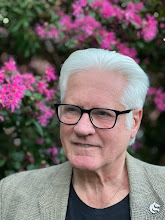
- Russell Blackford
- Australian philosopher, literary critic, legal scholar, and professional writer. Based in Newcastle, NSW. My latest books are THE TYRANNY OF OPINION: CONFORMITY AND THE FUTURE OF LIBERALISM (2019); AT THE DAWN OF A GREAT TRANSITION: THE QUESTION OF RADICAL ENHANCEMENT (2021); and HOW WE BECAME POST-LIBERAL: THE RISE AND FALL OF TOLERATION (2024).
Tuesday, April 01, 2008


Thursday, March 27, 2008
Transhumanism and the future of humanity
I've just taken a slightly radical step - or two steps in one.
I've proposed a paper for the forthcoming Australasian Association of Philosophers (AAP) annual conference in mid-July.
Here's my abstract:
================
Transhumanism and its critics: time to transform the debate
Transhumanism is an intellectual and cultural movement that advocates the use of technology for such purposes as enhancement of human physical and cognitive capacities, alteration of moods or psychological predispositions, and radical extension of the human life span. Typically, the aim is to negotiate a transition from human-level capacities to capacities so much greater as to merit the label "posthuman" for those who possess them. Some transhumanist thinkers make proposals that do not neatly meet this description: e.g., they propose research aimed at "uplifting" the cognitive capacities of non-human mammals to something like the human level.
An agenda such as this raises many questions for philosophical consideration. Some questions relate to the practicality and coherence of transhumanist proposals. For example, can a coherent definition be given of "enhanced", as opposed to merely "altered", capacities? If we were transformed into beings with vastly enhanced (or radically altered) capacities, would this be compatible with the preservation of our existing identities and/or with our survival of the transformation? Other questions relate more to how we should react, individually and collectively, to transhumanist proposals. Are the transformations advocated by transhumanists desirable for us as individual people? Are they socially manageable?
Transhumanists raise issues that are of great intrinsic interest to philosophers. Beyond this, however, transhumanism has become a controversial and increasingly prominent movement that has attracted passionate advocates and equally passionate critics.
I suggest that it's time to transform this debate, adopting a more discriminating approach. It is possible to accept some aspects of the transhumanist agenda (albeit cautiously), while rejecting others. Transhumanist proposals merit scrutiny from viewpoints that are careful and critical, without being merely hostile or dismissive.
============
Beyond this, I've proposed an entire stream of programming to be called Transhumanism and the future of humanity.
Bear in mind that I don't have any clout in the AAP and am not even a member (though I really should join up). I expect my paper to be accepted, since I'm a bona fide philosopher in good standing, etc. I'm not optimistic about my left-field suggestion for an entire new programming stream (which is the really radical proposal).
On the other hand, no one will ever accept such proposals unless they are made. I also encourage other people who have an interest in issues related to transhumanism, and who and might be reading this, to make similar proposals for transhumanism-related streams when they attend conferences where it might be appropriate. It really would be good to transform the debate by getting it into a wider range of forums and attracting a wider range of inputs.
I've proposed a paper for the forthcoming Australasian Association of Philosophers (AAP) annual conference in mid-July.
Here's my abstract:
================
Transhumanism and its critics: time to transform the debate
Transhumanism is an intellectual and cultural movement that advocates the use of technology for such purposes as enhancement of human physical and cognitive capacities, alteration of moods or psychological predispositions, and radical extension of the human life span. Typically, the aim is to negotiate a transition from human-level capacities to capacities so much greater as to merit the label "posthuman" for those who possess them. Some transhumanist thinkers make proposals that do not neatly meet this description: e.g., they propose research aimed at "uplifting" the cognitive capacities of non-human mammals to something like the human level.
An agenda such as this raises many questions for philosophical consideration. Some questions relate to the practicality and coherence of transhumanist proposals. For example, can a coherent definition be given of "enhanced", as opposed to merely "altered", capacities? If we were transformed into beings with vastly enhanced (or radically altered) capacities, would this be compatible with the preservation of our existing identities and/or with our survival of the transformation? Other questions relate more to how we should react, individually and collectively, to transhumanist proposals. Are the transformations advocated by transhumanists desirable for us as individual people? Are they socially manageable?
Transhumanists raise issues that are of great intrinsic interest to philosophers. Beyond this, however, transhumanism has become a controversial and increasingly prominent movement that has attracted passionate advocates and equally passionate critics.
I suggest that it's time to transform this debate, adopting a more discriminating approach. It is possible to accept some aspects of the transhumanist agenda (albeit cautiously), while rejecting others. Transhumanist proposals merit scrutiny from viewpoints that are careful and critical, without being merely hostile or dismissive.
============
Beyond this, I've proposed an entire stream of programming to be called Transhumanism and the future of humanity.
Bear in mind that I don't have any clout in the AAP and am not even a member (though I really should join up). I expect my paper to be accepted, since I'm a bona fide philosopher in good standing, etc. I'm not optimistic about my left-field suggestion for an entire new programming stream (which is the really radical proposal).
On the other hand, no one will ever accept such proposals unless they are made. I also encourage other people who have an interest in issues related to transhumanism, and who and might be reading this, to make similar proposals for transhumanism-related streams when they attend conferences where it might be appropriate. It really would be good to transform the debate by getting it into a wider range of forums and attracting a wider range of inputs.
Wednesday, March 26, 2008
No one has a monopoly on speaking for science - whatever that might mean
In the current debate that has erupted through much of the blogosphere about whether Matt Nisbet was right to tell Richard Dawkins and PZ Myers to shut up and lie low, Nisbet is not getting much support. Still, he's getting some, such as here and here, and I think it's worth taking stock of the fact that no one has a monopoly on speaking for science - if that's a meaningful concept.
Does Dawkins, for example, "speak for science"? No, not if this means acting as a mouthpiece or advocate for the profession of science. He's never claimed to do anything remotely like that. He does, of course, attempt to communicate science to the general public, something he's well suited for and which falls naturally within his duties at Oxford, where his professorial chair relates to "The Public Understanding of Science". I'm sure, however, that he would not dream of claiming that his understanding of the larger implications of science is the only one possible, to the exclusion of that of, say, Francisco Ayala's.
That said, the Nisbets of the world need to understand a crucial fact. Some of us really do think that it's important to undermine the intellectual and moral authority that religion claims (in just about every society, though with diminishing success in some). I'm one of those people. We've come to the conclusion that religion is false, and this is largely because of the conflict between its claims and the well-corroborated scientific image of the world (this very real conflict has been a leading theme in Western culture for quite a while now, as some participants in the current debate have acknowledged).
We have also come to the conclusion that the moral authority and political influence that religion continues to wield in so many societies are dangerous. They lead people to take the wrong stances - and often cruel stances - on a whole range of moral and political issues.
We will keep seeing depressing stories like this every day, until such a time as the political influence of religion recedes.
Let's be clear. People like Dawkins and Myers (and like Udo Schuklenk and me, and many of the people who are reading this post) quite specifically do wish to cast doubt on religion in order to undermine its influence and perceived authority.
That being the case, what better way to do so than to point out the aforementioned conflict between religious worldviews and the worldview arising from the well-established findings of science, backed by mountains of evidence? For many of us, after all, this was a gigantic component in how we came to doubt religion in the first place, and we think the anti-religious arguments are strong. Maybe we're mistaken about this, but that requires a rational philosophical argument, not some communications "expert" telling two of the most prominent advocates of our viewpoint to lie low.
I think there's a sense in which people like Dawkins are, indeed, acting as spokespersons for the scientific worldview or scientific image of the world, in the much same way that some of their opponents act as spokespersons for various religious worldviews even if they don't (as many obviously do) represent a specific church or other such organisation. So, there's a sense in which they do represent the cause of science - if science is viewed as an abstract idea roughly equivalent to "systematic rational inquiry". But I repeat that it does not make Dawkins, etc., spokespersons for the scientific profession, within which many attitudes to religion can be found.
Most importantly, Dawkins and others like him are part of the party of reason: part of the large group of people who want society's direction to be determined more by outcomes from rational thought and inquiry, and less by the influence of religious and moral tradition. Dawkins, in particular, has empowered those of us who belong to this party to speak up and voice our beliefs - and our disbelief in Abrahamic monotheism and other forms of religion - in public.
I'm proud to belong to this group of people - depite, of course, being far less prominent than Dawkins or even Myers.
Nisbet has a different aim. He sees various demographics within the US population that might resist science. These include one or more religious demographics. So he wants to tailor a message to the religious demographic(s), which he takes for granted as part of the cultural landscape. He does not have an agenda of representing reason, or the scientific worldview, in the manner of Dawkins, but of speaking for "science" in some other sense (I can never quite work out what he has in mind by "science", whether it's the organised profession of scientists or what, but I suppose the idea is clear enough for practical purposes). His aim is to make science more popular with the American public as it is, and not to try to transform that bible-loving public's view of the world. His aim necessarily involves using PR spin in a such a way as to minimise or gloss over, or avoid mentioning, the conflict that really does exist between the worldviews of science and religion.
If Nisbet is to pursue this strategy in the short term, with whatever short term benefits it might have, he really has no choice but to wish that people like Dawkins and Myers would shut up. It was pretty rude of him to actually say it, but of course he must think it.
If you take the Nisbet approach, you will necessarily find yourself constantly opposing the work of people like Dawkins, who really are engaged in a social struggle against the authority of religion ... fought from an intellectual position based in the worldview of science. To try to achieve his shorter-term PR goals, Nisbet is inevitably at loggerheads with what I referred to as the party of reason.
Now, if you don't actually care about the authority of religion, I suppose you should side with Nisbet on the issue of how science should be communicated and what should be said about the tension, or conflict, between science and religion. Even if you're in Nisbet's camp, though, you have to realise that what Dawkins and others are doing is a perfectly legitimate activity in a free society. Telling them to shut up and lie low (and, in effect, to abandon their larger aims) because their message doesn't suit your own agenda is, to say the least, pretty damn rude.
Does Dawkins, for example, "speak for science"? No, not if this means acting as a mouthpiece or advocate for the profession of science. He's never claimed to do anything remotely like that. He does, of course, attempt to communicate science to the general public, something he's well suited for and which falls naturally within his duties at Oxford, where his professorial chair relates to "The Public Understanding of Science". I'm sure, however, that he would not dream of claiming that his understanding of the larger implications of science is the only one possible, to the exclusion of that of, say, Francisco Ayala's.
That said, the Nisbets of the world need to understand a crucial fact. Some of us really do think that it's important to undermine the intellectual and moral authority that religion claims (in just about every society, though with diminishing success in some). I'm one of those people. We've come to the conclusion that religion is false, and this is largely because of the conflict between its claims and the well-corroborated scientific image of the world (this very real conflict has been a leading theme in Western culture for quite a while now, as some participants in the current debate have acknowledged).
We have also come to the conclusion that the moral authority and political influence that religion continues to wield in so many societies are dangerous. They lead people to take the wrong stances - and often cruel stances - on a whole range of moral and political issues.
We will keep seeing depressing stories like this every day, until such a time as the political influence of religion recedes.
Let's be clear. People like Dawkins and Myers (and like Udo Schuklenk and me, and many of the people who are reading this post) quite specifically do wish to cast doubt on religion in order to undermine its influence and perceived authority.
That being the case, what better way to do so than to point out the aforementioned conflict between religious worldviews and the worldview arising from the well-established findings of science, backed by mountains of evidence? For many of us, after all, this was a gigantic component in how we came to doubt religion in the first place, and we think the anti-religious arguments are strong. Maybe we're mistaken about this, but that requires a rational philosophical argument, not some communications "expert" telling two of the most prominent advocates of our viewpoint to lie low.
I think there's a sense in which people like Dawkins are, indeed, acting as spokespersons for the scientific worldview or scientific image of the world, in the much same way that some of their opponents act as spokespersons for various religious worldviews even if they don't (as many obviously do) represent a specific church or other such organisation. So, there's a sense in which they do represent the cause of science - if science is viewed as an abstract idea roughly equivalent to "systematic rational inquiry". But I repeat that it does not make Dawkins, etc., spokespersons for the scientific profession, within which many attitudes to religion can be found.
Most importantly, Dawkins and others like him are part of the party of reason: part of the large group of people who want society's direction to be determined more by outcomes from rational thought and inquiry, and less by the influence of religious and moral tradition. Dawkins, in particular, has empowered those of us who belong to this party to speak up and voice our beliefs - and our disbelief in Abrahamic monotheism and other forms of religion - in public.
I'm proud to belong to this group of people - depite, of course, being far less prominent than Dawkins or even Myers.
Nisbet has a different aim. He sees various demographics within the US population that might resist science. These include one or more religious demographics. So he wants to tailor a message to the religious demographic(s), which he takes for granted as part of the cultural landscape. He does not have an agenda of representing reason, or the scientific worldview, in the manner of Dawkins, but of speaking for "science" in some other sense (I can never quite work out what he has in mind by "science", whether it's the organised profession of scientists or what, but I suppose the idea is clear enough for practical purposes). His aim is to make science more popular with the American public as it is, and not to try to transform that bible-loving public's view of the world. His aim necessarily involves using PR spin in a such a way as to minimise or gloss over, or avoid mentioning, the conflict that really does exist between the worldviews of science and religion.
If Nisbet is to pursue this strategy in the short term, with whatever short term benefits it might have, he really has no choice but to wish that people like Dawkins and Myers would shut up. It was pretty rude of him to actually say it, but of course he must think it.
If you take the Nisbet approach, you will necessarily find yourself constantly opposing the work of people like Dawkins, who really are engaged in a social struggle against the authority of religion ... fought from an intellectual position based in the worldview of science. To try to achieve his shorter-term PR goals, Nisbet is inevitably at loggerheads with what I referred to as the party of reason.
Now, if you don't actually care about the authority of religion, I suppose you should side with Nisbet on the issue of how science should be communicated and what should be said about the tension, or conflict, between science and religion. Even if you're in Nisbet's camp, though, you have to realise that what Dawkins and others are doing is a perfectly legitimate activity in a free society. Telling them to shut up and lie low (and, in effect, to abandon their larger aims) because their message doesn't suit your own agenda is, to say the least, pretty damn rude.
Tuesday, March 25, 2008
Test Your Techno Tolerance
I didn't like the phrasing of all the questions, but an interesting quiz. My result was predictable. If you do the quiz, you'll see that over 70 per cent of people who take it get the same result, but it's obviously a self-selecting group.
====
You Score as a Transhumanist-Biotech
 Transhumanists believe that humanity can and should strive to attain higher levels of physical, mental, and social achievement through the use of technology. They seek to extend human capabilities and improve the human condition through technology- supporting the quest for immortality, the conquering of death and disease, the amplification of human intelligence, and the capabilities of the human body.
Transhumanists recognize that over time and with technological advancements, man will realize new possibilities for society and human nature and achieve a posthuman condition (becoming more than human). Societal change is an important consequence of technological progress.
Because of this passionate trust in technological advancement, transhumanists generally see all technologies, as long as they don't jeopardize the non-corporeal consciousness of a person, as being beneficial both to society and to the happiness and advancement of the person. Transhumanists see benefit not only in technologies that address medical necessities, but also aesthetic or recreational demands. They support advances in cybernetics, genetic engineering in clinical settings, embryo design, and other technologies that allow individuals to take control of their biology, and the human species to take control of evolution.
Transhumanists can be either hard-technology oriented--more inclined to add microchips and machines to their lifestyle--or bio-technology oriented--preferring the softer, more natural advancements and modifications that are made available.
====
You Score as a Transhumanist-Biotech
 Transhumanists believe that humanity can and should strive to attain higher levels of physical, mental, and social achievement through the use of technology. They seek to extend human capabilities and improve the human condition through technology- supporting the quest for immortality, the conquering of death and disease, the amplification of human intelligence, and the capabilities of the human body.
Transhumanists recognize that over time and with technological advancements, man will realize new possibilities for society and human nature and achieve a posthuman condition (becoming more than human). Societal change is an important consequence of technological progress.
Because of this passionate trust in technological advancement, transhumanists generally see all technologies, as long as they don't jeopardize the non-corporeal consciousness of a person, as being beneficial both to society and to the happiness and advancement of the person. Transhumanists see benefit not only in technologies that address medical necessities, but also aesthetic or recreational demands. They support advances in cybernetics, genetic engineering in clinical settings, embryo design, and other technologies that allow individuals to take control of their biology, and the human species to take control of evolution.
Transhumanists can be either hard-technology oriented--more inclined to add microchips and machines to their lifestyle--or bio-technology oriented--preferring the softer, more natural advancements and modifications that are made available.
Monday, March 24, 2008
More science and religion kerfuffle - Nisbet tells Dawkins and Myers to shut up
Matthew Nisbet, who is supposed to be some kind of guru on communicating science to the public, has more or less told Richard Dawkins and PZ Myers to shut up and let others do the job. Apparently, Dawkins and Myers are so compromised that their efforts at communicating and defending science are now counterproductive. Accordingly, per the esteemed Professor Nisbet, they ought to "lay [sic] low".
How, you ask, did Dawkins and Myers become so compromised? Why ... because of their known anti-religious views of, course. If science is communicated by people known to have such views then the good, plain folk of the USA's Bible-rich heartland will pass by the other way, like rats following a piper or horny priests on the trail of a juicy altar boy. Better to leave the defence of science to official organisations ... or to nice Catholic scientists like Francisco J. Ayala.
For some time now, I've been following Nisbet's running program of blatant self-promotion over at ScienceBlogs, and I've finally decided that he's not just a nuisance who doesn't "get" it. I've made up my mind that he's a genuine opponent of the party of reason. Sure, he may wish to popularise his concept of science. But his view is something like: "Religion is here to stay, so to popularise science we have tosanitise er adjust er frame it to make it palatable to the religionists."
This might have some short-term benefits, I suppose, though I can see many problems with it. In any event, it is not the way to popularise a rational view of the world.
Look, I accept that religion in some form may turn out to be here to stay. Not necessarily, though: that has certainly not been the experience in a lot of Western and Asian countries (Norway, Japan, etc., and even the UK, Australia, and New Zealand to an extent). And even if we're always going to be stuck with religion of some kind, deep into the indefinite future, religious claims can be put under pressure, and perhaps they will mutate into something more benign (like Unitarian Universalism or the nicer strains of Anglicanism). What's more, as religion gets put under pressure it will lose something of its lustre of authority in the minds of all those busy people whose belief is half-hearted, not to mention all those who are not really religious but still believe in belief.
Here's how I see it. Not all religion is simply evil. I'll mention yet again that I am fond of the Anglican Church, at least its more enlightened and less evangelical strains, and am mildly touched that unbelievers like me are still welcome in its halls. (Note to self: I must go to a nice High Church cathedral service, with incense and all, some time soon. I haven't done that for ages.) Certain kinds of Hinduism and Buddhism don't bug me. In fact, I get along with genuine moderates from any religious tradition. Some of them even read this blog, and they're very welcome. Some of them are people whom I count as friends.
Nonetheless, for all of that, the various religions are - more often than not I'm afraid to say - cults of misery that need to be opposed. They merit our opposition not just because they are false, but because their moral teachings and political influence are pernicious. At the same time, there is, to put it very mildly, a tension between any full-blooded, supernaturalist religious belief and the austere-yet-beautiful worldview arising from science. In particular, it is very difficult to reconcile the scientific image of the world with the image of a loving, providential (and all-powerful, all-knowing) God presiding over it. Anyone prepared to try the needed intellectual gymnastics and contortions is welcome to it, but I gave up many years ago.
I submit that those of us who form the party of reason should be saying this loudly, clearly, and persistently. If someone keeps telling us to shut up, I am no longer going to consider him a friend of the party of reason who just doesn't "get" a few things. I'm going to see him as an opponent, as an enemy of reason itself.
How, you ask, did Dawkins and Myers become so compromised? Why ... because of their known anti-religious views of, course. If science is communicated by people known to have such views then the good, plain folk of the USA's Bible-rich heartland will pass by the other way, like rats following a piper or horny priests on the trail of a juicy altar boy. Better to leave the defence of science to official organisations ... or to nice Catholic scientists like Francisco J. Ayala.
For some time now, I've been following Nisbet's running program of blatant self-promotion over at ScienceBlogs, and I've finally decided that he's not just a nuisance who doesn't "get" it. I've made up my mind that he's a genuine opponent of the party of reason. Sure, he may wish to popularise his concept of science. But his view is something like: "Religion is here to stay, so to popularise science we have to
This might have some short-term benefits, I suppose, though I can see many problems with it. In any event, it is not the way to popularise a rational view of the world.
Look, I accept that religion in some form may turn out to be here to stay. Not necessarily, though: that has certainly not been the experience in a lot of Western and Asian countries (Norway, Japan, etc., and even the UK, Australia, and New Zealand to an extent). And even if we're always going to be stuck with religion of some kind, deep into the indefinite future, religious claims can be put under pressure, and perhaps they will mutate into something more benign (like Unitarian Universalism or the nicer strains of Anglicanism). What's more, as religion gets put under pressure it will lose something of its lustre of authority in the minds of all those busy people whose belief is half-hearted, not to mention all those who are not really religious but still believe in belief.
Here's how I see it. Not all religion is simply evil. I'll mention yet again that I am fond of the Anglican Church, at least its more enlightened and less evangelical strains, and am mildly touched that unbelievers like me are still welcome in its halls. (Note to self: I must go to a nice High Church cathedral service, with incense and all, some time soon. I haven't done that for ages.) Certain kinds of Hinduism and Buddhism don't bug me. In fact, I get along with genuine moderates from any religious tradition. Some of them even read this blog, and they're very welcome. Some of them are people whom I count as friends.
Nonetheless, for all of that, the various religions are - more often than not I'm afraid to say - cults of misery that need to be opposed. They merit our opposition not just because they are false, but because their moral teachings and political influence are pernicious. At the same time, there is, to put it very mildly, a tension between any full-blooded, supernaturalist religious belief and the austere-yet-beautiful worldview arising from science. In particular, it is very difficult to reconcile the scientific image of the world with the image of a loving, providential (and all-powerful, all-knowing) God presiding over it. Anyone prepared to try the needed intellectual gymnastics and contortions is welcome to it, but I gave up many years ago.
I submit that those of us who form the party of reason should be saying this loudly, clearly, and persistently. If someone keeps telling us to shut up, I am no longer going to consider him a friend of the party of reason who just doesn't "get" a few things. I'm going to see him as an opponent, as an enemy of reason itself.
Evolved and Rational blog
I just had the Evolved and Rational blog plugged to me. Yeah, have a look. This is good stuff:
http://www.evolvedrational.com/
http://www.evolvedrational.com/
Dawkins reviews Expelled
Richard Dawkins now has a superb review of Expelled over on his site - which, unfortunately, seems to have been overloaded with traffic all morning.
The best part of the review, when you can actually read it, is his cogent response to one of the main points that Expelled evidently tries to make in a ham-fisted way: that Darwinian evolutionary theory leads to Nazism. Dawkins says it better than I can, but his point is something like this. Yes, Hitler may have been influenced by some garbled version of Darwinian theory, to which he added a good dose of Humean fallacy, thus producing one ingredient in the racist, totalitarian witches' brew of Nazi ideology. That by no means entails that Darwinian theory leads to Nazism. It also has nothing to do with whether the essentials of Darwinian evolutionary theory are actually true. (And while it likewise doesn't disprove the truth of Christianity, Hitler is likely to have been influenced at least as much by the long history of anti-Semitism in Germany, founded on Christian hostility to the Jews.)
The best part of the review, when you can actually read it, is his cogent response to one of the main points that Expelled evidently tries to make in a ham-fisted way: that Darwinian evolutionary theory leads to Nazism. Dawkins says it better than I can, but his point is something like this. Yes, Hitler may have been influenced by some garbled version of Darwinian theory, to which he added a good dose of Humean fallacy, thus producing one ingredient in the racist, totalitarian witches' brew of Nazi ideology. That by no means entails that Darwinian theory leads to Nazism. It also has nothing to do with whether the essentials of Darwinian evolutionary theory are actually true. (And while it likewise doesn't disprove the truth of Christianity, Hitler is likely to have been influenced at least as much by the long history of anti-Semitism in Germany, founded on Christian hostility to the Jews.)
Saturday, March 22, 2008
Myers expelled from Expelled
For all I know, Ben Stein may be Apollo's gift to the professions of acting and gameshow hosting, and to some of the other odd activities that have come his way from time to time in a long career that's more varied than the Galapagos finches.
Until very recently, Stein wasn't even on my radar, any more than I'm on his, but he's now involved as the starring talent in a project to popularise the idea of Intelligent Design, or ID. For anyone born just this morning, Intelligent Design is the claim that life, in its diversity, cannot be the outcome of biological evolution by natural selection (and other mechanisms that are taken seriously by legitimate working biologists). To publicise his case, Stein has become a leading perpetrator of Expelled, a documentary-style movie in defence of ID (calling Expelled "a documentary" may give the wrong impression of what's involved).
From all accounts, the movie alleges that the ... ahem ... bold conjecture of Intelligent Design has been kept out of academia by what is apparently spun as some kind of anti-Christian conspiracy. Individuals who have advocated ID are portrayed as victims of prejudice and injustice. Their academic freedom has been suppressed, or so we're meant to believe.
Whatever the precise content of Expelled, Intelligent Design itself is not, by any stretch of the imagination, genuine science. At best, it's the tattered remnant of what may have been genuine science back in the 19th century. You could dignify it, I suppose, by calling it a philosophical conjecture based on (supposed) inadequacies in evolutionary theory.
More than that, though, ID is a moderately sophisticated attempt to repackage Creationism and get it taught in schools.
However you define it, ID involves no actual program of scientific investigation, no testable hypotheses, nothing that could possibly lead to an integrated body of theory. The method is to raise as much doubt as possible about the credentials of evolutionary theory, usually by intellectually spurious means; the motivation is clearly religious. Proponents of Intelligent Design want to undermine genuine biological science in order to boost the credibility of that old time religion: they want to defend theistic explanations of the origin and diversity of life, and the presence of human beings on Earth.
I hope it goes without saying that evolutionary theory is not a "theory" in the colloquial sense of "hypothesis" or "conjecture". Rather, it's a well-corroborated system of theoretical knowledge - so well-corroborated, in fact, that its basic picture of the development of life over hundreds of millions of years is as indubitable as the heliocentric picture of the Solar System. The entirety of modern biological science is thoroughly permeated by evolutionary theory and would collapse without it.
Expelled opens to the public in the US on 18 April 2008, and I suppose it will be screening here in Australia some time not too long after that. We'll then be able to see the exact message. Meanwhile, we already know that it's an emotive propaganda piece in support of Intelligent Design.
One annoying aspect is that the moviemakers interviewed a high-profile biologist, PZ Myers, under false pretenses ... giving him no idea that he was being set up or how the footage would be used. They also interviewed an even higher-profile biologist, Richard Dawkins, under similar false pretenses. Myers has a formidable presence on the internet, but of course Dawkins' fame goes far, far beyond that: he has made major contributions to evolutionary theory - such as his development of the "extended phenotype" concept - as well as being the most notorious atheist in the English-speaking world. He's a best-selling author and something of a multi-media star. Dawkins' name immediately evokes certain ideas: memes; the selfish gene; the God delusion.
Well, you might say, so Myers and Dawkins were set up ... so what? Isn't this sort of tactic used by moviemakers all the time in order to get people to drop their guard? It may be shifty, but the outcome can be funny or revealing - or both. Where, you might ask, would "Borat" (Sacha Baron Cohen) and his collaborators be if they had to be honest with their various satirical targets? They waltz around with their cameras, giving out misinformation about what kind of thing they're really filming, and misleading the hapless folks on camera about how their footage will be used - usually to make the victims appear mean or foolish.
Very well. I won't get into whether that's a fair comparison.
But the whole sorry Expelled saga took an extra plot twist this week, with the ID-ists (or IDiots as they are sometimes known) shooting themselves in the feet with every available barrel - think of them carrying one of those Vietnam-era mini-guns used to great effect by Arnold Schwarzenegger's character in Terminator 2. With all barrels firmly pointed at the ground. Sorry, I mean at their vulnerable toes.
Expelled has been pre-screened on various occasions in the US, including a showing a day or two ago in Minneapolis. PZ Myers and his family went along this time, together with a few other folks, including an overseas academic. No tickets were required, but Myers had arranged for enough seats for his godless crew. On his "Pharyngula" blog, he tells the story of what happened next.
As he tells it, a policeman, or perhaps a security guard, pulled Myers out of the line with the explanation that he was not allowed in the theatre. The cop/guard said that one of the movie's producers had given specific instructions that Myers must not enter. He also told Myers that he (i.e., Myers) would be arrested if he attempted to get into the screening.
Myers continues: "I went back to my family and talked with them for a while, and then the officer came back with a theater manager, and I was told that not only wasn't I allowed in, but I had to leave the premises immediately. Like right that instant."
Wisely, Myers complied - rather than making some kind of disturbance or trying to act like a martyr.
Once expelled from the screening of Expelled, he immediately blogged about it.
There is of course a degree of irony, even hypocrisy, about the Expelled folks' expelling Myers from a screening of Expelled. It's all the nastier when you think that this is a movie in which he actually appears, and with which he cooperated. The greater irony, however, is that his family and guest were allowed in ... the overseas academic being, of course, none other than Richard Dawkins!
Dawkins is in the US on a promotional lecture tour, and was attending a conference of atheists in Minneapolis.
Dawkins and Myers discuss the incident over here, with Dawkins offering his (low) opinion of the movie. Meanwhile, Myers' daughter, Skatje, reviews Expelled here.
Enjoy all this, folks, but take it seriously at the same time. It's clear enough that there are people in the US (and elsewhere) who will never give up their bitter rearguard resistance to the main findings of modern biological science. These folks are intensely motivated, well-resourced, and supported by a huge proportion of the American public.
Those of who us who are committed to the cause of reason can have a laugh about this, but we mustn't just sit on the sidelines laughing. The ongoing struggle against evolutionary science has had its political successes, and it comes complete with a superficially attractive message: that both sides of the "controversy" should be taught. Forget for a moment that there is no scientific controversy, any more than there is scientific controversy about the heliocentric structure of the Solar System, the claim that certain micro-organisms cause disease, or the basic ideas of any other field of contemporary science.
Of course, there are genuine controversies at the cutting edge of evolutionary biology, as in all scientific disciplines, but they have nothing to do with the non-scientific conjecture of Intelligent Design.
This is not a struggle that any legitimate scientist, or any other rational person, ever asked for, but we are now involved in it whether we wanted to be or not. It may not always be clear what you and I can do as individuals when confronted by something like Expelled and the publicity machine that will now drive it. All the same, I do ask my readers reflect on it, and that you take a step or two to defend genuine science in whatever way you can.
Wednesday, March 19, 2008
Death of Arthur C. Clarke
I woke up this morning to be confronted by news of the death of Arthur C. Clarke, aged 90. While this was not totally unexpected, given Clarke's age and his poor state of health in recent times, it's still saddening. More later, perhaps.
Sunday, March 16, 2008
I won't be Docktor Doktor, after all!
Thanks to Damien Broderick for sending me this link to a Washington Post story.
It seems that Germany has an obscure 1930s law that, with limited exemptions, prevents anyone using the title "Dr" unless they hold their doctorate or medical degree from a German university. Actually, the law was extended in 2001 to give the privilege to people with relevant degrees from other universities in the European Union. But if you are an academic from, say, the US or Australia, and you're working in Germany you will generally have to call yourself something like "Prof. Ian Thomas Baldwin, PhD, Cornell University". If you call yourself "Dr Baldwin", you will have committed a criminal offence. They take "title abuse" pretty seriously in the status-conscious land of the autobahn.
Well, here I am: almost through a second PhD for my mysterious reasons that I always find difficult to explain to people succinctly. I thought that one of the perks was that I could really revel in it next time I visit Germany, but obviously I was wrong.
It seems that Germany has an obscure 1930s law that, with limited exemptions, prevents anyone using the title "Dr" unless they hold their doctorate or medical degree from a German university. Actually, the law was extended in 2001 to give the privilege to people with relevant degrees from other universities in the European Union. But if you are an academic from, say, the US or Australia, and you're working in Germany you will generally have to call yourself something like "Prof. Ian Thomas Baldwin, PhD, Cornell University". If you call yourself "Dr Baldwin", you will have committed a criminal offence. They take "title abuse" pretty seriously in the status-conscious land of the autobahn.
Well, here I am: almost through a second PhD for my mysterious reasons that I always find difficult to explain to people succinctly. I thought that one of the perks was that I could really revel in it next time I visit Germany, but obviously I was wrong.
Subscribe to:
Posts (Atom)