Further to last night's post, I should add that Asad and Mahmood do not seem to be suggesting that the considerations they raise provide a basis for censorship of blasphemous speech, including images such as the Danish cartoons. They seem more concerned to foster understanding of the Muslim point of view, and perhaps to create a more sympathetic response from non-Muslims in Western societies. Nonetheless, it is worth considering whether the issues they discuss should affect the policies of the secular state. In that respect, there's is a clear danger if the state acts on the basis of Asad's description of Muslim attitudes. What I call the Lockean model for relations between religion and state power does not propose that the various religions cease teaching their ideas, and arguing for them, merely that they cease jockeying for state power to impose doctrines and practices by fire and sword. This is completely inconsistent with a model that forbids one religion from "seducing" the adherents of another, or forbids opponents of religion from "seducing" the minds of religious believers generally.
Locke, of course, adduced secular reasons for prohibiting certain viewpoints, including those of Roman Catholicism, Islam, and atheism, but his reasons now appear weak. It is possible for conflicting viewpoints to co-exist in the one society, and pressing social problems don't usually arise from the presence of individuals with supposed extraterritorial loyalties, such as Catholics' loyalty to the Vatican or the Holy See (I say "usually" because there may be problems in some cases, as when crimes in one jurisdiction ar abetted in another). Nor, contrary to Locke's fears, does the presence of atheists destroy social bonds, or the efficacy of contracts and the judicial system. The tendency has been to allow a wide range of viewpoints and not to silence them - they may compete in a marketplace of ideas.
While some Muslims may find this alien to their tradition, much the same could have been said of Christians not that long ago. It seems reasonable to hope that Islam can adapt to a social environment in which it is open to criticism, and in which it is relatively routine for individual citizens to change religious faiths or lose religious faith altogether.
What about Mahmood's suggestion that Muslims experience attacks on the Prophet in a uniquely painful and personal way? Again, note the dangers if this is pressed too far. I have no way of assessing the accuracy of Mahmood's claim, though it seems plausible that pious religious adherents would feel something of the pain she describes when attacks are made on iconic figures. Perhaps this is especially so where the religious adherent is Muslim and the figure concerned is Muhammad, but it is easy enough to imagine the pain that might be suffered by pious Jews or Christians in analogous circumstances (ridicule of Moses, perhaps, or of Jesus or the Virgin Mary).
An explanation such as Mahmood's may help non-Muslims to understand what is at stake, emotionally, when satirical attacks are made on Islam, and especially on the person Prophet. Perhaps something similar explains the passionate responses of others, such as devout Catholics, to what they see as sacrileges (e.g. Andres Serrano's photograph, Piss Christ, which portrays a small crucifix submerged in the photographer's urine). All this is consistent with the militancy and litigiousness of some Catholic organizations.
Perhaps, then, we need to absorb the lesson that certain images, and perhaps mere words in come cases, can have a very high emotional impact not only for Muslims but also for adherents of other religions. That hardly excuses violent retaliation, such as occurred in following publication of the Danish cartoons, but high-impact offence can play a limited role in public policy. If it's correct that high-impact offence shades into harm, then the state has a legitimate role in protecting citizens from exposure to images and smells (for example) that produce, say, physical nausea. However, there's a catch here. There would be very few situations where exposure of others to nauseating smells has any communicative value. The situation is rather different with movies, artistic photographs, satirical cartoons, and philosophical novels! These can be avoided (even a newspaper can be closed) and they are protected by well-known free speech values.
The Danish cartoons, for example, caused offence to many people, but the immediate impact could be shut off by turning the page. A ban on such images would effectively mean that Islam was placed beyond satirical comment, as the images were not extreme as satirical cartoons go - no more so than run-of-the-mill cartoons that are published every day making fun of political proposals and events. What seems to have been most offensive about the cartoons was their ideas, for example of a linkage between Muhammad and modern-day Islamist terrorism. This, I submit, cannot be a ground for censoring newspapers.
About Me

- Russell Blackford
- Australian philosopher, literary critic, legal scholar, and professional writer. Based in Newcastle, NSW. My latest books are THE TYRANNY OF OPINION: CONFORMITY AND THE FUTURE OF LIBERALISM (2019); AT THE DAWN OF A GREAT TRANSITION: THE QUESTION OF RADICAL ENHANCEMENT (2021); and HOW WE BECAME POST-LIBERAL: THE RISE AND FALL OF TOLERATION (2024).
Monday, November 22, 2010


Lost in space
I came across this the other day, and it will amuse a certain sub-component of my readership (as you were, the rest of you).


James Bradley on the fate and fortune of the book
Over at City of Tongues, James Bradley has a post on the future of books (I like his choice of illustration for it). Abridged large sample:
In part this is an argument about the material culture of the book, and the material culture of the tablet computer or ereader, and about the complex web of relationships and assumptions that shape our experience of text on a page and text on a screen. But it’s also about the way the medium shapes the message, and about the way our desire to replicate an old technology with a new one reveals a failure to come to grips with the real possibilities of the new. Think for a moment about the silly page-turning animations ereaders insist on inserting: aren’t they really the textual equivalent of curtains on a television? Indeed why do we need to retain the notion of the “page” at all? Why can’t text just continue down as we read, like a scroll? And if it did, what would this do to the metaphors and devices we use to shape and organise information, the chapters and sections of the analog world?
Part of the problem is the fact that codex books feel so natural to us we forget they are themselves a technology. An extremely successful one to be sure (indeed if one wanted a test of true technological success it might well be precisely this capacity to disappear, to be subsumed and naturalised into the culture). And like any technology they use us just as we use them, shaping not just the way we consume information but the way we think. Many of our important narrative forms – the novel, for instance, or narrative non-fiction – are forms which depend in fundamental ways on the physical nature of the codex book, and its emphasis upon linearity, closure, as well as the more subtle questions about page length and internal organisation I alluded to above.
This question is usually framed as one about literary form, a David Shieldsesque argument against the hegemony of the unifying narrative. But I’d suggest we need to take it a step further. Because as I’ve said before, if we’re reading books on a device that can handle video and sound, how long will it be before publishers and creators start taking advantage of those possibilities?
[...]
But I think it also makes it necessary to question some of the assumptions underpinning what ebooks are, and what they mean for literary culture and publishing more generally. Because while I’m less convinced than I was a year or two ago that long-form narratives like the novel and narrative non-fiction are going to go the way of the dinosaurs, I do think they’ll change, and that just as the novel evolved to take advantage of the codex book new forms will evolve to take advantage of tablets and ereaders.
Ethics classes to go ahead
See this story in The Sydney Morning Herald. Sample:
PARENTS will have the right to ethics classes as an alternative to scripture in their child's school even if the principal and the majority of the school community opposes them.
The state cabinet is expected to approve the introduction of ethics classes to primary schools today after a successful trial this year. They will begin as early as term one next year.
While the classes will be voluntary for schools, the Herald has confirmed that parents who want their children to attend the classes will be able to appeal to the Education Department if the principal opposes them.
As long as the St James Ethics Centre, which will run the classes, is able to provide volunteers and there is a reasonable number of children to attend them, the department will ensure they are offered.
Students in years 5 and 6 are likely to be the first to be offered the classes, because they are the years in which the trial was run. Eventually classes will be offered in years K-6.
Do clones have souls?
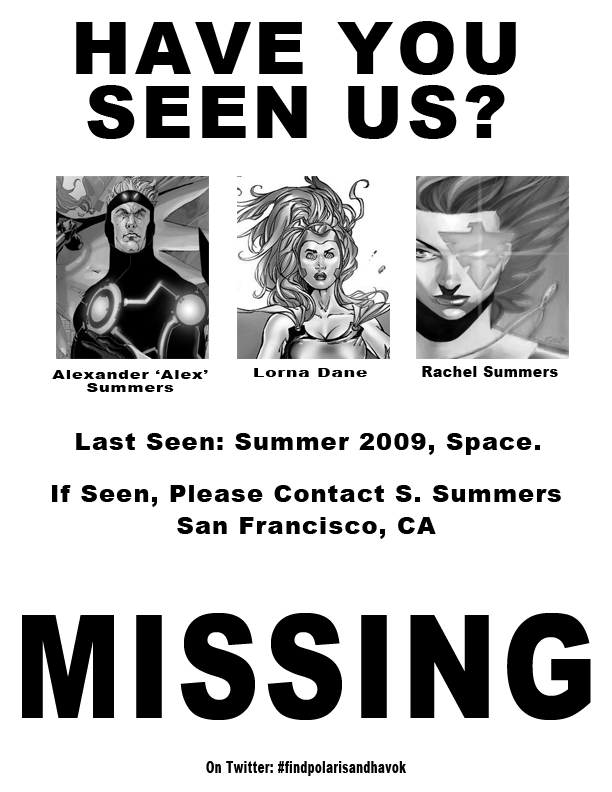
Here's a long message-board thread about whether comic-book clones are real characters (the point is illustrated in the scan in the original post, featuring a clash between the demonic-looking superhero Nightcrawler and the mercenary supervillain Scalphunter - the information you need is that the latter is a 6th Day-style clone of his original self).
You probably won't have time to read the whole thread, but it may amuse you to dip into it. At various points, it gets down to some serious and not-so-serious debate on such issues as whether clones would have souls and whether comics are corrupting children by presenting more-or-less sympathetic characters who have come into existence through cloning - thus undermining the idea that reproductive cloning would be morally wrong.
Some of the comments are quite insightful, as with the remark that Frankenstein's monster was a sensitive and intelligent being who was corrupted only by the unenlightened treatment he received from prejudiced humans. Whatever Mary Shelley's intentions, Frankenstein's crime wasn't defying God or violating nature but bringing into the world a person who would inevitably be mistreated. That's the real issue we'd face with cloning, or so the commenter seems to be saying.
There's much humorous discussion of how clones are handled as characters, but also some people expressing what seems like real unease. The argument about corrupting young readers is interesting - but of course, young people are exposed to an enormous amount of propaganda that reinforces popular moral ideas, including the idea that cloning is wrong or yucky. Why shouldn't they also be exposed to some narratives that implicitly present an opposed viewpoint? If the current manufactured consensus (which I, for one, have not joined) about the evil of reproductive cloning depends on the socialisation of children into the "correct" view, how much respect should we give it?
Not very much at all, I argue. If we had a safe technology for reproduction via somatic cell nuclear transfer, I'd have only slight misgivings about using it. The slight misgivings would relate mainly to the prejudice that the resulting children might face. Much of the opposition to human reproductive cloning strikes me as simply irrational, and it's a pity that we've moved so swiftly and often mindlessly to a supposed consensus that it ought to be banned.
Sunday, November 21, 2010
About those Danish cartoons ...
As is well known, the publication in September 2005 of the notorious Danish cartoons - a set of satirical cartoons depicting Muhammad, printed in the newspaper Jyllands-Posten - led to widespread violence, political debate, high-profile litigation, and numerous attempts to explain the depth of anger among (at least some) Muslims.
One such attempt is that of Talal Asad, who offers an explanation of distinctively Muslim attitudes to free speech, blasphemy, and anti-religious satire. His analysis stresses the sanctity of private thought in the Islamic tradition - religious and government authorities will not inquire into individual's hidden motives and beliefs, scrutinizing them for heresy - as opposed to freedom to express thoughts in public. According to Asad, Islam differs from Christianity in its commitment to the privacy of thought. However, it does not protect attempts to seduce the thoughts of others away from their bond with God, their responsibility to coreligionists, and what it sees as metaphysical and moral truth. In Islam, so Asad assures us, such "seduction" is regarded as a kind of violence; it is dangerous to individuals and the social order, threatening discord and violence. For Muslims who take this seriously, "it is impossible to remain silent when confronted with blasphemy … blasphemy is neither 'freedom of speech' nor the challenge of a new truth but something that seeks to disrupt a living relationship."
Saba Mahmood takes a different, though perhaps complementary, approach. She describes a special form of pain felt by (some) pious Muslims, which amounts to a sense of personal loss and sorrow when confronted by ridicule of the Prophet. On this account, the loss and sorrow relate to Muhammad's role as a moral exemplar, someone to be imitated in many of the quotidian aspects of life - such as how he walked, slept, spoke, ate, and dressed. Thus, these Muslims respond to ridicule of the prophet not with anger that a moral interdiction has been violated, but with a sense of having been violated and wounded. Like many other commentators, Mahmood also insists that such phenomena as the Danish cartoons involve an element of "racism" - extending this idea beyond biological notions of race to groups marked by religious and cultural characteristics. This characterization tends to undermine the value of satire directed at Islam, or at radical forms or manifestations of Islam, associating it with mere racial slurs, a form of speech that many of us see as essentially worthless.
How should a secular state respond to these analyses, which appear in Talal Asad, et. al., Is Critique Secular? Blasphemy, Injury, and Free Speech, Townsend Center/University ofCalifornia
One such attempt is that of Talal Asad, who offers an explanation of distinctively Muslim attitudes to free speech, blasphemy, and anti-religious satire. His analysis stresses the sanctity of private thought in the Islamic tradition - religious and government authorities will not inquire into individual's hidden motives and beliefs, scrutinizing them for heresy - as opposed to freedom to express thoughts in public. According to Asad, Islam differs from Christianity in its commitment to the privacy of thought. However, it does not protect attempts to seduce the thoughts of others away from their bond with God, their responsibility to coreligionists, and what it sees as metaphysical and moral truth. In Islam, so Asad assures us, such "seduction" is regarded as a kind of violence; it is dangerous to individuals and the social order, threatening discord and violence. For Muslims who take this seriously, "it is impossible to remain silent when confronted with blasphemy … blasphemy is neither 'freedom of speech' nor the challenge of a new truth but something that seeks to disrupt a living relationship."
Saba Mahmood takes a different, though perhaps complementary, approach. She describes a special form of pain felt by (some) pious Muslims, which amounts to a sense of personal loss and sorrow when confronted by ridicule of the Prophet. On this account, the loss and sorrow relate to Muhammad's role as a moral exemplar, someone to be imitated in many of the quotidian aspects of life - such as how he walked, slept, spoke, ate, and dressed. Thus, these Muslims respond to ridicule of the prophet not with anger that a moral interdiction has been violated, but with a sense of having been violated and wounded. Like many other commentators, Mahmood also insists that such phenomena as the Danish cartoons involve an element of "racism" - extending this idea beyond biological notions of race to groups marked by religious and cultural characteristics. This characterization tends to undermine the value of satire directed at Islam, or at radical forms or manifestations of Islam, associating it with mere racial slurs, a form of speech that many of us see as essentially worthless.
How should a secular state respond to these analyses, which appear in Talal Asad, et. al., Is Critique Secular? Blasphemy, Injury, and Free Speech, Townsend Center/University of
Steven Paul Leiva on the future of printed books
With the popularity of readers really taking off just in the last year or two, this post over Steven Paul Leiva's This 'n That blog is more than timely.
I share many of Leiva's biases, no doubt in part because we are from roughly the same generation, but people coming along after us are going to see the world differently. He has produced a long, meditative, and I think wise and insightful post.
Sample:
The book, what we are now calling the traditional book, “...a written or printed work consisting of pages glued or sewn together along one side and bound in covers,” has been both a more successful and less successful delivery system than the vacuum-packed can. It never alters the “taste” of its contents, but, because it is prone to wear and tear, mold and mildew, not to mention the evil of dust and the negligence of borrowers, it does not always have a long shelf life. However it is quite user friendly—portable with pages not difficult to turn, easy on the eyes depending on the type size, and usually of a warm, inviting feel. You can underline and write in the margins if you so choose to desecrate it. In essence, books travel well with us. Books can be boon companions. If you are a book reader—and who reading this blog wouldn’t be—books might well figure into highlights of your personal history. That book or series of books you shared with your best childhood buddy, say those Frazzeta cover-illustrated paperbacks of the Mars novels by Edgar Rich Burroughs; that beat up copy of Siddhartha you were reading while sitting around the collage quad that attracted the attention of that long-haired blonde beauty who looked just liked Michelle Phillips of The Mamas and the Papas; that Saul Bellow novel that kept dogging you when you were in your twenties—you loved it, you hated it, you loved it, you hated it—; that rare book of short stories from her favorite author that you “scored” in finding at a used book store and gave to her, her smile back convincing you that she was indeed the love of your life; those Dr. Seuss books you read out loud to your kids, acting them out in a gloriously foolish performance; that dark, dangerous, bloody serial-killer novel you read while sitting on a warm, sunny beach somewhere during your most wonderful vacation ever; that great jazz musician’s biography you read while on a long train trip, the train providing the rhythm section. You can remember the look, the feel, the touch, the cover, the heft of all of these books and you remember them with great fondness, yet isn’t it the content that really deserves to be part of your memory? Wasn’t the delivery system—the look, the feel, the touch, the cover, the heft—really just, dare I call it, an appendix to the content?
Smells can bring on a flood of memories, but are they memories of smells? The aroma of a great meal is delightful, but it is not the aroma that will nourish you.
Saturday, November 20, 2010
A better (non-spooky) account of human rights
This time I'm quoting from AC Grayling's Towards the Light: The Story of the Struggles for Liberty and Rights (Boomsbury, 2007), pp. 260-61:
Critics have focused on the arbitrariness of the claim that nature or a deity has somehow magically endowed people with rights to life, liberty, property and happiness, when in fact the idea of these things is a human invention, and their existence as rights (in those dispensations where they indeed are rights) is the result of decisions to regard them as such. I call this the "arrogatory theory of rights"; experience and rational reflection show what is required to give individuals the best chance of making flourishing lives for themselves, and these framework requirements we institute as rights in order to make the chance of that flourishing available.
So we do not need to be wedded to the idea of "natural" rights at all. The proceeding just described - of people coming to see what they should lay claim to as the basis of their social and institutional arrangements - is acceptable and justifiable on its merits; one can make out an excellent case for saying that over time a consensus has been reached about the kinds of basic laws and principles required to so arrange things for individuals and groups that they can exist in ways we ("we" in those societies) recognise as desirable. It is for this that a robust and generalised concept of liberty is needed. As has often enough been pointed out (for example, by the philosopher H.L.A. Hart), if any idea of rights is to have content, the basic one must be liberty, for without it none of the others can apply.
The Australian Book of Atheism - a review
Nice review of Warren Bonnet's book in Bookseller and Publisher, quoted on Scribe's site for the book. (I'm not mentioned, but that's cool; I'll get my glory or otherwise some other time.)
More from Wolterstorff
As I indicated in the Preface, I engage myself in the practice of philosophy as a Christian. That remained in the background for large stretches of the discussion: here, in our discussion of natural human rights, it has come into the foreground.
The following should be added: if one believes that there are natural inherent human rights, then the fact that the secularist cannot account for those rights, whereas the theist who holds convictions about God's love that I have delineated can do so, is an argument for theism (of that sort). Not a foundationalist argument, but an argument nonetheless. I believe that there are natural human rights. Human beings, all of them, are irreducibly precious.
(It won't surprise you that I think this is arguing backwards. I don't deny the usefulness of a body of international human rights law, though what we have is imperfect. But to me it's pretty obvious that all talk of "natural inherent human rights" is nonsense on stilts - certainly not the kind of thing that you can use as a premise in an argument for the existence of God.)
Subscribe to:
Posts (Atom)