Whether religious freedom is a concept worth supporting really depends on what it means. No one wants to be heard saying that they are opposed to it, but not every conception of it is as liberal as the one that I support. I'm currently reading Michael J. Perry's Under God? Religious Faith and Liberal Democracy. At this stage, I haven't absorbed the whole thesis, and there are some points to come that I'll probably find attractive. But he does seem to think that, for example, there is nothing wrong with politicians voting to ban conduct merely because it is against their moral views, and even though they would not have those moral views except for their reliance on a holy book. Thus, if a society dominated by people whose holy books say that eating pork is an abomination decides to ban eating pork that is fine ... even though the ban is not for public health reasons, or because there is a temporary shortage of pork so all pigs must be used for breeding for the time being, or whatever other secular reason we can imagine, but merely because the relevant holy books condemn the eating of pork.
Needless to say, Perry's ideas of what a government can do in a society that embraces religious freedom are radically different from mine. For me, the above is a paradigm example of a religious doctrine being imposed on population - believers and non-believers alike - by means of the coercive power of the state. And whatever else that is, it is not freedom of religion.
Of course, Perry is correct that in the real world of Western democracies such as the US it will be difficult to find such clear-cut examples. For example, people who think homosexual acts should be criminalised can always dream up some kind of secular-sounding reason. But that's not a reason for us to stop complaining about essentially religious doctrines being imposed by the state and backed up with guns and police: "We will force you not to have sex with the person of the same sex whom you love, or between whom there is simply a mutual attraction, on pain of locking you away in a small space behind iron bars, and even though you are not hurting anyone and don't accept the holy book on which we base our decision to do this."
No, that's not acceptable. That's tyranny.
Even if the state can get away with banning X for what are preponderantly religious reasons - e.g. by convincing a constitutional court that it also had some secular reason - so what? This does not give us a reason to say that banning X for preponderantly religious reasons is consistent with plausible ideas of what freedom of religion is all about, or that banning X for preponderantly religious reasons is a proper thing for the state to do.
I'll read further as the week goes on. Although it's a short book, it's very densely argued (to its credit), and the issues are, at least from my point of view, extremely important. So I'll take my time, make close notes, and so on. I can see, looking ahead, that Perry is going to qualify his argument considerably, but I can't see him doing so to an extent that will mollify me.
About Me
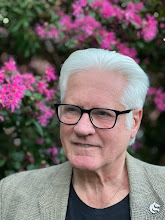
- Russell Blackford
- Australian philosopher, literary critic, legal scholar, and professional writer. Based in Newcastle, NSW. My latest books are THE TYRANNY OF OPINION: CONFORMITY AND THE FUTURE OF LIBERALISM (2019); AT THE DAWN OF A GREAT TRANSITION: THE QUESTION OF RADICAL ENHANCEMENT (2021); and HOW WE BECAME POST-LIBERAL: THE RISE AND FALL OF TOLERATION (2024).
Monday, February 08, 2010


Sunday, February 07, 2010
Beware the drop bears
The Australian National Dictionary Centre provides a wonderful online resource for those of you are not entirely familiar with Australian English. My overseas readers may need to consult it now and then when I use an unfamiliar expression (to those beyond these shores) such as "bogan" (a word that proved to be very important recently in a discussion over at Butterflies and Wheels). If I suggest that someone (our Minister for Communications and Stuff, for example) dare not eat prawns for fear of cannibalism, you will be able to discover something to the effect that a prawn is not just an edible crustacean similar to a shrimp but also a foolish or hapless person. Moreover, when a prawn, such as the Minister, or indeed anyone else (whether they are a prawn or not), attempts to deceive you, or put one over you, you are entitled to respond: "Don't come the raw prawn with me, mate!" I.e., "Don't try to fool me, my friend!"
One point that strikes me when I look at the site is how recent some well-known Australian slang terms are - some appeared in my lifetime, and I must have cottoned on to them, or sussed them out, almost immediately. E.g., the expression "hoon", for a dangerous, stupid, and irresponsible driver, usually behind the wheel of a powerful or hotted-up car, goes back no further than the era when I first encountered it. Evidently, the word was used before that but in a different sense (to refer to some kind of standover man involved in prostitution).
The people involved in the site also have a sense of humour.
To demonstrate the latter, I refer you to the definition of "drop bear".
One point that strikes me when I look at the site is how recent some well-known Australian slang terms are - some appeared in my lifetime, and I must have cottoned on to them, or sussed them out, almost immediately. E.g., the expression "hoon", for a dangerous, stupid, and irresponsible driver, usually behind the wheel of a powerful or hotted-up car, goes back no further than the era when I first encountered it. Evidently, the word was used before that but in a different sense (to refer to some kind of standover man involved in prostitution).
The people involved in the site also have a sense of humour.
To demonstrate the latter, I refer you to the definition of "drop bear".
Saturday, February 06, 2010
The Endarkenment
H/T to Ophelia Benson on this one. Via Butterflies and Wheels, I came across this review of a new book by Zeev Sternhell, The Anti-Enlightenment Tradition (Yale University Press). If anyone wants to send me a review copy of this, I'd love one. If anyone wants to review it for JET, well I'll certainly consider a review as long as it is made relevant to JET's interest and meets the other criteria.
Meanwhile, this review contains a fair bit of snark near the end, but it's not obvious that it's justified. Some of the reviewer's own claims seem to be open to debate. E.g., sure there's a sense in which Nazism was a product of the First World War, i.e. the outrageously punitive terms imposed on Germany fueled a craving for revenge and redress. They may have made a second world war inevitable, though a further war does not always follow from crushing defeat and harsh terms of surrender. In any event, surely Sternhell is correct that Nazism was not just a reaction to the First World War and the Russian Revolution. The form of German militarism that arose in the 1930s was shaped by many ideas in the German culture that could be traced back for centuries. It's simplistic to say that one or two events, alone, led to something as horrible, yet bizarre, as Nazism. History is far messier than that.
The commenters seem to be even less helpful, with much anti-Enlightenment feeling being vented, and a great deal of uncritical praise for Edmund Burke. Burke, of course, was no saint. Much of his energy was wasted on his successful-at-the-time (but ultimately futile in the sweep of history) campaign to retain the Test and Corporation Acts, which prevented non-Anglicans from matriculating at Oxford or Cambridge or holding offices under the Crown. He was convinced that public order required this kind of draconian interference by the secular authorities in matters of religion. Thanks to Burke's efforts, these unjust and unnecessary laws remained on the books in England until as late as 1829. While we can praise Burke for his opposition to the more apocalyptic aspects of the French Revolution, he was far more deeply and nastily conservative than his modern-day fans like to paint him.
If the French Revolution went overboard in one direction, Burke certainly did in the other.
Meanwhile, this review contains a fair bit of snark near the end, but it's not obvious that it's justified. Some of the reviewer's own claims seem to be open to debate. E.g., sure there's a sense in which Nazism was a product of the First World War, i.e. the outrageously punitive terms imposed on Germany fueled a craving for revenge and redress. They may have made a second world war inevitable, though a further war does not always follow from crushing defeat and harsh terms of surrender. In any event, surely Sternhell is correct that Nazism was not just a reaction to the First World War and the Russian Revolution. The form of German militarism that arose in the 1930s was shaped by many ideas in the German culture that could be traced back for centuries. It's simplistic to say that one or two events, alone, led to something as horrible, yet bizarre, as Nazism. History is far messier than that.
The commenters seem to be even less helpful, with much anti-Enlightenment feeling being vented, and a great deal of uncritical praise for Edmund Burke. Burke, of course, was no saint. Much of his energy was wasted on his successful-at-the-time (but ultimately futile in the sweep of history) campaign to retain the Test and Corporation Acts, which prevented non-Anglicans from matriculating at Oxford or Cambridge or holding offices under the Crown. He was convinced that public order required this kind of draconian interference by the secular authorities in matters of religion. Thanks to Burke's efforts, these unjust and unnecessary laws remained on the books in England until as late as 1829. While we can praise Burke for his opposition to the more apocalyptic aspects of the French Revolution, he was far more deeply and nastily conservative than his modern-day fans like to paint him.
If the French Revolution went overboard in one direction, Burke certainly did in the other.
Thursday, February 04, 2010
Risk Quotient test
H/T Pharyngula. As PZ explains the test:
Here's an interesting test: measure your Risk Quotient. It's a 50 question survey of a set of questions, some simple and some obscure, in which you estimate your confidence in providing an answer. You aren't scored on just getting the right answer, but on whether you accurately assess your likelihood of being right — if you answer wrongly but with great confidence and certainly you'll score poorly, but if you answer just as wrongly but with a more cautious appraisal of your certainty, you'll score better.
I.e. someone with a high RQ will admit uncertainty, and can be generally be trusted to be correct when they feel certain or highly confident of something. Such a person is someone who will not bullshit you.
Assuming the test is valid, it's very interesting.
====
My result
Results and Explanation
Thank you for participating in our study!
The RQ score ranges from 0 (low RQ) to 100 (high RQ). Your RQ score is 85. Such a score is very high.
Risk intelligence can be measured by calculating something called a “calibration curve”. The graph that is displayed above, is your calibration curve
A perfect calibration curve would lie exactly on the diagonal line, so the area between the curve and the diagonal would be zero. Nobody is perfectly calibrated, but people with high risk intelligence come very close to this ideal. For more information about how to interpret your calibration curve, click here.
Here's an interesting test: measure your Risk Quotient. It's a 50 question survey of a set of questions, some simple and some obscure, in which you estimate your confidence in providing an answer. You aren't scored on just getting the right answer, but on whether you accurately assess your likelihood of being right — if you answer wrongly but with great confidence and certainly you'll score poorly, but if you answer just as wrongly but with a more cautious appraisal of your certainty, you'll score better.
I.e. someone with a high RQ will admit uncertainty, and can be generally be trusted to be correct when they feel certain or highly confident of something. Such a person is someone who will not bullshit you.
Assuming the test is valid, it's very interesting.
====
My result
Results and Explanation
Thank you for participating in our study!
The RQ score ranges from 0 (low RQ) to 100 (high RQ). Your RQ score is 85. Such a score is very high.
Risk intelligence can be measured by calculating something called a “calibration curve”. The graph that is displayed above, is your calibration curve
A perfect calibration curve would lie exactly on the diagonal line, so the area between the curve and the diagonal would be zero. Nobody is perfectly calibrated, but people with high risk intelligence come very close to this ideal. For more information about how to interpret your calibration curve, click here.
Is religious freedom self-contradictory?
Over on his CFI blog, It's Only Natural, John Shook addresses an argument against religious freedom. The view that he challenges is articulated like this in a piece on the American Catholic blog:
there is a built in contradiction in the place of religious freedom in classical liberalism: While religious freedom is a central element of classical liberalism, the ability of a state to function as a liberal democracy will collapse if a large majority of the population do not share a common basic moral and philosophical (and thus by implication theological) worldview. Thus, while religious freedom is a foundational element of classical liberalism, only a certain degree of religious conformity makes it possible.
Now, before going any further, I must observe what a recipe for intolerance and bigotry this is. I'll try to discuss it dispassionately in the paragraphs that follow, but you can be assured that I fully appreciate that it's morally repellent.
How does Shook respond? Quite sensibly - for example, by emphasising that what is required is not theological consensus but some degree of basic moral/philosophical consensus. As he says, these are not the same thing.
But that actually understates it. Sure, there has to be some consensus that we cannot, for example, just go around using violence to promote our own interests in social, economic, and sexual competition. The benefits of social life will be impossible unless there are some strong norms against that kind of violence. Given the scarcity of resources, there also has to be some sort of property system; whatever form this takes, it will need to be experienced as "fair" (in practice, this is likely to involve such things as some emphasis on effort and contribution in acquisition, while also a place for property to be transferred as a gift); and there will need to be a strong norm that property rights be honoured (which does not preclude, and may even require, the overlay of a scheme of taxes and transfers based on need and other relevant values). This level of basic agreement on certain sorts of legal and moral norms is, in fact, required for any society to operate. However, the reasons have nothing to do with theology and can be agreed to from almost any comprehensive worldview. Whatever their comprehensive worldview, nobody wants to live in a Hobbesian state of nature.
Generally speaking, we all have good secular reasons to support these sorts of norms and to socialise children into internalising them. Theology has nothing to do with it.
When it comes to issues such as whether homosexuality or polyamory or abortion or stem cell research or the use of contraception or IVF or reproductive cloning is morally wrong, however, the situation changes. It is not necessary for social survival and the benefit of living in societies that there be agreement on these things. The law can allow somebody who thinks one of these things is morally wrong to refrain from it, while also allowing those who have no such moral aversions, and who find these things good, to act on their own beliefs. In such a case, neither group of people is subjected to tyranny. The former are not subjected to tyranny because they are not forced to do anything that goes against their own morals. It would be a bizarre definition of "tyranny" to say that someone is tyrannised merely because she is powerless to stop others doing things she disapproves of. The latter group - the homosexuals, polyamorists, women seeking abortions, etc., are not tyrannised either. They are not prevented from doing what they want. (They might be tyrannised if their activities are legal but nonetheless lead to social ostracism, but in a society where their actions are not only legal but approved of by large numbers of people they cannot claim to be tyrannised. If social tyranny is too much of a problem, some specific laws may need to be enacted to ensure they can function in society.)
Human societies can certainly operate with no theological consensus, so long as there is even a fairly rough consensus on the norms required to protect such worldly things as life, limb, and property. Someone with a theologically-based morality may wish to see many things prohibited that are actually allowed, but she cannot complain merely because she doesn't get to use the state apparatus to control what others do. If she wants more than that, the rest of us may rightly regard her as unreasonable - she wants her own way not only in how she gets to behave but also in forcing others to do likewise.
Stook deals with a further argument:
If, however, there is fundamental disagreement among the populace about basic issues of right and wrong and what the purpose of the human person is, the victory of the other side will increasingly look to the defeated like an unacceptable tyranny, and the state will risk coming apart at the seams.
His reply is that this is essentially a fantasy, as no such fundamental disagreement is actually tearing apart the country that both bloggers are talking about, i.e. the United States of America. But I'd go further. It is quite possible for a society to get along with fundamental disagreements about such things as "what the purpose of the human person is". You could have half the population claiming that the purpose of the human person is to worship a particular god, while the other half denies that there is any "purpose" at all (though they may still think that life can be rich, personally meaningful, lived with zest, and so on). There is no reason at all why these two groups cannot co-exist in the same society. All that is required is that neither attempt to coerce the other to live in a certain way. They will, of course, also have to have some consensus about the need to refrain from violence, respect property rights (and legitimate redistributions of property through the official tax-transfer system) and so on. But that's already covered above.
In other words, it is indeed possible to have a state that does relatively limited things - protecting us from internal and external violence, establishing and enforcing a scheme of property, imposing taxes and redistributing wealth in the form of public programs based on such things as individual need - without anyone having to feel defeated or tyrannised. Of course, you may literally be defeated if you campaign for, say, the criminalisation of homosexual acts ... and your pet theologically-based campaign fails. But your "defeat "simply means that you have failed to coerce others, or to get the state to do it for you. It is bizarre to claim that you are, yourself, being tyrannised.
If your views are based on religious doctrine, you will have failed to impose your religious morality on others who don't share it. That does not, however, mean that they are tyrannising you or that your freedom to live by your own religious morality has been lost.
There are, of course, any number of complexities and ramifications to all this, but if there is any contradiction in classical liberalism, or in freedom of religion, the arguments that Stook refers to certainly do not establish it. Of course, as with almost anything in this domain, there are going to be some grayish areas, but some can be dealt with in a principled way, while others can be dealt with by means of the reasonable discretion of electorates and governments. Overall, the view of the world sketched above can be elaborated indefinitely to cope with real-world complications, and I see no reason why it should ever come apart - at least not under pressure from the crude arguments dissected in this post.
Wednesday, February 03, 2010
Remember them - political executions in Iran
(Reposted from a widely-distributed email from Maryam Namazie, with my full endorsement.)
Dear friend
I want you to remember two names - Mohammad Reza Ali Zamani and Arash Rahmanipour.
They were two young men who were executed by the Islamic regime of Iran at dawn this past Thursday, January 28 for the ‘crime’ of ‘enmity against god’.
Yet another two beloved, murdered for protesting medievalism and theocracy …
And whilst this act of barbarity will leave many of us outraged and ‘speechless’ (see writer Jim Herrick’s act of solidarity against the executions: http://iransolidarity.blogspot.com/2010/02/i-am-speechless-on-execution-of-two.html), we can only do them justice if we keep the pressure on.
The Islamic regime of Iran is on its last legs and will do anything it can to maintain power just a while longer. It is flexing its muscles to intimidate and threaten and we need to flex ours.
It plans to execute at least another 66 people that we know of in the coming weeks.
But we just cannot – no, we will not - let them.
Those on death row, languishing in prisons and who dare to come out onto the streets of Iran every opportunity they can represent the undefeated even after thirty years of Islamic rule. We must come out in full force to stop the executions and support the people of Iran in their struggle to get rid of this regime.
We mustn’t let up until we win. The future is ours.
In solidarity,
Maryam
Maryam Namazie
Coordinator
Iran Solidarity
Notes:
Things you can do:
1. Send a letter of protest to the Islamic regime of Iran over recent and impending executions. For details, click here: http://iransolidarity.blogspot.com/2010/02/66-political-prisoner-sentenced-to.html
2. Support Iran Solidarity and its demands by signing up to our petition: http://iransolidarity.org.uk/iscommit/iscom186.php?nr=97158834&lang=en.
3. Sign up to the Manifesto of Liberation of Women in Iran: http://equal-rights-now.com/IntWD/IntWD649.php?nr=63719093&lang=en
4. Join our daily acts of solidarity with the people of Iran. Since Monday July 27, we have organised acts of solidarity EVERY SINGLE DAY. It is easy to join in – just videotape or photograph yourself doing something and send it to us to upload to our blog. You can see other acts here: http://iransolidarity.blogspot.com/.
5. Join rallies and events in various cities against the executions and the Islamic regime of Iran, including every Saturday. You can find out about such protests on our blog.
6. Set up Iran Solidarity groups in your neighbourhoods, workplaces, universities and cities. So far we have groups in Australia, Austria, Canada, Germany, Norway, Sweden and the UK. Like the solidarity committees during the anti-apartheid era, these committees can be instrumental but we need many more in every city in the world for that to happen.
For more information or to send in your daily acts of solidarity, contact:
Maryam Namazie
Iran Solidarity
BM Box 2387
London WC1N 3XX, UK
Tel: +44 (0) 7719166731
iransolidaritynow@gmail.com
www.iransolidarity.org.uk
Dear friend
I want you to remember two names - Mohammad Reza Ali Zamani and Arash Rahmanipour.
They were two young men who were executed by the Islamic regime of Iran at dawn this past Thursday, January 28 for the ‘crime’ of ‘enmity against god’.
Yet another two beloved, murdered for protesting medievalism and theocracy …
And whilst this act of barbarity will leave many of us outraged and ‘speechless’ (see writer Jim Herrick’s act of solidarity against the executions: http://iransolidarity.blogspot.com/2010/02/i-am-speechless-on-execution-of-two.html), we can only do them justice if we keep the pressure on.
The Islamic regime of Iran is on its last legs and will do anything it can to maintain power just a while longer. It is flexing its muscles to intimidate and threaten and we need to flex ours.
It plans to execute at least another 66 people that we know of in the coming weeks.
But we just cannot – no, we will not - let them.
Those on death row, languishing in prisons and who dare to come out onto the streets of Iran every opportunity they can represent the undefeated even after thirty years of Islamic rule. We must come out in full force to stop the executions and support the people of Iran in their struggle to get rid of this regime.
We mustn’t let up until we win. The future is ours.
In solidarity,
Maryam
Maryam Namazie
Coordinator
Iran Solidarity
Notes:
Things you can do:
1. Send a letter of protest to the Islamic regime of Iran over recent and impending executions. For details, click here: http://iransolidarity.blogspot.com/2010/02/66-political-prisoner-sentenced-to.html
2. Support Iran Solidarity and its demands by signing up to our petition: http://iransolidarity.org.uk/iscommit/iscom186.php?nr=97158834&lang=en.
3. Sign up to the Manifesto of Liberation of Women in Iran: http://equal-rights-now.com/IntWD/IntWD649.php?nr=63719093&lang=en
4. Join our daily acts of solidarity with the people of Iran. Since Monday July 27, we have organised acts of solidarity EVERY SINGLE DAY. It is easy to join in – just videotape or photograph yourself doing something and send it to us to upload to our blog. You can see other acts here: http://iransolidarity.blogspot.com/.
5. Join rallies and events in various cities against the executions and the Islamic regime of Iran, including every Saturday. You can find out about such protests on our blog.
6. Set up Iran Solidarity groups in your neighbourhoods, workplaces, universities and cities. So far we have groups in Australia, Austria, Canada, Germany, Norway, Sweden and the UK. Like the solidarity committees during the anti-apartheid era, these committees can be instrumental but we need many more in every city in the world for that to happen.
For more information or to send in your daily acts of solidarity, contact:
Maryam Namazie
Iran Solidarity
BM Box 2387
London WC1N 3XX, UK
Tel: +44 (0) 7719166731
iransolidaritynow@gmail.com
www.iransolidarity.org.uk
Backdown on some censorship madness
SOUTH Australia's Attorney-General Michael Atkinson has made a "humiliating" backdown and announced he will repeal his law censoring internet comment on the state election.
After a furious reaction on AdelaideNow to The Advertiser's exclusive report on the new laws, Mr Atkinson released this statement at 10pm last night: "From the feedback we've received through AdelaideNow, the blogging generation believes that the law supported by all MPs and all political parties is unduly restrictive.
"I have listened. I will immediately after the election move to repeal the law retrospectively."
Mr Atkinson said the law would not be enforced for comments posted on AdelaideNow during the upcoming election campaign, even though it was technically applicable.
"It may be humiliating for me, but that's politics in a democracy and I'll take my lumps," he continued in the statement.
"This way, no one need fear now that they are being censored on the net or in blogs, whether they blog under their own name or anonymously.
"I call upon all the other political parties who supported this review to also review their position."
No the above is not a joke. To read on, go here.
At least the South Australian government had the decency to back down on this crazy law, which prohibits anonymous comments on the internet on election issues during an election period. Anyone making election-related comments has to reveal their name and address! What is especially troubling is that such a crazy and illiberal law had the support of all parties and all MPs until a public backlash led the government to back away from it.
What is more reassuring is that the government seems to have listened, showing that it can be worth standing up and shouting loudly in defence of our freedoms.
After a furious reaction on AdelaideNow to The Advertiser's exclusive report on the new laws, Mr Atkinson released this statement at 10pm last night: "From the feedback we've received through AdelaideNow, the blogging generation believes that the law supported by all MPs and all political parties is unduly restrictive.
"I have listened. I will immediately after the election move to repeal the law retrospectively."
Mr Atkinson said the law would not be enforced for comments posted on AdelaideNow during the upcoming election campaign, even though it was technically applicable.
"It may be humiliating for me, but that's politics in a democracy and I'll take my lumps," he continued in the statement.
"This way, no one need fear now that they are being censored on the net or in blogs, whether they blog under their own name or anonymously.
"I call upon all the other political parties who supported this review to also review their position."
No the above is not a joke. To read on, go here.
At least the South Australian government had the decency to back down on this crazy law, which prohibits anonymous comments on the internet on election issues during an election period. Anyone making election-related comments has to reveal their name and address! What is especially troubling is that such a crazy and illiberal law had the support of all parties and all MPs until a public backlash led the government to back away from it.
What is more reassuring is that the government seems to have listened, showing that it can be worth standing up and shouting loudly in defence of our freedoms.
John Wilkins on fear and risk
Over at Evolving Thoughts, John Wilkins has a highly meritorious post about the creeping totalitarianism in Australia and other Western democracies. This tendency succeeds, and has the support of major political parties in both government and opposition, because, we, as populations and electorates, acquiescence in it, or even seem to want it. We are driven by fear and an irrational aversion to any risk. Unfortunately, no government, however much it puts us under surveillance and attempts to micro-manage our lives, can ever guarantee an environment free of risk (or some kind of centrally planned utopia). The tools available to governments are clumsy, and can never bring about a risk-free, ultimate zipless society.
We might as well face that fact, unpalatable or not, and fight to get our freedoms back.
Worse, democratic governments reach for populist solutions that create an illusion of decisive action, and thereby make our lives less and less free, but are pretty much guaranteed to be ineffective, Imperfect though it is, our law-makers would do better to rely on ordinary policing of genuinely harmful crimes. Yeah, okay - meanwhile, in the real world, we end up with such outcomes as ridiculous and unpleasant aviation "security", censorship of the internet, and ever-increasing surveillance of our actions and speech. Wilkins says:
we have adopted useless ineffective and costly measures that only look good, so we can deal with out fears. We can feel comfortable knowing that the national intelligence services are listening to those terrorists, while pretending not to know that they are going instead to listen in on you if you have any kind of view the authorities do not like. Warrantless wiretaps by the FBI and other agencies after 9/11 went rogue immediately, and that’s only what we do know. In Australia, moves to make the internet self-censor under law according to an undisclosed, unsupervised, list drawn up by public servants at the behest of the government of the day stands to make Australian access to information something that happens at the whim of the politicians. Now where has that worked well in the past, I wonder?
What can we do about it? Well, I sometimes feel as if it's futile to try anything, since we are confronted by the sensationalist media and a naive, scared public, not just by power-hungry or officious politicians. But we certainly won't be able to push this whole thing back if we simply give up and live in coccoons.
Wilkins again:
What to do? Well there is only one way to prevent this – stand up for freedoms against the unrelenting desire of the bureaucracy and politicians to take control. Allow rights to those you do not like so that you may have rights too. And when something, like child pornography or terror, threatens the civil order, use legal and effective policing methods to halt it and reverse it. And realise that you cannot have a risk-free world.
That's right. But it won't work unless a lot of us follow this advice, and it's all too tempting not to step forward and risk being isolated. In my case, I'm a bit less vulnerable than most, being old enough, now, and financially secure enough (by a run of moderately good financial luck plus a certain amount of self-sacrifice over the last 25 years or so). Nothing terribly harmful can be done to me, not easily. Not if we're talking about careers or livelihoods being destroyed - though obviously my reputation can be smeared, and I'm as vulnerable to physical attacks as anyone else. But I do speak up in this blog and elsewhere, partly because I can. I'd do it even more if I had better media access. If you can deliver it to me, take the hint.
Not everyone is as well-fortified against human-made ill fortune as I am. Still, I implore you to do whatever you can against the drift that Wilkins identifies.
It's an understatement to say that John Wilkins and I don't always agree on stuff, but he's a stalwart on this kind of issue, where our vaunted Western freedoms are being eroded. On this occasion I want to applaud him with all my might and power (pity I don't have more of it to applaud with).
You rock, mate. More strength to your arm.
We might as well face that fact, unpalatable or not, and fight to get our freedoms back.
Worse, democratic governments reach for populist solutions that create an illusion of decisive action, and thereby make our lives less and less free, but are pretty much guaranteed to be ineffective, Imperfect though it is, our law-makers would do better to rely on ordinary policing of genuinely harmful crimes. Yeah, okay - meanwhile, in the real world, we end up with such outcomes as ridiculous and unpleasant aviation "security", censorship of the internet, and ever-increasing surveillance of our actions and speech. Wilkins says:
we have adopted useless ineffective and costly measures that only look good, so we can deal with out fears. We can feel comfortable knowing that the national intelligence services are listening to those terrorists, while pretending not to know that they are going instead to listen in on you if you have any kind of view the authorities do not like. Warrantless wiretaps by the FBI and other agencies after 9/11 went rogue immediately, and that’s only what we do know. In Australia, moves to make the internet self-censor under law according to an undisclosed, unsupervised, list drawn up by public servants at the behest of the government of the day stands to make Australian access to information something that happens at the whim of the politicians. Now where has that worked well in the past, I wonder?
What can we do about it? Well, I sometimes feel as if it's futile to try anything, since we are confronted by the sensationalist media and a naive, scared public, not just by power-hungry or officious politicians. But we certainly won't be able to push this whole thing back if we simply give up and live in coccoons.
Wilkins again:
What to do? Well there is only one way to prevent this – stand up for freedoms against the unrelenting desire of the bureaucracy and politicians to take control. Allow rights to those you do not like so that you may have rights too. And when something, like child pornography or terror, threatens the civil order, use legal and effective policing methods to halt it and reverse it. And realise that you cannot have a risk-free world.
That's right. But it won't work unless a lot of us follow this advice, and it's all too tempting not to step forward and risk being isolated. In my case, I'm a bit less vulnerable than most, being old enough, now, and financially secure enough (by a run of moderately good financial luck plus a certain amount of self-sacrifice over the last 25 years or so). Nothing terribly harmful can be done to me, not easily. Not if we're talking about careers or livelihoods being destroyed - though obviously my reputation can be smeared, and I'm as vulnerable to physical attacks as anyone else. But I do speak up in this blog and elsewhere, partly because I can. I'd do it even more if I had better media access. If you can deliver it to me, take the hint.
Not everyone is as well-fortified against human-made ill fortune as I am. Still, I implore you to do whatever you can against the drift that Wilkins identifies.
It's an understatement to say that John Wilkins and I don't always agree on stuff, but he's a stalwart on this kind of issue, where our vaunted Western freedoms are being eroded. On this occasion I want to applaud him with all my might and power (pity I don't have more of it to applaud with).
You rock, mate. More strength to your arm.
Tuesday, February 02, 2010
Mooney goes to Point of Inquiry
The Center for Inquiry (CFI) has just announced three new hosts for its popular Point of Inquiry podcast. They are to replace D.J. Grothe, who has left the CFI to take up a top executive position with the James Randi Educational Foundation.
The new hosts of Point of Inquiry will be Chris Mooney, Karen Stollznow, and Robert Price. Mooney will be doing about half of the interviews, while the other half will be divided evenly between Stollznow and Price. Before I go any further, allow me to make it clear that I have nothing against either Stollznow or Price. I know relatively little about Price and very little about Stollznow, but I've heard nothing to make me doubt their competence or fairness, and I wish them every success. Still, even if I could say the same about Mooney, D.J. Grothe's act would be a hard one to follow.
I was interviewed by Grothe last year, and I totally enjoyed the experience. He was friendly, skilled, and gave me every opportunity to explain my views about the imperative to scrutinise and criticise religion. The interview was not done live or uncut - it was quite heavily edited. However, I was always assured that the editing would not present me in a bad light ... and, of course, it didn't. Since I had confidence in Grothe, I was able to talk very frankly to him knowing that hesitations, false starts, and so on would be okay. There was no need to be on my guard, so the final product, if somewhat artificial, is a truer presentation of my views than comes across in most interviews, where the opportunities to open up are fewer and it is necessary to maintain a degree of suspicion and caution.
Thus, when Grothe asked me to re-answer a question because I'd brought up a point he wanted me to come to later, I was fine with it. I didn't say anything I didn't want to say, but I could trust him to do some shaping of the podcast, knowing I'd still be allowed to get across what I had in mind. With two people cooperating on producing the best possible product to get the interviewee's ideas across clearly, there is a feeling of mutual confidence and trust. The interviewee can open up because he or she is confident of being treated more than fairly in the end product.
I have every confidence that D.J. Grothe would likewise have treated someone with very different views from mine: i.e., help them to present their best case. He would not set out to undermine anyone with editorial tricks. I've listened to his interviews with a wide range of people holding an equally wide range of views, always being more than fair.
My concern is that I simply do not trust Chris Mooney to take the same attitude. Doing a heavily-edited interview with him could be dangerous. Even if he did not edit the recorded material unfairly, to put the interviewee in a bad light, he could make the interview a hostile experience. Sometimes, of course, we must all do hostile interviews, but that is not what Point of Inquiry is for. It's supposed to provide outreach into the community with messages that are broadly congruent with CFI's positions (even if not totally consistent with each other). That should specifically include messages that criticise religious doctrines, leaders, and organisations. Even prior to Grothe's departure, there were few non-print outlets for someone with views like mine - few places where we could explain our views in an atmosphere of friendly cooperation with skilled media professionals. Contrast the immense funding available to religious apologists, and the many sympathetic outlets they have for their views across the full range of electronic media.
Now the situation is worse.
Why is that so? Why is Mooney so dangerous? Because he opposes robust public criticism of religion, or at least of supposedly moderate religious viewpoints that are not fundamentalist in character. He opposes that kind of criticism even if it is civil and thoughtful. He is well known for his unfair and vitriolic attack on P.Z. Myers, in his book Unscientific America. More worrying, however, and perhaps more easily forgotten is that he has used this New Republic review by Jerry Coyne of books by Kenneth R. Miller and Karl W. Giberson as an example of the sort of thing that should not be said in public. If you have not already done so, I suggest you read Coyne's review for yourself. Consider it in its entirety before reading on. ...
Coyne's review is highly critical of Miller and Giberson, particularly their attempts at Christian apologetics, but it discusses the perceived strengths as well as weaknesses of their books. It certainly does not travel beyond the area of robust, yet thoughtful and civil, public discourse about ideas. Authors should expect this sort of criticism when they venture into print, much as they might hope for unqualified praise. Indeed, an author who received no review worse than this would be very fortunate. In short, whether you agree with its conclusions or not, there is nothing wrong with Coyne's review, i.e. nothing discourteous, irresponsible, unprofessional, or uncivil.
Yet, Mooney has claimed that this sort of thing should not be said. If you find that difficult to believe, check for yourself. Here is Mooney:
In a recent New Republic book review, Coyne took on Kenneth Miller and Karl Giberson, two scientists who reconcile science and religion in their own lives. Basically, Forrest’s point was that while Coyne may be right that there’s no good reason to believe in the supernatural, he’s very misguided about strategy. Especially when we have the religious right to worry about, why is he criticizing people like Miller and Giberson for their attempts to reconcile modern science and religion?
Forrest then gave three reasons that secularists should not alienate religious moderates:
1. Etiquette. Or as Forrest put it, "be nice." Religion is a very private matter, and given that liberal religionists support church-state separation, we really have no business questioning their personal way of making meaning of the world. After all, they are not trying to force it on anybody else.
2. Diversity. There are so many religions out there, and so much variation even within particular sects or faiths. So why would we want to criticize liberal Christians, who have not sacrificed scientific accuracy, who are pro-evolution, when there are so many fundamentalists out there attacking science and trying to translate their beliefs into public policy?
3. Humility. Science can’t prove a negative: Saying there is no God is saying more than we can ever really know empirically, or based on data and evidence. So why drive a wedge between religious and non-religious defenders of evolution when it is not even possible to definitively prove the former wrong about metaphysics?
Forrest therefore concluded her talk by saying that we need are "epistemological and civic humility" – providing the groundwork for "civic friendship." To which I can only say: Amen.
Note, of course, that Mooney hides behind a series of statements allegedly made by Barbara Forrest. However, it's clear that he agrees with her analysis. He is offering Forrest's thoughts for our edification. He cites them as something that we should accept, does so without any qualifications, and ends up saying "Amen", to indicate his echoing agreement. Thus, all arguments attributed by Mooney to Forrest can quite properly be taken as Mooney's own views, not just the views of "Forrest". Out of "epistemological and civic humility" we are not supposed to publish the kinds of criticisms that Coyne makes of Miller and Giberson.
The three supporting points allegedly made by Forrest are so naive that I must call them foolish. If Forrest, as opposed to Mooney, really did say these things, I have to inquire what planet she has been living on in recent decades. I can only deal with these points briefly, or an analysis of them will end up taking over the whole discussion. First, however, even supposedly moderate religion must be subjected to criticism for all the reasons that I have stated so often, including in my article in The Philosopher's Magazine, and it is nonsense to say that supposedly moderate churches do not try to force their views on everyone else. The quintessential "moderate" religion that Forrest/Mooney refer to is Roman Catholicism, which continually attempts to impose its barbaric ethical views on the rest of us through its influence on secular law-makers.
Second, just because we criticise fundamentalists, we do not have to give a free pass to non-fundamentalist religion, which can be just as socially dangerous, or even more so. Once again, the political power and influence of the Catholic Church, in particular, is immense. Year by year, it draws upon this in every country, wherever it can, usually to promote a morally despicable social agenda - attacking gay rights, abortion rights, the use of condoms for safe sex, the conduct of stem cell research, and anything else that does not fit into its miserable and medieval worldview. When it seeks to do this, it is natural and proper to ask what authority it really has. Where does it get the authority that it claims? From a god? Well, does this god exist? From a sacred tradition? Well, what sanctity does it really have? From holy books? Well, what is their provenance? Are they divinely inspired or are they all-too-human constructions?
Third, of course there are many different religions, but many of the so-called "moderate" ones are just as determined as the fundamentalist ones to translate their ideas into public policy. Often, as I've stated, the proposed policies are morally reprehensible. Once again, it is natural and proper to ask where the claimed authority to do this comes from. Do the gods of these religions even exist, let alone say what is attributed to them?
But, leaving aside the three reasons put forward by Mooney, the bottom line is that he does not think that we should write material that is critical of non-fundamentalist religion. Thus, Jerry Coyne's moderate and civil book review is held up as an example of the sort of thing that should not have been written. Worse, Mooney has since defended his views acrimoniously and often unfairly.
I have no idea what the CFI managers had in mind when they decided to employ someone with views like this - which are contrary to the CFI's entire mission - and such a one-eyed approach to defending them. But in any event, I cannot imagine working on CFI-related business with somebody who has such views and such an approach. They're free to employ him, of course, as he is to accept the job, but I'd not be happy to be interviewed by Mooney. If I did do an interview with him, I'd be in a situation of having to treat CFI's interviewer as hostile. I'm sure that many other secular public intellectuals would feel the same way.
It's an inappropriate, divisive, damaging choice. The controversy may help Chris Mooney sell more copies of his book, but it will not help the cause of reason. What on earth were the CFI people thinking?
The new hosts of Point of Inquiry will be Chris Mooney, Karen Stollznow, and Robert Price. Mooney will be doing about half of the interviews, while the other half will be divided evenly between Stollznow and Price. Before I go any further, allow me to make it clear that I have nothing against either Stollznow or Price. I know relatively little about Price and very little about Stollznow, but I've heard nothing to make me doubt their competence or fairness, and I wish them every success. Still, even if I could say the same about Mooney, D.J. Grothe's act would be a hard one to follow.
I was interviewed by Grothe last year, and I totally enjoyed the experience. He was friendly, skilled, and gave me every opportunity to explain my views about the imperative to scrutinise and criticise religion. The interview was not done live or uncut - it was quite heavily edited. However, I was always assured that the editing would not present me in a bad light ... and, of course, it didn't. Since I had confidence in Grothe, I was able to talk very frankly to him knowing that hesitations, false starts, and so on would be okay. There was no need to be on my guard, so the final product, if somewhat artificial, is a truer presentation of my views than comes across in most interviews, where the opportunities to open up are fewer and it is necessary to maintain a degree of suspicion and caution.
Thus, when Grothe asked me to re-answer a question because I'd brought up a point he wanted me to come to later, I was fine with it. I didn't say anything I didn't want to say, but I could trust him to do some shaping of the podcast, knowing I'd still be allowed to get across what I had in mind. With two people cooperating on producing the best possible product to get the interviewee's ideas across clearly, there is a feeling of mutual confidence and trust. The interviewee can open up because he or she is confident of being treated more than fairly in the end product.
I have every confidence that D.J. Grothe would likewise have treated someone with very different views from mine: i.e., help them to present their best case. He would not set out to undermine anyone with editorial tricks. I've listened to his interviews with a wide range of people holding an equally wide range of views, always being more than fair.
My concern is that I simply do not trust Chris Mooney to take the same attitude. Doing a heavily-edited interview with him could be dangerous. Even if he did not edit the recorded material unfairly, to put the interviewee in a bad light, he could make the interview a hostile experience. Sometimes, of course, we must all do hostile interviews, but that is not what Point of Inquiry is for. It's supposed to provide outreach into the community with messages that are broadly congruent with CFI's positions (even if not totally consistent with each other). That should specifically include messages that criticise religious doctrines, leaders, and organisations. Even prior to Grothe's departure, there were few non-print outlets for someone with views like mine - few places where we could explain our views in an atmosphere of friendly cooperation with skilled media professionals. Contrast the immense funding available to religious apologists, and the many sympathetic outlets they have for their views across the full range of electronic media.
Now the situation is worse.
Why is that so? Why is Mooney so dangerous? Because he opposes robust public criticism of religion, or at least of supposedly moderate religious viewpoints that are not fundamentalist in character. He opposes that kind of criticism even if it is civil and thoughtful. He is well known for his unfair and vitriolic attack on P.Z. Myers, in his book Unscientific America. More worrying, however, and perhaps more easily forgotten is that he has used this New Republic review by Jerry Coyne of books by Kenneth R. Miller and Karl W. Giberson as an example of the sort of thing that should not be said in public. If you have not already done so, I suggest you read Coyne's review for yourself. Consider it in its entirety before reading on. ...
Coyne's review is highly critical of Miller and Giberson, particularly their attempts at Christian apologetics, but it discusses the perceived strengths as well as weaknesses of their books. It certainly does not travel beyond the area of robust, yet thoughtful and civil, public discourse about ideas. Authors should expect this sort of criticism when they venture into print, much as they might hope for unqualified praise. Indeed, an author who received no review worse than this would be very fortunate. In short, whether you agree with its conclusions or not, there is nothing wrong with Coyne's review, i.e. nothing discourteous, irresponsible, unprofessional, or uncivil.
Yet, Mooney has claimed that this sort of thing should not be said. If you find that difficult to believe, check for yourself. Here is Mooney:
In a recent New Republic book review, Coyne took on Kenneth Miller and Karl Giberson, two scientists who reconcile science and religion in their own lives. Basically, Forrest’s point was that while Coyne may be right that there’s no good reason to believe in the supernatural, he’s very misguided about strategy. Especially when we have the religious right to worry about, why is he criticizing people like Miller and Giberson for their attempts to reconcile modern science and religion?
Forrest then gave three reasons that secularists should not alienate religious moderates:
1. Etiquette. Or as Forrest put it, "be nice." Religion is a very private matter, and given that liberal religionists support church-state separation, we really have no business questioning their personal way of making meaning of the world. After all, they are not trying to force it on anybody else.
2. Diversity. There are so many religions out there, and so much variation even within particular sects or faiths. So why would we want to criticize liberal Christians, who have not sacrificed scientific accuracy, who are pro-evolution, when there are so many fundamentalists out there attacking science and trying to translate their beliefs into public policy?
3. Humility. Science can’t prove a negative: Saying there is no God is saying more than we can ever really know empirically, or based on data and evidence. So why drive a wedge between religious and non-religious defenders of evolution when it is not even possible to definitively prove the former wrong about metaphysics?
Forrest therefore concluded her talk by saying that we need are "epistemological and civic humility" – providing the groundwork for "civic friendship." To which I can only say: Amen.
Note, of course, that Mooney hides behind a series of statements allegedly made by Barbara Forrest. However, it's clear that he agrees with her analysis. He is offering Forrest's thoughts for our edification. He cites them as something that we should accept, does so without any qualifications, and ends up saying "Amen", to indicate his echoing agreement. Thus, all arguments attributed by Mooney to Forrest can quite properly be taken as Mooney's own views, not just the views of "Forrest". Out of "epistemological and civic humility" we are not supposed to publish the kinds of criticisms that Coyne makes of Miller and Giberson.
The three supporting points allegedly made by Forrest are so naive that I must call them foolish. If Forrest, as opposed to Mooney, really did say these things, I have to inquire what planet she has been living on in recent decades. I can only deal with these points briefly, or an analysis of them will end up taking over the whole discussion. First, however, even supposedly moderate religion must be subjected to criticism for all the reasons that I have stated so often, including in my article in The Philosopher's Magazine, and it is nonsense to say that supposedly moderate churches do not try to force their views on everyone else. The quintessential "moderate" religion that Forrest/Mooney refer to is Roman Catholicism, which continually attempts to impose its barbaric ethical views on the rest of us through its influence on secular law-makers.
Second, just because we criticise fundamentalists, we do not have to give a free pass to non-fundamentalist religion, which can be just as socially dangerous, or even more so. Once again, the political power and influence of the Catholic Church, in particular, is immense. Year by year, it draws upon this in every country, wherever it can, usually to promote a morally despicable social agenda - attacking gay rights, abortion rights, the use of condoms for safe sex, the conduct of stem cell research, and anything else that does not fit into its miserable and medieval worldview. When it seeks to do this, it is natural and proper to ask what authority it really has. Where does it get the authority that it claims? From a god? Well, does this god exist? From a sacred tradition? Well, what sanctity does it really have? From holy books? Well, what is their provenance? Are they divinely inspired or are they all-too-human constructions?
Third, of course there are many different religions, but many of the so-called "moderate" ones are just as determined as the fundamentalist ones to translate their ideas into public policy. Often, as I've stated, the proposed policies are morally reprehensible. Once again, it is natural and proper to ask where the claimed authority to do this comes from. Do the gods of these religions even exist, let alone say what is attributed to them?
But, leaving aside the three reasons put forward by Mooney, the bottom line is that he does not think that we should write material that is critical of non-fundamentalist religion. Thus, Jerry Coyne's moderate and civil book review is held up as an example of the sort of thing that should not have been written. Worse, Mooney has since defended his views acrimoniously and often unfairly.
I have no idea what the CFI managers had in mind when they decided to employ someone with views like this - which are contrary to the CFI's entire mission - and such a one-eyed approach to defending them. But in any event, I cannot imagine working on CFI-related business with somebody who has such views and such an approach. They're free to employ him, of course, as he is to accept the job, but I'd not be happy to be interviewed by Mooney. If I did do an interview with him, I'd be in a situation of having to treat CFI's interviewer as hostile. I'm sure that many other secular public intellectuals would feel the same way.
It's an inappropriate, divisive, damaging choice. The controversy may help Chris Mooney sell more copies of his book, but it will not help the cause of reason. What on earth were the CFI people thinking?
Monday, February 01, 2010
Humanist Symposium # 49
You might like to check out the 49th edition of the Humanist Symposium, which has been posted at The Purloined Letter, with an Edgar Allan Poe theme. One of the items there is my recent discussion of Robert Wright's The Evolution of God, but there's much other material that (also!) looks interesting.
Go read and check it out. These blog carnivals/symposia need readers, so if you like what you see spread the word.
Go read and check it out. These blog carnivals/symposia need readers, so if you like what you see spread the word.
Subscribe to:
Posts (Atom)