About Me
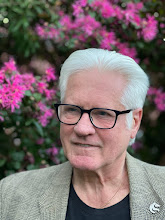
- Russell Blackford
- Australian philosopher, literary critic, legal scholar, and professional writer. Based in Newcastle, NSW. My latest books are THE TYRANNY OF OPINION: CONFORMITY AND THE FUTURE OF LIBERALISM (2019); AT THE DAWN OF A GREAT TRANSITION: THE QUESTION OF RADICAL ENHANCEMENT (2021); and HOW WE BECAME POST-LIBERAL: THE RISE AND FALL OF TOLERATION (2024).
Tuesday, January 29, 2019
Helen Dale reviews THE TYRANNY OF OPINION
This is a very pleasing review by Helen Dale. She concludes: "[Blackford] writes gorgeously, guiding the reader through a great deal of material with expertise and, sometimes, élan. It is a lesson in how to argue, and how to think. The Tyranny of Opinion: Conformity and the Future of Liberalism is an exceptional book. Anyone who engages in political debate should read it."


Monday, January 14, 2019
Australian Book Review reviews THE TYRANNY OF OPINION
The Tyranny of Opinion is Australian Book Review's book of the week this week, highlighted in its electronic newsletter. The journal has published the book review, by Ceridwen Spark, online. This is a wonderful review, and I couldn't be more pleased.
The review concludes: "Blackford’s book exemplifies how things might be if only we would all stop shouting at one another and learn to listen."
I'm expecting to see some more reviews soon. I know that there are reviews forthcoming in the immediate future from Quillette and Free Inquiry.
Friday, December 28, 2018
Where to begin in studying philosophy?
This thread over at Leiter Reports, back in August 2018, was a useful discussion of the question. Commenters chewed over what might be a good syllabus or reading list for a law professor with a budding interest in philosophy.
Some comments and suggestions didn't appeal to me, but some suggestions of philosophy books and other materials seemed very useful. Even for someone who has studied philosophy quite deeply, it's interesting to see a range of perspectives on what might count as the basics. It's also a bit frustrating to see how some people with undoubted expertise consider stuff to be central that I would be inclined to think rather peripheral and esoteric, while other similarly expert people evidently have different conceptions again of what philosophy is all about.
Still, in a world with ample time it would all be interesting to track down. I'm sure I'd be a much more rounded philosopher and thinker if I read (and genuinely considered) more of the material that I just described as peripheral and esoteric.
Saturday, December 22, 2018
Jerry Coyne defends anti-accommodationism at The Conversation
Jerry Coyne has published this useful piece at The Conversation, briefly setting out his case against the religion-science accommodationist position (i.e. the position that religion and science are, in some sense, straightforwardly compatible). He followed up with a post about this on his Why Evolution is True site.
As a reminder, I sometimes write for The Conversation, via its Australian set-up (my profile is here). In January 2016, I wrote a piece for The Conversation on this exact topic, entitled "Against accommodationism: How science undermines religion."
(My preferred version can be found here, if you have access to Academia.edu. However, there is little difference: I've merely reworded some phrasing about Stephen Jay Gould that caused unnecessary, unintended, and unexpected offence.)
This piece responded to (and acted as a sort of review of) Jerry's excellent book Faith vs Fact: Why Science and Religion are Incompatible. You can, perhaps, detect subtle differences in our approaches, but we're on the same wavelength here. I've long argued that science has a tendency - logically, psychologically, and historically - to undermine religion, which I understand in much the same way as the Canadian philosopher Charles Taylor.
It is also true that the humanities have tended to undermine religion's authority as they've explored the historical provenance of particular religions, not least Christianity.
As for what counts as a religion, I think "religion" is inevitably a fuzzy concept. The boundaries between religions, political ideologies, and various other worldviews are not sharp. Some ideologies show many of the trappings of religion. Indeed, they show many of the worst features of monotheistic religions in particular: their identification of orthodoxies and heresies; their reverence for certain figures and demonization of others; the psychological transformations they can produce, often leading to zealotry; and their intolerance of dissent.
Nonetheless, we can describe the phenomenon of religion in a way that tracks most people's intuitions. See, for example, my discussion of religion on pages 5-10 of Freedom of Religion and the Secular State and the short discussion of religion and ideology on pages 101-103 of The Tyranny of Opinion: Conformity and the Future of Liberalism.
In The Tyranny of Opinion, I describe religions in this way (p. 101): "Religions are (very roughly) systems of belief and practice that include otherworldly or supernatural elements of some kind: they involve belief in something that transcends the observable world or eludes empirical inquiry. Further, religions teach that there is an otherworldly dimension to human lives, and that this has at least something to do with how we ought to act in this world. Religions almost always involve rituals of some sort, and they typically include moral norms that are given a supernatural or otherworldly rationalization."
In recent years, I've become slightly less concerned about the claims of religion - and about religion's threats to our liberties - as I've become more focused on political ideologies and their dangers. Nonetheless, debates about religion and its value, and about its intellectual and moral authority, will not go away any time soon.
To be sure religion itself is slowly fading in Western countries (and some others), as Jerry notes in his post at Why Evolution is True, but my fear is that many people who are turning away from religious faith are turning to other belief systems that offer comfort and the sense of meaning that comes with claims to esoteric knowledge, while showing authoritarian tendencies. That, in fact, seems to be a danger with any belief system except the most open-ended and individualistic. Even if religion eventually goes away, as is clearly happening in Western and Northern Europe especially, there won't be an end to the struggle against authoritarian systems of belief.
Tuesday, December 11, 2018
Interview on Wikizilla site
I've done an interview on the Wikizilla site (a site devoted to giant movie monsters, including Kong) about my 2005 novel Kong Reborn. We get into lots of interesting issues about the 1933 King Kong movie, Skull Island, the big gorilla, the characters in the movie and my novel, the craft of writing this sort of fiction, etc. Check it out!
Monday, November 12, 2018
The Tyranny of Opinon reviewed at Goodreads ...
… by Laura Moriarty, author of the novel American Heart, which I discuss in The Tyranny of Opinion.
Since I discuss American Heart sympathetically, and defend its author over the public controversy that arose from it last year, it wouldn't be surprising if Ms Moriarty were predisposed to be sympathetic, in turn, to my book. Still, if you read the review (scroll down the page for it), you'll see that it's by someone who has obviously given The Tyranny of Opinion thought and consideration. I'm very pleased with this first public review to appear on Goodreads.
Tuesday, November 06, 2018
New piece published at Quillette: "Reasons to Be Fearful"
This is abridged and edited from the opening chapter of The Tyranny of Opinion. It will give an idea of the emphases and the prose style of the book, and where I'm coming from with it.
Friday, October 26, 2018
Latest on The Tyranny of Opinion

The Tyranny of Opinion was officially published a week ago, on 18 October 2018 (though with a copyright date of 2019 if you want to cite it). You can buy it from all the usual places, including Amazon, Amazon Australia, and Amazon UK.

First, an article that I wrote for Areo magazine entitled "How did we become post-liberal?" This covers some of the same general territory as The Tyranny of Opinion, although there is little overlap. The article somewhat assumes the contemporary situation described in the book and asks how we got into it. The two should be seen as complementary, while sharing much the same style and view of the world. If you like the article, you'll love the book! One merit of the article is that it offers some explanation of why Americans use the word "liberal" in a different way from the rest of the world (look to the 1930s).
Second, the first review of The Tyranny of Opinion so far, by Russell A. Whitehouse (no, this is not me under a pseudonym despite the similarity of names). This is a favourable review, so I'll take it! My main worry with the review - the only worry of much substance - is that I don't see the book as about "political correctness" or "P.C. culture." Let me explain this briefly. My criticism of ideological purity policing on the Left is an important aspect of the book, but I also have much to say about authoritarianism and censorship from the Right. In my opinion, the Right has historically been, and in some ways still is, generally worse than the Left in disrespecting individual freedoms and especially freedom of speech and expression. Nonetheless, I am very concerned at the way the contemporary Left so often censors and harms its own. Therefore, I do call for an end to left-wing purity policing. I'd like to see the Left return to liberalism (i.e. to an emphasis on individual liberty & free speech) on social issues and to a focus on the problems and anxieties of people from the rural and industrial working classes. All of this fertile political territory has increasingly been abdicated for conservatives and right-wing populists to take over.
Third, an interview about the book with the aforementioned Russell Whitehouse. In this interview, I take up the issue of political correctness, an expression that I distance myself from in the book, and the wider problem of political and social conformity (the book's topic). The interviewer raises various statistical issues with me, relating to some of the book's claims, and I give my answers. More generally, you might appreciate discussion of certain issues that are not specifically covered in The Tyranny of Opinion, but are certainly relevant the same political and cultural environment.
Friday, September 14, 2018
I have copies of The Tyranny of Opinion

The official publication date of The Tyranny of Opinion is 18 October 2018. From that point, it should be shipping from suppliers such as Amazon (and the Kindle edition should be available for purchase). By then or shortly thereafter, it should also be in bookshops. To make sure it's ordered in by your local bookshop, you can always draw it to their attention.
Sunday, July 08, 2018
The Tyranny of Opinion - cover art

Subscribe to:
Posts (Atom)