Wagg says:
I believe that if you equate skepticism with anything other than science, you’ve missed the point. As for Christianity, skepticism has nothing to say except about testable claims associated therein. Bleeding statues? Yes, skepticism comes into play. Jesus rose and is in heaven? Seems unlikely, but there’s not a lot more to say.
This seems like a very good time to bash our heads against the desk. First, we don't encounter claims such as those about Jesus' alleged resurrection in isolation. We encounter them in the context of entire systems of thought whose plausibility on any one claim can depend on their plausibility across a whole range of issues. That is, in fact, one reason why religions take work to refute: a claim about Jesus' resurrection may be made by many different theological systems, and its plausibility within any one system will depend on whether the system as a whole seems plausible. If your claim that Jesus rose from the dead depends on the plausibility of your total system, but that in turn depends on a whole range of other dubious claims - perhaps, for example, claims about the age of the Earth or the provenance of the Bible - then the claim about Jesus will end up being in trouble. Sorting out the logic of this kind of thing can be quite tricky, and it goes far beyond the sophomoric "Seems unlikely."
Yes, it does seem unlikely. But there's a lot more to say about why it really is unlikely.
But set that aside. Here's the important point that I want to make. Why should skepticism just be about science? Why shouldn't it be about rational inquiry generally, including the kinds of rational inquiry carried out within the humanities?
Now maybe Wagg doesn't mean "science as opposed to the humanities". Perhaps by "science" Wagg really meant "rational inquiry" and he actually meant to say:
I believe that if you equate skepticism with anything other than rational inquiry, you’ve missed the point.
But there is a great deal that can be said by rational inquiry in general about the plausibility of the claim that Jesus rose from the dead. For Zeus's sake, why doesn't Wagg go and read a few books by Bart Ehrman to get a sense of what we know through the humanistic part of rational inquiry - meticulous examination of texts and their provenance, for example - about how reliable the biblical accounts of Jesus' resurrection are likely to be?
He can't have it both ways. If he's going to use "science" in its common sense of what goes on in science faculties rather than, say, humanities faculties, there is no reason at all to confine skepticism to science. There are many extraordinary claims that are best examined via the rational methods used in the humanities, e.g by textual-historical scholars.
If, on the other hand, he wants to use the word "science" to mean the entirety of rational inquiry then there is a great deal that "science", as so defined, can say about a claim such as the one that Jesus rose from the dead.
This brings me back to another point from a couple of weeks ago, that there are many things that we know via the humanities and many other things that we know by ordinary kinds of observation that are not, in my view, sufficiently sophisticated or systematic to be termed "science". Some readers, particularly over at RD.net, seem to have interpreted that as an attack on science or some sort of defence of accommodationism in the manner of Eugenie Scott. It was, of course, the exact opposite.
My point was that non-accommodationists don't have to deny the obvious fact that the humanities, as well as the sciences, have something to offer us in obtaining knowledge of the world. Which techniques are most effective in making progress will depend on the circumstances. There are also circumstances where we can gain knowledge without doing anything as rigorous or systematic as what is done by either competent working scientists or by reputable scholars in the humanities.
However, science, the humanities, and ordinary experience are all continuous with each other and can be informed by each other. There are no sharp dividing lines. Nor are there any spooky, yet reliable, "other ways of knowing" that are discontinuous with them, enable us to take huge epistemic short-cuts, and give us knowledge of a supernatural world. At least, I don't see any reason to believe that there are.
Contrary, to what some accommodationists seem to think, non-accommodationists are not committed to denying the value of, say, rigorous textual scholarship, or that of highly-trained reading of literary texts to get a sense of their rhythm, tone, and dramatic intent (one of my examples was making a judgment about how to say a particular line in Macbeth). The idea that non-accommodationism about religion commits us to saying silly things about, for example, the uselessness or charlatanry of the humanities is simply false. It's a straw man argument, and we shouldn't give it credence.
(That's not to deny that a certain amount of what we've seen from the humanities in the last few decades really has looked like charlatanry, but the tendency seems to be receding to some extent, and the Sokal hoax and the circumstances that led to it shouldn't be allowed to put genuine scholarship in disrepute.)
This business with Wagg is a case in point. Rational inquiry has much to say about the alleged resurrection of Jesus. Much of what it has to say comes from that area of rational inquiry that we normally classify within the humanities rather than the sciences. If Wagg doesn't recognise the value of the humanities in the process of skeptical inquiry, or in the skeptic movement, so much for Wagg.
About Me

- Russell Blackford
- Australian philosopher, literary critic, legal scholar, and professional writer. Based in Newcastle, NSW. My latest books are THE TYRANNY OF OPINION: CONFORMITY AND THE FUTURE OF LIBERALISM (2019); AT THE DAWN OF A GREAT TRANSITION: THE QUESTION OF RADICAL ENHANCEMENT (2021); and HOW WE BECAME POST-LIBERAL: THE RISE AND FALL OF TOLERATION (2024).
Thursday, November 25, 2010


Currently reading: V. by Thomas Pynchon
In my spare moments over the next couple of months I'm going to work through Thomas Pynchon's novels, starting with those that I used to be very familiar with and wrote about at some length in an earlier phase of my life. I'm currently a couple of hundred pages into V., Pynchon's first novel, published in 1963, and am finding it a very strange work, coming back to it after a quarter of a century since I last read it - it's a bizarre and often perplexing story of real and imagined conspiracies, intrigue, lust, and decadence, all conveyed in a tone that seems to mingle fascination and distaste.
I'll report back in a few days when I reach the end. I must also check what I wrote about it all those years ago when I discussed it in my doctoral dissertation on the "return to myth" in modern fictional narrative.
I'll report back in a few days when I reach the end. I must also check what I wrote about it all those years ago when I discussed it in my doctoral dissertation on the "return to myth" in modern fictional narrative.
Wednesday, November 24, 2010
We need a broader skeptic movement - contra Jeff Wagg's idiocy and hypocrisy
PZ Myers has already replied to this idiotic and destructive post by Jeff Wagg, who puts the boot into a recent skeptics convention - Skepticon 3. [Edit: And Ophelia Benson has her say over here at Butterflies and Wheels.]
To be fair to Wagg, he also offers some (rather faint, insincere-sounding) praise to the organisers. But according to his line of argument, the program contained too many topics that were devoted to skepticism about religious claims. Oh noes! They're being skeptical about the truth claims of religion at a skeptics convention!
For Cthulhu's sake, what extraordinary claims can it possibly be more important to express skepticism about than those of religion?
Wagg says:
The pro-atheist cause is an entirely different endeavor with a community that overlaps strongly with the skeptical community. Skepticism is about drawing conclusions that are proportioned to the available evidence. That’s it. And I think keeping the two things separate i[s] vitally important.
What rubbish! First, skepticism has an honorable pedigree going back to ancient Greece, and the concept is far broader than this definition.
But even if you want to define "skepticism" very narrowly, part of what the "pro-atheist cause" does is subject claims about deities to rational examination, seeing what evidence exists for or against the existence of these entities. Conceptually, that is exactly the same thing as examining what evidence there is for or against the existence of Bigfoot or the efficacy of astrology. Of course, it's not as safe and comfortable, socially and politically, to get stuck into the evidence relating to deities as it is with that relating to Bigfoot, but that's all the more reason why people who wish to do so should be made welcome at skeptics conferences - and invited to present on atheism-related topics. The kind of unwelcoming stance that Wagg has taken to the atheist speakers is the last thing we need from people like him, who have some influence on the movement.
If anything, the skeptics movement should be moving to a wider definition, so that it embraces not just skepticism about religion but also skepticism about other extraordinary-but-popular claims that are difficult to square with the scentific picture of the world: such claims as those relating to the existence of libertarian free will. Let's have a genuine equal opportunity skeptic movement that goes well beyond relatively trivial claims about New Age woo, cryptozoology and the like - much as I love me some cryptozoology - and subjects claims that really matter to skeptical scrutiny.
Wagg's attitude conveys the implication that religion should, unlike astrology or claims related to Bigfoot, be protected from skeptical scrutiny. But such scrutiny is far more important in the case of religion, which wields enormous social and political power - unlike clubs for Bigfoot aficianados or Nessie spotters. Right now, we live in a time when it's crucially important to challenge the epistemic and moral credentials of religious leaders and organisations, and Wagg has placed himself on the side of frustrating that effort. Among other things, he is forcing people like me to waste our time replying to him.
What really annoys me is the way people like this, people who are attacking their own allies in public, behave as if they are the nice, reasonable, softly-softly ones. Talk about hypocrisy!
Cheers for Skepticon for dealing with an important issue in the depth that it deserves. As for Wagg, he deserves all the flak he's currently getting. He says, near the end of his diatribe:
And I fear the damage has already been done. I see a lot of good people leaving the skeptical community because they’re uncomfortable with the tone and disappointed with, frankly, the lack of skepticism presented by many people.
If people are leaving because they see skeptical scrutiny of claims about supernatural beings, then I wonder how "skeptical" they were in the first place. Good riddance to them, I say, joining in chorus with PZ on this occasion. And good riddance to Wagg, as well, if he leaves with them, as he's welcome to do. Hopefully he'll never again be seen in the skeptic movement, if publicly expressed skepticism about religion makes him so uncomfortable. It's his choice, of course - no one should be forced out. But the option is there for him to take.
The EXIT sign is right over there ...
Kitteh contest
I'm proud to be one of the, ahem!, celebrity judges - along with Ophelia Benson and Miranda Hale - of Jerry Coyne's kitteh contest. Check out the rules and send your entries to Jerry.
What use is the UN anyway?
Take the above as a genuine question if you like. Perhaps the UN has done some good above and beyond that done by the effect of the balance of nuclear terror in averting a third world war. Perhaps there has been real benefit in the body of international human rights law that it's developed, and in some of its programs. I'd welcome comments setting out just what benefits have been achieved via the UN that wouldn't have been achieved anyway. Let's hope that the list is impressive.
But I have to say that I have my doubts when the UN is unable to agree on a resolution that condemns arbitary executions, gives some examples, and is unable to issue a document with a reference to executions for sexuality among those examples. From a gay rights viewpoint, this is worse than no resolution at all. When such a reference is conspicuous by its absence, and when it's a matter of public record that the UN explicitly decided against including it, the implication can only be that the UN condones arbitrary executions of LGBT people.
When I see some of the outcomes from the UN, I sometimes shake my head and wonder, frankly, whether we'd be better off without it. Feel free to tell me why that's going too far and about some good things that it's accomplished - whenever I brood about what a shambles that organisation has become, I could do with some cheering up.
Tuesday, November 23, 2010
"The next step is to prohibit religious expression" - really?
Anti-religious speech is often criticized in a way that goes beyond refutation to a suggestion that it is somehow socially unacceptable. Consider Tom Frame's recent attack on what he calls "contemporary anti-theism," in which he includes such books as The God Delusion, by Richard Dawkins:
When it becomes acceptable, and even admirable, to mock and ridicule a person's religious convictions and customs — and especially when the intention is to provoke an indignant reaction — the next step is to prohibit the expression of religious sentiment in all public places and forums.
But this claim verges on paranoia. Frame is Australian, and should be well aware that there is no prospect in his (and my) home country of any prohibition on public expressions of religious sentiment - though he claims, vaguely, that there are "signs" to the contrary. If he were writing in the American context, where the presidency is intimately linked with religious ritual and involved in interaction with religious leaders, the claim would appear even more bizarre. The freedom of speech enjoyed by "contemporary anti-theists" is more than matched by that of their religious opponents.
Accordingly, Frame is legally free to liken these examples of "contemporary anti-theism" to religious fundamentalism.
But although this slur is perfectly legal, it is unfair: Frame suggests that "contemporary anti-theism" has "some of the characteristics of fundamentalism and, like all fundamentalisms, needs to be opposed." But which characteristics of fundamentalism is this anti-theism supposed to show? Frame does not say, and it is not at all clear.
For example, the anti-theists he refers to have no holy text that they treat as inerrant: they may give respect to each other's writings or to classics of science such as Charles Darwin's On the Origin of Species (1859), but that is a very different thing. They do not show extreme resistance to modernity through acts of violence, resistance to science and scholarship, and subordination of women. Dawkins and others may be confident of their positions, but not with the extreme dogmatism that clings to a position even when it is plainly contrary to robust scientific findings (liberal or moderate religious leaders may be equally confident of their positions, but that doesn't turn them into fundamentalists).
Frame appears to use the word "fundamentalism" for its hurtfulness rather than its accuracy. That is, of course, his legal right in a liberal democracy. However, his analysis exemplifies the illiberal view that satire and robust criticism are illegitimate forms of speech when directed at religion.
Stump an Atheist
I'm going to give a plug to this new blog created by Ryan Benson, which advocates an atheist perspective by answering questions from the public. From what I've read, Ryan is giving thoughtful, civil, and rather comprehensive answers, and this may well be one of the most effective ways to get the point across.
Go and check it out for yourself - you might like it.
Go and check it out for yourself - you might like it.
Australian Book of Atheism now on sale

Monday, November 22, 2010
More on Islamophobia and stuff
Further to last night's post, I should add that Asad and Mahmood do not seem to be suggesting that the considerations they raise provide a basis for censorship of blasphemous speech, including images such as the Danish cartoons. They seem more concerned to foster understanding of the Muslim point of view, and perhaps to create a more sympathetic response from non-Muslims in Western societies. Nonetheless, it is worth considering whether the issues they discuss should affect the policies of the secular state. In that respect, there's is a clear danger if the state acts on the basis of Asad's description of Muslim attitudes. What I call the Lockean model for relations between religion and state power does not propose that the various religions cease teaching their ideas, and arguing for them, merely that they cease jockeying for state power to impose doctrines and practices by fire and sword. This is completely inconsistent with a model that forbids one religion from "seducing" the adherents of another, or forbids opponents of religion from "seducing" the minds of religious believers generally.
Locke, of course, adduced secular reasons for prohibiting certain viewpoints, including those of Roman Catholicism, Islam, and atheism, but his reasons now appear weak. It is possible for conflicting viewpoints to co-exist in the one society, and pressing social problems don't usually arise from the presence of individuals with supposed extraterritorial loyalties, such as Catholics' loyalty to the Vatican or the Holy See (I say "usually" because there may be problems in some cases, as when crimes in one jurisdiction ar abetted in another). Nor, contrary to Locke's fears, does the presence of atheists destroy social bonds, or the efficacy of contracts and the judicial system. The tendency has been to allow a wide range of viewpoints and not to silence them - they may compete in a marketplace of ideas.
While some Muslims may find this alien to their tradition, much the same could have been said of Christians not that long ago. It seems reasonable to hope that Islam can adapt to a social environment in which it is open to criticism, and in which it is relatively routine for individual citizens to change religious faiths or lose religious faith altogether.
What about Mahmood's suggestion that Muslims experience attacks on the Prophet in a uniquely painful and personal way? Again, note the dangers if this is pressed too far. I have no way of assessing the accuracy of Mahmood's claim, though it seems plausible that pious religious adherents would feel something of the pain she describes when attacks are made on iconic figures. Perhaps this is especially so where the religious adherent is Muslim and the figure concerned is Muhammad, but it is easy enough to imagine the pain that might be suffered by pious Jews or Christians in analogous circumstances (ridicule of Moses, perhaps, or of Jesus or the Virgin Mary).
An explanation such as Mahmood's may help non-Muslims to understand what is at stake, emotionally, when satirical attacks are made on Islam, and especially on the person Prophet. Perhaps something similar explains the passionate responses of others, such as devout Catholics, to what they see as sacrileges (e.g. Andres Serrano's photograph, Piss Christ, which portrays a small crucifix submerged in the photographer's urine). All this is consistent with the militancy and litigiousness of some Catholic organizations.
Perhaps, then, we need to absorb the lesson that certain images, and perhaps mere words in come cases, can have a very high emotional impact not only for Muslims but also for adherents of other religions. That hardly excuses violent retaliation, such as occurred in following publication of the Danish cartoons, but high-impact offence can play a limited role in public policy. If it's correct that high-impact offence shades into harm, then the state has a legitimate role in protecting citizens from exposure to images and smells (for example) that produce, say, physical nausea. However, there's a catch here. There would be very few situations where exposure of others to nauseating smells has any communicative value. The situation is rather different with movies, artistic photographs, satirical cartoons, and philosophical novels! These can be avoided (even a newspaper can be closed) and they are protected by well-known free speech values.
The Danish cartoons, for example, caused offence to many people, but the immediate impact could be shut off by turning the page. A ban on such images would effectively mean that Islam was placed beyond satirical comment, as the images were not extreme as satirical cartoons go - no more so than run-of-the-mill cartoons that are published every day making fun of political proposals and events. What seems to have been most offensive about the cartoons was their ideas, for example of a linkage between Muhammad and modern-day Islamist terrorism. This, I submit, cannot be a ground for censoring newspapers.
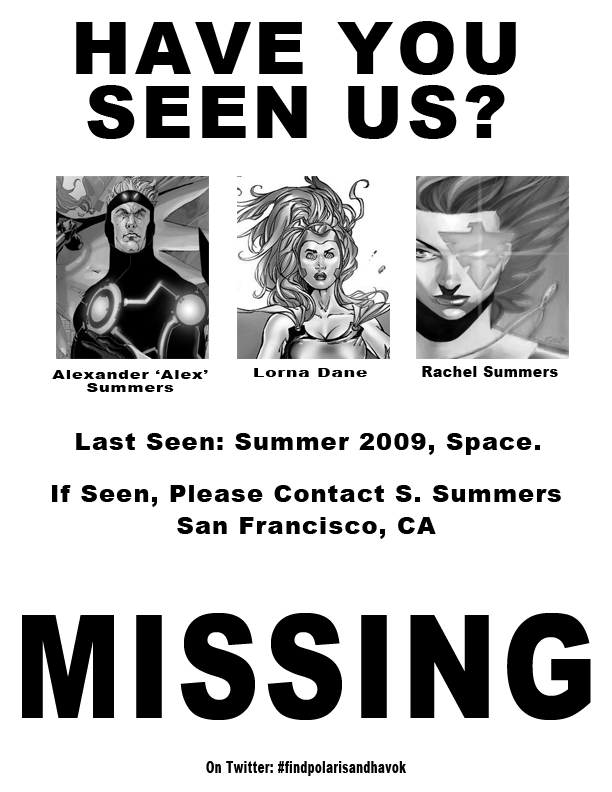
Lost in space
I came across this the other day, and it will amuse a certain sub-component of my readership (as you were, the rest of you).


Subscribe to:
Posts (Atom)