I've been on a long de facto blog break - not something I especially intended, but just how it's been turning out.
The last three weeks have been a bit intense, not so much incredibly busy (though busy enough) as incredibly nerve-wracking. Jenny and I made a decision some ago that we would need to sell our house and move on to the next phase of wherever we'll live. Actually, we'll still probably live in Melbourne for a year or so, renting somewhere, while we take stock of our options. Of course, this has meant dealing with real estate agents, lawyers, painters, carpet-repairers, etc., etc., none of it unpleasant and too much of it falling on Jenny ... see next para for why ... so I can't complain too much. Still, it's been a bit fraught, and I must say that I love this house, and have loved living it. I'm a bit sad about having to sell up, though I'm in no doubt that it's the right decision. We can't live the semi-retired lifestyle we do, with relatively little cash-flow, week by week, and also maintain a house as expensive as this one.
At the same time, events have come to a head with the preparation of my PhD thesis. There was an administrative log-jam to be broken - no use going into this - and it took a bit out of me working out what to do about it. However, the upshot is that I've spent much of the past three weeks deeply immersed in getting the thesis into order for submission. I have a green light from the department, and if all goes well it will be submitted late in the coming week (or early the following week). I now have what seems to be the final version - subject only to the very last layer of proofreading. I just need to run around getting copies bound, various forms signed, and so on.
I never planned that these two things would come to a head at once, but that's how it's worked out. So be it.
About Me
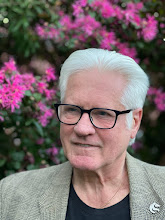
- Russell Blackford
- Australian philosopher, literary critic, legal scholar, and professional writer. Based in Newcastle, NSW. My latest books are THE TYRANNY OF OPINION: CONFORMITY AND THE FUTURE OF LIBERALISM (2019); AT THE DAWN OF A GREAT TRANSITION: THE QUESTION OF RADICAL ENHANCEMENT (2021); and HOW WE BECAME POST-LIBERAL: THE RISE AND FALL OF TOLERATION (2024).
Saturday, August 16, 2008


Sunday, July 27, 2008
Current issue of JET complete
We have now completed the current issue of the Journal of Evolution and Technology - Volume 17 Issue 1. Rounding it out is an in-depth review by Milan Cirkovic of Ian McDonald's novel Brasyl. Other books reviewed include Marc Hauser's Wild Minds and the new autobiography by Craig Venter. We have articles covering a wide range of issues related to technological change, society, and the future of humanity.
We're now putting the finishing touches on two special issues: one basically a proceedings volume from a conference held at Stanford on human enhancement technologies and human rights; the other an issue devoted to the subject of transhumanism, edited by Sky Marsen.
We are already looking to material for volume 18, for which four articles have been accepted and more are under review. We're always looking for high-quality scholarly material on the issues that interest us - essentially to do with emerging technologies, the human future, and the increasingly plausible and familiar idea of a new kind of human evolution, driven not by biological mechanisms such as natural selection but by the application of technology to expand human capacities. These ideas need to be examined from every disciplinary viewpoint, and as editor-in-chief of JET I'm determined to make it the forum for rigorous discussion of the issues.
Thursday, July 24, 2008
Another good review for Dreaming Again
Here's another good review for Jack Dann's anthology, Dreaming Again, this time by Carol Neist on the Specusphere website. My story, "Manannan's Children" gets a favourable mention, though the reviewer's comment left me unsure that she really "got" the ending:
Love of mythology is fed by several tales. Russell Blackford’s “Manannan’s Children”, for example, sweeps the reader up into the world of Irish legend while questioning the value of immortality. Janeen Webb’s “Paradise Designed” also has a mythological base, but with a Jurassic Park twist. Kim Wilkins’s “The Forest” is a near-future take on the Hansel and Gretel story. All three are well-told and very enjoyable.
I guess it's true that the story questions the value of immortality, but so does a lot of other literature and myth. The point is to provide an answer to the question, something that I attempt as the story draws to a close and the moral of the tale turns out to be not what a reader might assume it would be.
Still, I'm always pleased when something I've written is described as "well-told and very enjoyable"; I won't complain. I'm also glad to have my work mentioned in the same paragraph as stories by Janeen Webb (one of my dearest friends) and Kim Wilkins - both people whose work I admire greatly.
Monday, July 21, 2008
World Youth Day
I've spent the past week resisting an urge to comment on the great festival known as World Youth Day, actually a week-long set of activities culminating in an address by the pope to hundreds of thousands of the faithful.
This year, World Youth Day was held in Sydney, and its effects could also be seen in Melbourne where any trip into the city over the past fortnight has involved contact with roaming bands of young "pilgrims" from other countries.
I've avoided the topic for a couple of reasons. One is that I'm just sick of the media coverage and would rather ignore this sorry episode as much as possible. It's not as if my attitude to the Catholic Church, with its pathological morality of misery and guilt, is any secret. And, too, I feel genuine good will toward the young people who are guests in my country, much as I abhor the religious morality preached by their hierarchs.
I am, of course, appalled by the outrageous attempts to legislate to suppress the freedom of speech of people protesting against the Catholic Church, and I applaud the fact that the worst of this legislative effort was struck down by the courts. Things have come to a pretty pass if governments are even going to think about banning peaceful forms of protest against a highly controversial religious worldview.
I am also appalled that many millions of tax-payers' dollars have been spent promoting that same worldview - I do not want the mechanism of the state promoting ideas that I, for one, oppose and seek to undermine by intellectual critique and satire. Why should the dollars of the citizenry and the might of the state be spent on such blatant, one-sided distortion of the community debate about ideas about metaphysics and morals? The fact that associated tourism may have ended up making the exercise profitable for Sydney, and Australia in general, is beside the point. The issue is not that the expenditure has harmed our economy - it probably hasn't - but that the state has taken sides on a huge scale in an important controversy over the truth of religious doctrine.
Imagine the outcry if tens of millions of tax-payers' dollars were spent promoting a major event organised by Richard Dawkins and Christopher Hitchens to rally the world's youthful atheists (complete with laws criminalising efforts to "annoy" the atheistic pilgrims, such as by handing them religious pamphlets in the street).
Anyway, the whole thing is over now. Hopefully, many of the young Catholic pilgrims used the trip more as an opportunity to see the world, enjoy Australia's lifestyle, and engage in a certain amount of pleasurable sinning.
Friday, July 18, 2008
WTA changes its image
Following a membership vote, the World Transhumanist Association will be changing its image to the extent of trading under the "doing business as" name "Humanity Plus" and using a stylised "h+" as its logo. This decision was made by the Board, which sent it to the organisation's financial members for ratification or rejection. It follows an extensive review by the WTA Board over the past few months.
For the record, I voted in favour of these moves. However ambivalent I am about the word "tranhumanism" and its cognates, I am in broad agreement with the goals of the WTA and am a member in good standing. As I see it, the proposed move is very cautious and may do little either for good OR ill. However, if the Board believes that such initiatives can help it in its wider efforts to make the WTA more attractive as an organisation to fund and support, then, in the absence of some compelling argument to the contrary (and I haven't heard one that seems compelling), then I think the membership should be supportive. Clearly, various soundings were taken, so I'm hopeful that a total public relations overhaul - with a neat logo, a contemporary-sounding trading name, and a revamp of the website and everything else - might make the WTA a more attractive proposition to others who largely agree with its pro-technology emphases.
The new name and logo may themselves cause some confusion and/or have some undesirable connotations, but we can probably live them, and the decision can always be reversed a few years down the track if it has turned out, by then, to have been counterproductive.
There was some very spirited debate, with a wide range of viewpoint, some of which I find congenial - while some sounded bizarre. But that's the transhumanist movement, a very broad one in the ideas that it welcomes. In the end only 108 people actually voted, and the majority in favour of the change was overwhelming.
The breakdown was:
CHOICES AND RESULTS
- Yes, 75 votes, 69.44%
- No, 22 votes, 20.37%
- Abstain, 11 votes, 10.19%
Thursday, July 17, 2008
Jenny Blackford getting attention
No, I don't mean that sort of attention (which she can command any time).
I mean that up-and-coming writer Jenny Blackford has had a good week for critical attention paid to her short stories. "Python", published last year in the anthology Ruins Terra, has made Gardner Dozois' Honorable Mentions in his latest Year's Best SF anthology, which is quite an achievement for Jenny's first published short story aimed at adult readers rather than at children or the YA market. Her second such story is "Trolls' Night Out", in Dreaming Again - which has also picked up early praise. Reviewing Dreaming Again in AurealisXpress, Stuart Mayne says:
The stand-outs for me were Lucy Sussex's "Robots and Zombies, Inc."; John Birmingham's terrific colonial horror show "Heere Be Monsters"; Jenny Blackford's playful "Troll's Night Out" was supernatural fun; Lee Battersby's "In From the Snow"... Oh, this is silly there are too many terrific stories to list. The lovely thing I found about the majority of the stories is the local content; in this respect I particularly like Trudi Canavan's, Jenny Blackford's and Cecilia Dart-Thorton's Melbourne pieces.
(Eek! My own story in Dreaming Again is set in ancient Ireland and retells the Oisin legend from a vaguely transhumanist viewpoint - but (*grin*) never mind about me.)
Meanwhile, Jenny's YA retelling of the Perseus myth, "Andromeda", appears in Paul Collins' new anthology Trust Me - and again her story was singled out for praise, this time in a review in the influential Magpies magazine.
All this in one week. Not bad going.
Tuesday, July 15, 2008
Listen to Triple J at 5.30 pm
I just did an interview with Triple J on unreasonable/absurd religious practices. This was conducted in a light-hearted way that involved my being presented with a list of odd practices to rank in order of unreasonableness.
If you have a moment (and see this in time), tune in to Triple J at 5.30 this afternoon and let me know what you thought. And how would you rank the traditional Jewish kaparot ceremony (in which an individual's sins are transferred to a chicken), pentacostals' speaking in tongues, Jehovah's Witnesses' refusal of blood transfusions, Mormon temple garments, and the E-meter beloved of Scientologists? What's the best criterion to use to determine relative unreasonableness? E.g., is it what just seems weirdest or least familiar to you or to someone of your background? What involves the most unlikely understanding of reality? Or what does the most harm (or maybe some weighing up of bizarreness and harmfulness?)?
Tune in for a (hopefully) quick-witted discussion of these issues and more.
Thursday, July 10, 2008
At the AAP conference
I've been a bit scarce all week, as I've been attending the AAP conference. I'm perhaps not getting "into" this as much as if it were held in a different city - with it being here in Melbourne this year, it's tempting to stay home and worry about my paper (on tomorrow) and deal with other things. Still, I've been there most of the time since Sunday evening, and need to give a paper first thing tomorrow. Wish me luck, everyone.
Sunday, July 06, 2008
AAP conference coming up
The AAP conference starts this afternoon and continues through until Friday afternoon - in fact there's social activity on into Saturday. This is the big event in the yearly calendar for philosophers based in Australia and New Zealand. I can't believe that it's already upon us (where did the year go?).
My own paper, which is entitled "Transhumanism and its Critics: Time to Transform the Debate" is scheduled first thing on Friday morning. Hmmm, early in the morning on the last day is not the best time to give a paper if you actually want an audience. In fact, that's putting it rather mildly - I hope someone shows up to it. Never mind, we'll see how it all goes.
Thursday, July 03, 2008
Avoidance activities?
The time has come for me to write the paper that I'm committed to give at the AAP Conference next week. The subject is ... well, I must check what exactly I committed myself to, but I know it was something to do with transhumanism. I even tried to get a transhumanism-related stream on the program, but that didn't come to anything.
I figured earlier in the week that spending most of the week thinking and writing about transhumanism - by immersing myself in the papers published in The Global Spiral, and commenting on them all - might get me in the mood. As a matter of fact, it has, and I hope that all the work that went into it will be of value to someone. But it hasn't actually written my paper for me. Hmmm, maybe I'm not that much in the mood to write a conference paper. what avoidance activities should I try next?
Subscribe to:
Posts (Atom)