Here's what Barack Obama said that now has him in such deep trouble (we'll find out just how much trouble next week):
You go into some of these small towns in Pennsylvania, and like a lot of small towns in the Midwest, the jobs have been gone now for 25 years and nothing's replaced them. And they fell through the Clinton administration, and the Bush administration, and each successive administration has said that somehow these communities are gonna regenerate and they have not. And it's not surprising then they get bitter, they cling to guns or religion or antipathy to people who aren't like them or anti-immigrant sentiment or anti-trade sentiment as a way to explain their frustrations.
So, how wrong is he? A lot of the reaction seems to based on the idea that, even if there's some truth to what he's saying, a presidential candidate is not supposed to say anything that might be construed as negative about a part of the American electorate. You always have to lift people up - all of them - and never be seen to "look down" on them.
But a lot of the flak is coming from the mention of "religion" in a way that is not respectful and implies criticism (listing it with guns, bigotry, protectionism, and so on, like it's another bad thing). You just can't do that in the US - not even in passing, in this mild, implied way. Not if you're a politician trawling for votes. But surely Obama has a point; it does appear that America's ongoing religiosity has something to do with its widespread economic insecurity.
So is Obama now on the skids? I'd hate to see him falter over something like this. I mean, I'm kind of rooting for Clinton (nothing against Obama; I just think that at this stage of their respective careers Clinton will be the more formidable opponent for McCain ... and perhaps also the most competent president on offer). But Obama has gone up in my estimation. What he said is being portrayed as a terrible gaffe, as a moment when he betrayed what he really thinks and revealed himself to be an elitist who looks down on the common people. To me, it just reveals a man with a brain his head.
About Me
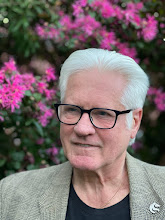
- Russell Blackford
- Australian philosopher, literary critic, legal scholar, and professional writer. Based in Newcastle, NSW. My latest books are THE TYRANNY OF OPINION: CONFORMITY AND THE FUTURE OF LIBERALISM (2019); AT THE DAWN OF A GREAT TRANSITION: THE QUESTION OF RADICAL ENHANCEMENT (2021); and HOW WE BECAME POST-LIBERAL: THE RISE AND FALL OF TOLERATION (2024).
Monday, April 14, 2008


Sunday, April 13, 2008
A nice pro-religious argument
I came across this, or something similar, the other day. I don't think it's a successful argument in the sense that it should persuade an atheist. Still, it's quite neat. It's deductively valid, and it's not viciously circular, since independent arguments can be put for both P1. and P2.
P1. Certain religious virtues, attitudes, etc., are superior to their secular equivalents.
P2. P1. could be true only if God existed and we were His creatures.
C. God exists and we are His creatures.
It looks to me as there must be some sense in which P2. is true, though I query whether it could be true at the same time as P1. and without equivocation.
I suspect that the godless readers of this blog will want to dismiss P1. pretty quickly, and in the end I'd probably reject it too. But I actually think that a fair bit can be said in its favour.
Note that the conclusion entails only a very minimal belief: God exists and we are His creatures. A very moderate religionist could believe this. If someone is actually persuaded by this argument to retain some kind of minimal religious belief, I won't have too much of a problem with it. I'd even adopt the argument myself if I thought it stood up to analysis, but I don't think it does. The fact that it doesn't might not be entirely welcome, though. Religious attitudes to the world may not, ultimately, be superior to their secular equivalents, but there is something impressive about at least some of them.
Consider this famous poem by Gerard Manley Hopkins:
God's Grandeur
The world is charged with the grandeur of God.
It will flame out, like shining from shook foil;
It gathers to a greatness, like the ooze of oil
Crushed. Why do men then now not reck his rod?
Generations have trod, have trod, have trod;
And all is seared with trade; Bleared, smeared with toil;
And wears man's smudge and shares man's smell: the soil
Is bare now, nor can foot feel, being shod.
And for all this, nature is never spent;
There lives the dearest freshness deep down things;
And though the last lights off the black West went
Oh, morning, at the brown brink eastward, springs —
Because the Holy Ghost over the bent
World broods with warm breast and with ah! bright wings.
Nice, eh? It does appear to me that there is a certain attitude to the world expressed in this poem which it is impossible to have without some kind of minimal religious belief along the lines that God exists and we are His creatures. Hopkins does not see the world merely as awe-inspiring and beautiful; it's more than that. He sees it as charged with the grandeur of a creator-deity to whom we owe obedience. Somehow, we see the world and catch a glimpse of something beyond it, sustaining it and caring for it.
You can't translate the vision of the poem into secular terms without losing something. Hopkins is not seeing nature as just beautiful, fresh and self-renewing, or grand/awesome. For Hopkins, the world somehow conveys to us the greatness of a supernatural being who stands behind it all and whose creatures we are. Somehow - it's not clear how - we have this experience of seeing through the phenomena to a higher or deeper or more noumenal (not to mention numinous) reality.
It's impossible not to be impressed by this, and Hopkins' vision does seem, at least arguably, to be somehow "richer" than any secular equivalent. This may be an illusion - perhaps we are merely socialised to find this kind of sacramental vision of nature's grandeur and beauty especially impressive and moving. Still you can, maybe, see why a religious believer might not want to stop taking this kind of sacramental vision with full seriousness; you can see why someone might want to buy into it unproblematically. We atheists can project ourselves into it imaginatively, perhaps, or we can take a slightly distanced, almost anthropological view of it. But we can't embrace what Hopkins is saying without reservation, and perhaps there is a loss here. It may also be true that holding such a minimalist religious belief does not require giving up much that's of secular value.
(Of course, those parts of the poem that talk about us being sinners - e.g. not recking God's rod, i.e. disobeying him - may seem less palatable. If there is no secular equivalent of this, perhaps it's a good thing.)
All in all, at least some aspects of the poem's vision might impress us in a way that a secular equivalent would not. This seems to make P1. seem more plausible.
Here's a simpler example: the religious believer with at least the minimal belief that I've described can face each morning with an attitude of thankfulness. We atheists can also be "thankful", but only in inverted commas, because there is no person to thank - at most we can "thank" (or perhaps just be happy about) all the good events and so on that have kept us alive until now (we can thank goodness, as Daniel Dennett says, but surely it is an inverted-commas kind of thanking). But this secular equivalent may seem to be missing something. Again P1. is lent some plausibility.
There are many such examples. We could multiply them indefinitely.
At the same time, how could P1. be true unless it really is true that God exists and we are His creatures? So surely, it might be said, we must accept P2. But then, if the arguments for the plausibility of P1. move us, so that we accept both premises, we are forced by the logical entailment to accept C.
As I said, I don't think it's a satisfactory argument - and I'll leave its problems as an exercise for my readers. But it may bring out one way in which someone can be a very moderate and minimalist religious believer, while also being very serious about it (and honestly saying "not my religion" when confronted by attacks on religion by people like Richard Dawkins).
Don't worry, I'm not going soft on religion. I continue to believe that its claims are false, that the argument under discussion is not successful, and that it would be better if the political influence of religion were reduced. But sometimes it's good to think about how things might seem to reasonable people on the other side.
Discuss.
Friday, April 11, 2008
Great quote from John Harris
"I conclude that if there is an issue of human dignity which is engaged by human cloning in any of its forms, it is the huge indignity of permitting the legislative and regulatory agenda to be set by a combination of panic and prejudice. Added to which is the indignity of witnessing an undignified scramble to produce literally any argument, however poor or implausible, so long as it seems to provide some grounds for rejecting cloning." (On Cloning, 2004: 143)
Do we want a truly liberal society?
(Note: this paper was written for the context of Australia's current soul-searching about its future, but I believe that it is applicable, with very little change, to every contemporary (supposedly) liberal society.)
DO WE WANT A TRULY LIBERAL SOCIETY? AUSTRALIA'S STARK CHOICE
Russell Blackford, School of Philosophy and Bioethics, Monash University
INTRODUCTION
A key question that Australia now faces as a nation is whether we are prepared to build a truly liberal society in the twenty-first century, or whether we will continue on a path where individual liberties are at the mercy of the political process. We are confronted with a stark choice.
One spur to thought about this question is the hysterical response in recent years to the prospect of new biomedical technologies. Much of this was provoked by the 1997 announcement in Nature that scientists in the UK had succeeded in cloning an adult sheep using what is known as somatic cell nuclear transfer ("SCNT") (for the announcement, see Wilmut et al. 1997). This announcement immediately led to moral panic about the prospect of human reproduction by the use of SCNT. Since then, Australia has been one of the many nations that have taken a highly illiberal approach to the regulation of new or emerging biotechnology.
Commentators on new biomedical technology often appear to believe that we are faced with Frankensteinian possibilities that cry out for a regulatory response. This, however, is getting things exactly back to front. On the contrary, the problem that we currently face is that widespread fear of new technologies has created an atmosphere in which liberal tolerance is under challenge. In the field of bioethics, what we need right now is a truly liberal response.
I suggest that our approach should identify genuine dangers and concerns, but deal with them strictly in accordance with liberal values.
Before going any further, I must stress that the recent illiberal tendency in public policy cannot be confined to bioethical issues. Once the idea of liberal tolerance is abandoned, many practices may be suppressed by the coercive power of the state, should they fail to gain acceptance within the political process.
Thus, just as arguments can be put that human reproductive cloning should be suppressed because it is somehow "interfering with nature" or "playing God", arguments can be put for suppressing certain consensual sexual practices as "unnatural", for suppressing certain speech as "blasphemous" or "offensive", or simply "inappropriate". And so on. Much of our policy framework for dealing with recreational drugs seems to be driven by an illiberal moralism, rather than a concern with liberty (or even harm reduction).
Liberal societies should give no credence to any such arguments that are based on contested values and moral beliefs.
THE IDEA OF A LIBERAL SOCIETY
A liberal society embraces pluralism, in the sense that it does not seek to impose any one vision of what it means to be virtuous or to lead a good life. Within such a society, approval is commonly expressed for John Stuart Mill's view that "experiments in living" should not be merely tolerated, but actually welcomed and celebrated (Mill 1974: 120).
As Max Charlesworth writes, "In a liberal society personal autonomy, the right to choose one's own way of life for oneself, is the supreme value." He adds that this includes what he calls ethical pluralism: members of the society are free to hold a wide range of moral, religious, and non-religious positions, with no core values or public morality that it is the law's business to enforce (Charlesworth 1993: 1). Accordingly, a liberal society makes a sharp distinction between the sphere of personal moral views and that of the law; no one can use the law to impose their beliefs on others (16-20).
Admittedly, it is sometimes difficult to define the boundaries of liberal tolerance, and the broad idea has been formulated in different ways, even by its prominent defenders in the current debates about bioethics.
John Harris, for example, writes of what he calls "the democratic presumption", which he elaborates as the principle adopted in liberal democracies that the freedom of citizens not be interfered with without good and sufficient reasons. According to Harris, citizens should otherwise be at liberty to make their own choices, based on their own values; some serious real and present danger, whether to other citizens or to society, is required to rebut the presumption (Harris 2007: 72-73).
Similarly, Gregory E. Pence defends what he calls the "classic liberal view", though he notes that the label is confusing.
This is the idea that we do not try to dictate decisions about the good to others, but leave them alone as long as they leave us alone. For Pence, the justification for this approach is simply that all the alternatives have led to disaster (Pence 2000: 167).
In a recent defence of liberalism, Paul Starr offers a richer description of the liberal ideal. Liberalism as Starr understands it has allowed people with different religious and moral commitments not just to live side by side, but to flourish together. A liberal state will not require everyone to worship in the same way, follow the same way of life, or profess an official ideology, but it expects citizens to show reasonableness and openness to ideas. It is not neutral about such values as disease and health, sloth and effort, deceit and integrity, cowardice and courage. There are, he suggests, excellences that it must promote to survive (Starr 2007: 176-77).
Nonetheless, Starr argues, a liberal state is neutral where divisions over the nature of the good life are deep and irreconcilable. Most crucially, the state apparatus of a liberal society allows a diversity of cultural and moral practices that cause no harm to others; this provides a framework for individuals' free development (Starr 2007: 22-23).
On such an account, liberalism can welcome any worldview that is able to endorse such ideas as mutual tolerance and the free development of autonomous individuals.1
As Starr points out, modern liberalism has also adapted to growing agglomerations of private power, the harsh collective and individual impacts of unregulated markets, social changes, economic crises, and unprecedented scales of warfare (Starr 2007: 85-116). As a result of social and economic change, the apparatus of the state now exercises extensive powers for the purposes of social coordination and to ameliorate the harshness of economic outcomes that would arise under a system of unbridled capitalist competition (see, e.g., Atiyah 1979: 571-779). However, these powers are explained in liberal thought on the basis that their use is meant to extend, rather than reduce, the practical autonomy of individual citizens (Lee 1986: 16-17; Raz 1986: 414-18).
Unless some kind of harm can be identified, a liberal society is generally reluctant to restrict the liberty of individuals to act as they wish with the resources available to them. Even the idea of harm is usually restricted to direct, significant, and wrongful harm to others. In particular, the harm described must be to secular interests, not to theological ones such as interests in personal salvation, holiness, purity from sin, or conformity to the will of a deity.2
As Charlesworth describes the position, in a liberal society there cannot be a consensus on such matters as the alleged superiority of heterosexual, monogamous marriage, or the idea that deliberately ending one's life is against God's will, or that organ transplants violate bodily and spiritual integrity, or that abortion is equivalent to murder of the innocent (Charlesworth 1993: 163).
In a liberal society, the coercive power of the state is brought to bear against individuals only with reluctance. Where individuals' personal lives and life plans are at stake, including their ability to express themselves freely, have consenting sexual relations, and make reproductive decisions, the state will be particularly solicitous of freedom of choice, unless a compelling reason can be found to do otherwise.3 Prima facie, the infliction or threat of force by the state is considered objectionable, especially so when very personal interests are at stake, as with choices about sexual relationships and family formation.4
BIOETHICS AND THE CHALLENGE TO LIBERAL TOLERANCE
This somewhat idealised picture of a liberal society and its ethos of mutual tolerance might suggest that a forbearing, if not welcoming, attitude would be taken to new or postulated forms of biomedical technology. For example, reproductive cloning might, one would think, be welcomed by a liberal society as an acceptable personal choice - particularly, but not solely, as a legitimate response to male infertility (and the preferences of some lesbian couples).
Admittedly, reproductive cloning is not currently a safe method of reproduction, in the sense that it would involve a high risk of congenital malformation. It is arguable that even the most liberal society has good reason not to tolerate the use of a method of reproduction that is unsafe in that sense. Such safety arguments, as they might be called, could also apply to other technological interventions, such the genetic engineering of human embryos.
However, the policy debate since the cloning of Dolly the sheep by Ian Wilmut and his team has been remarkable for the way that many participants have ignored, or even rejected, the liberal idea that experiments in living are to be welcomed. Prima facie, this Millian idea should apply to decisions about the full gamut of technological innovations, even though Mill himself could hardly have foreseen them. In the absence of some argument based in liberal values, liberal societies should allow individuals to decide whether or not to bear and raise children created by the use of SCNT.
Arguments about safety, or even about the welfare of growing children, do not explain the character of the actual debate or the real-world policy responses of liberal societies. The debate appears to be motivated in large part by a wish to impose certain moral or quasi-religious, ideals as social norms, and by a fear of the potentially strange directions that societies might take as biomedical technology develops.
In the early 1990s, Max Charlesworth complained about a gap between liberal ideas and the widespread hostility, within liberal societies, to a range of practices in health and medicine. On Charlesworth's account, one would expect to see liberal societies treating personal autonomy as central to ethical discussions about new reproductive technologies, and drawing a sharp line between the morality and legality of biomedical innovations. However, Charlesworth argued, the experience was that many of the policy responses of the time were illiberal - often authoritarian or paternalistic (Charlesworth 1993: 1-2).
The years since - and particularly those since the cloning of Dolly - have only made the gap identified by Charlesworth more obvious. We have seen the emergence of widespread and politically-influential opposition to many real or mooted technologies (e.g. embryonic sex selection, reproductive cloning, human genetic engineering, and radical forms of life extension). More than ever, we should heed Charlesworth's contention that those engaged in bioethical discussion, within liberal societies, must take account of the fact that they are, indeed, living in liberal societies and of a liberal society's basic values (Charlesworth 1993: 27).
In Australia, one outcome of the debate over new biotechnology has been the enactment of the Prohibition of Human Cloning for Reproduction Act 2002 (Cth). In its current form, as amended, this specifies a raft of criminal offences with maximum terms of imprisonment of fifteen years. These offences include any deliberate alteration of a human cell that would be inheritable, and intended as such (section 15), and any action that involves placing what the Act calls "a human embryo clone" in the body of a human being or another animal (section 9). The legislation proscribes germ-line manipulation of embryos for any reason, along with actions needed for reproductive cloning; further, it imposes prison sentences appropriate only for major crimes.
This federal statute operates in conjunction with numerous other restrictions under state legislation and guidelines issued by the National Health and Medical Research Commission ("NHMRC"). In particular, the use of PGD for embryonic sex selection, a technology that is already available, is proscribed by NHMRC guidelines and prohibited by some state provisions such as Victoria's Infertility Treatment Act 1995 (Vic.), which provides a maximum two-year penalty for any attempt to predetermine the sex of a child by technological means, except where necessary for medical reasons (section 50).
I submit that little of this can be justified on grounds that would be acceptable under the Millian harm principle or any principled extension of it, such as might be found in the comprehensive review in Feinberg's four-volume The Moral Limits of the Criminal Law (Feinberg 1984, 1985, 1986, 1988).
CONCLUSION
While the focus of this paper is on bioethical issues, where my recent research has largely been concentrated, it has implications that go far wider. A truly liberal society would be reluctant to interfere in many issues relating to sexuality, free speech and expression, family formation, and other matters involving deep disagreement about values and the good life. Once a society goes down the path of allowing law-makers to impose their views about these matters (or the views of an electoral majority), liberty is threatened across the board. Such an approach cannot be confined to one set of issues, such as bioethics.
We can expect the future to bring new political issues of many kinds. Some of them will provoke anger, fear, and other strong emotions, as did the cloning of Dolly and the prospect of reproductive cloning for human beings. Next time such an issue emerges, and grants law-makers in liberal societies, such as Australia, the opportunity to demonstrate their credentials as successors to Locke and Mill, they should not squander it.
A good start would be for opinion leaders to begin right now in identifying the issue of whether we want Australia to develop as a truly liberal society. This is, I submit, an idea whose time has come.
NOTES
1 This is a central theme of John Rawls's Political Liberalism (Rawls 1993).
2 An early version of this idea can be found in John Locke's A Letter Concerning Toleration, in which Locke assigns to the civil magistrate protection of "things belonging to this Life" but not "the Salvation of Souls" (Locke 1983: 26).
3 In so doing, the governing philosophy of a liberal society will foster autonomous choices, even where this requires a redistribution of economic resources. In this respect, it differs from political libertarianism.
4 Compare Hart (1963: 21-22), which emphasises the importance of sexuality to individuals. The same point can be made about individuals' reproductive decisions.
REFERENCES
Atiyah, PS. (1979). The Rise and Fall of Freedom of Contract. New York: Oxford University Press.
Charlesworth, Max. (1993). Bioethics in a Liberal Society. (Cambridge: Cambridge University Press.
Feinberg, Joel. (1984). Harm to Others. New York and Oxford: Oxford University Press.
—. (1985). Offense to Others. New York and Oxford: Oxford University Press.
—. (1986). Harm to Self. New York and Oxford: Oxford University Press.
—. (1988). Harmless Wrongdoing. New York and Oxford: Oxford University Press.
Harris , John. (2007). Enhancing Evolution: The Ethical Case for Making Better People. Princeton: Princeton University Press.
Hart, H.L.A. (1963). Law, Liberty, and Morality. Oxford: Oxford University Press.
Lee, Simon. (1986). Law and Morals: Warnock, Gillick and Beyond. Oxford: Oxford University Press.
Locke, John. (1983). A Letter Concerning Toleration. First published 1689. Indianapolis: Hackett Publishing.
Mill, John Stuart. (1974). On Liberty. First published 1859. London: Penguin.
Pence, Gregory E. Re-Creating Medicine: Ethical Issues on the Frontiers of Medicine. Lanham, Maryland: Rowman & Littlefield.
Rawls, John. (1993). Political Liberalism. New York: Columbia University Press.
Raz, Joseph. (1986). The Morality of Freedom. Oxford: Clarendon; New York: Oxford University Press.
Starr, Paul. (2007). Freedom's Power: The True Force of Liberalism. New York: Basic Books.
Wilmut, I., et al. (1997). "Viable Offspring Derived from Fetal and Adult Mammalian Cells." Nature 385: 810-13.
Another annoying thing about the Australia 2020 conference
Another annoying thing is this. Those of us who hoped to go, but missed out, were given an extremely short time to regroup, after being given the bad news, and to take the alternative route. In this case, the alternative route is to provide a written submission to the conference.
Submissions were due on 9 April and apparently this is being applied strictly. To be fair, I suppose we could all have prepared written submissions just in case, but we're busy people - at least I am - and it would be nice to know what ground rules to follow.
Anyway, I was stretched far too thin to meet that deadline. I imagine that a lot of people didn't even try: anyone who has serious pretensions to go to a conference like this is going to be a busy person.
In my spare moments (ha!) I have actually managed to put something together which at least summarises what I would have liked to have said to the conference ... or to have included in a written submission. If anyone is interested in this, you only have to ask for a copy. I can't think of what else I should do with it. Maybe save it as my response for when some sort of report emerges from the conference?
I guess the "second thousand" will eventually get our chance to have a say.
Thursday, April 10, 2008
Trust me!
I'm just back from the launching of Paul Collins' new anthology of genre stories for young adults, Trust Me! This features 50-odd stories, including a new fantasy story by Jenny. Paul, as editor and publisher, has done a beautiful in putting the package together.
About half the authors were present, so this was a fun occasion, with much passing around of copies for multiple signatures from as many contributors as possible, etc. Jenny visibly had a great time, and hey I did, too, though it's always the most fun to be in an anthology when it's being launched. :)
Paula Kelly gave a generous speech in introducing Paul, and Paul gave a generous speech in which he thanked everyone he could think of (even I got a mention, though I really had nothing to do with this book, except as Jenny's in-house proofreader).
Jenny and I had a tasty dinner with a few friends afterwards ...
And okay, now back to work.
Monday, April 07, 2008
I am not one of Australia's best and brightest - apparently
It's gradually becoming known who did and who did not get an invitation to the Australia 2020 seminar later this month, in which Australia's 1000 supposedly best and brightest thinkers will spend a weekend in Canberra solving the nation's problems and working out its future trajectory.
I can report that I didn't get an invitation, and I'm not going to pretend I don't care. I am, in fact, mildly pissed off about it. Those lead articles in Quadrant don't count, I guess, and nor does the fact that, in Damien Broderick's absence, self-exiled in the US, I must surely rank as Australia's best-known thinker on issues relating to the human/post-human future (hey, guys, you now have a goddamn Australian as editor-in-chief of the Journal of Evolution and Technology, the leading intellectual flagship of the transhumanist movement; just thought I'd let you know). You'd think there'd be some room for my viewpoint at a conference of Australia's ... ahem ... top thousand thinkers about the future of the country.
Okay, who am I kidding? My application was always a long-shot, since my interests in science fiction, transhumanism, scientifically-informed rationalism, and a genuinely liberal approach to public policy were always going to be seen as kind of out there by the folks running this talk fest. It doesn't matter how much prominence I build up nationally and internationally, those fields of expertise aren't going to endear me to the solid burghers in the political mainstream.
Still, I thought there was some outside chance, if someone just used a bit of imagination and thought beyond the usual suspects, so I won't pretend otherwise. Yes, I am (however mildly) pissed off by it, much as I didn't expect to get the nod from on high, much as I'm more amused than anything else, and much as there are plenty of other people, er things, I'd like to do that weekend. For all that, those grapes would have been sweet, and I did have something to say.
Anyhow, what the heck, I'm sure I have plenty of company.
Saturday, April 05, 2008
Science, religion, and "framing"
I've posted a version of this on John Wilkins' blog (thanks to the commenter who pointed out to me that Wilkins had blogged thoughtfully on the issue). There is some discussion over there about whether there's really a tension between science and religion and about whether religion is really such a terrible thing.
Let's address the latter point: what's so bad about religion - apart from its falsity? I'm assuming throughout this post that all known religions actually are false.
Well, (1) if you buy seriously and non-sceptically into a religious view of the world - I'm assuming here a fairly comprehensive one, not just a couple of key doctrines such as "the Abrahamic God exists" - then it's likely that your whole life will be lived in accordance with a worldview that is, ex hypothesi, fundamentally and pervasively false. In that sense, everything you do and say will be distorted and your life will be structured in accordance with an illusion. I actually think that's an unfortunate fate, and I'd like to rescue people from it to the small extent that I can (while using nothing but liberal means, such as persuasion and example).
(2) Religions tend to preserve moral norms that may or may not have once been functional in the societies in which they originated, but are certainly not functional now. The result is often a cruel disconnect between the way religion tells you how to live and the way of life that would actually be flourishing and pleasurable - and perhaps better for those around you as well as for you.
Perhaps this doesn't matter so much, because religious people can still feel happy, even if their happiness is based on the comforting illusion that they are living the most moral or correct way of life in the service of a deity or a supernatural principle. But, worse, the religious are often eager to impose their way of life on others by means of the coercive power of the state. They are always trying to ban something or other, whether it's abortion, alcohol, divorce, contraception, homosexual acts, stem cell research, rival belief systems, or whatever.
We have some choices here: we can insist on liberal tolerance, according to which the state does not impose contentious religious and moral beliefs - taking some proposals off the democratic agenda and limiting the powers of the state. I think we should do exactly that, but it's not a complete answer.
* First, many religious leaders have no commitment to liberal tolerance; sometimes they merely pay it lip service, and at other times they are explictly opposed to it.
* Second, oftentimes religious and moral beliefs that are not well-founded are nonetheless not actually all that controversial within a particular population, for historical reasons, even though they perhaps should be, since they have little evidence in their support. It can be difficult taking these off the political agenda.
* Third, there are many grey areas, since most moral and political claims that are motivated by a religious worldview can be given some kind of secular translation, even if the translation seems implausible and contrived to sceptics. Weak secular arguments can thus obtain great popularity within an electorate if many people in the electorate have a visceral response that is based more on their religious instincts than on the merit of the arguments themselves.
For these reasons, it is often only the most blatantly sectarian claims (e.g. a claim for compulsory, state-enforced belief in transubstantiation) that end up being removed completely from the political agendas of modern liberal societies.
If we really do oppose popular religious moralities, or many aspects of them, we can't trust that religious lobbies and the electorate will favour liberal tolerance across the board, while interpreting the idea of a liberal tolerance in a way that significantly narrows the scope of religious organisations to co-opt the coercive power of the state. We can argue for liberal tolerance, separation of church and state, and similar ideas, until we're blue in the face. But we also need at least some people to attack religion's moral pretensions more directly, and, since the morality may claim to be backed by revelation and authority, that can require attacks on the intellectual credibility of the religion itself.
I think it's healthy that modern societies continue to have a constant stream of high-powered people expressing scepticism about religion, and in many cases backing up their scepticism with arguments. I also think it's healthy when those arguments include arguments about the almost-inevitable tensions between religion and the findings of science.
This may not destroy religion, but that's not necessarily the aim. It can help create a social ethos in which there's widespread scepticism about religion's intellectual and moral authority. To me, that's a good thing. It can also put pressure on religion(s) to adapt to social and intellectual change, and to mutate into something more benign. To a considerable extent, this has been happening. There are certainly Christian positions with which I don't have too much of a quarrel (although I see no reason why I should actually believe any of them).
As for framing ... There is some contradiction between the process that I described in the two paras immediately above and any masterplan for popularising science that includes reassuring existing religious demographics that science poses no threat to religion - and so should be more appealing to the religious. I'm afraid that I'm unlikely ever to accept that a masterplan such as Matt Nisbet's - which contains this element - should be allowed to override the great social benefit that comes from a stream of intellectually high-powered people in each generation continually putting pressure on the truth claims made by religion.
But if I understood correctly what John Wilkins was saying in his post, I agree with him that all viewpoints on this ought to be put. Although I disagree with Nisbet, I won't try to shut him up.
On the other hand, if he ever tells me to shut up he'll get the same sort of terse and hostile response that he received from PZ Myers recently. To be clear, if someone tried to use the coercive power of the state to prevent Nisbet saying "Shut up," to Myers, I'd defend him (i.e., I'd defend Nisbet). In that sense, but only in that rather weak sense, he has the right to say it. I'm all for freedom of speech. But he doesn't have the right to say it without getting a rude reply.
Once it's said, Myers has the same right to reply, as he did, "Fuck you very much." Beyond that point, I think that it's actually quite an appropriate response to "Shut up." When you are told to shut up, the conversation has moved to a meta-level where you need not follow it: no one need feel that they have to justify their actions in arguing for their views, as opposed to giving their arguments for the views themselves.
Friday, April 04, 2008
Chris Mooney on the framing debate
Over on ScienceBlogs, Chris Mooney is publishing this interesting series of posts on his blog, The Intersection, backed up by co-blogger Sheril Kirshenbaum.
All these posts, together with the discussion they've generated, are still just a small part of the current debate on the merits of "framing" science: trying to make the conclusions of mainstream science more salient and appealing to various audiences.
Mooney, who has been one of the main supporters of arch-framer Matt Nisbet, is now acknowledging that Nisbet blundered when he recently called for Richard Dawkins and PZ Myers to stop talking in public about science.
As it strikes me, the kerfuffle is not so much about, "Is there a role for professional PR/communications techniques when presenting science to the public?" Almost everyone agrees that there should be some role for some people to use such techniques to some extent at least some of the time. The issue has become, more specifically, "Should Dawkins and PZ (and other atheists whose beliefs have been influenced by their understanding of scientific theory) basically shut up, since their message is cutting across Matt Nisbet's suggested PR strategy for organised (American) science?"
That brilliant proposal has, of course, been met with a resoundingly negative response from the ScienceBlogs community and the broader science-oriented blogosphere.
Dawkins and Myers have a message of their own, which they actually frame very well in their different ways. However, it's not their mission to make science palatable to various existing American demographics, complete with all their existing values and religious beliefs. They don't seek to take current demographics as they find them and try to be more popular.
Rather, Dawkins and Myers want to change people's beliefs if they can. This is a long-term project that involves, among other things, publishing the arguments against religion in an accessible, popular format; creating an environment in which other voices of disbelief can get a hearing; building more communities and networks, and a greater sense of camaraderie, among non-believers; making atheism seem more ... well, cool, and more like a socially-available and acceptable option; getting at least some believers to become more sceptical about what religious leaders say; getting more of the large uncommitted block, the people who don't feel strongly about religion one way or the other, to be that little bit less deferential to religious traditions and sensitivities; etc., etc.
It seems to me that Dawkins and Myers (and others) are doing a good job at a large and difficult task that no one person is leading or coordinating. To be fair, however, I can also see how their work cuts to some extent across what Nisbet is trying to do. Nisbet points out, correctly, that there's a potential for Dawkins, Myers, and other atheistic scientists to scare many Americans away from science if science is thought to undermine religious faith.
But the lesson is not that Dawkins and Myers - or anyone else - should shut up. It's that Nisbet has to find a way to work in a world that contains people like Dawkins and Myers - who have every right to pursue their own objectives in their own manner. None of us can have things all our own way; the world is full of messy compromises, and any realistic PR or communications strategy will need to take that into account.
Wednesday, April 02, 2008
Fitna and freedom of speech
A controversial (apparently) Dutch parliamentarian, Geert Wilders, has recently released a short film, Fitna, which has been interpreted as a warning against the Islamisation of Europe - and is, on any interpretation, an attack on the content of the Koran.
I've delayed commenting until I found some time to watch Fitna. I've now seen it.
First, I admit that I know nothing about this Geert Wilders guy, since I don't follow Dutch politics much. I've seen many claims that he is driven by a racist agenda. There is also much talk about his having made an attempt to ban the Koran in the Netherlands, which would seem hypocritical for someone who depends on freedom of speech to be able to express his own controversial viewpoint.
It doesn't matter. Perhaps he is a racist and a hypocrite. Perhaps, for all I know, he has sex with his pet parrot every night. Whether or not that's true, I see nothing in the movie that should be condemned by liberal people (whether or not they actually agree with it, which is a different issue).
The message is presented powerfully, but solemnly, through juxtapositions of passages from the Koran with footage of atrocities and Islamist rantings. The tone is not inflammatory; it doesn't arouse hatred or passion. It leaves the viewer feeling troubled - yet calm and reflective.
As I interpret the film (and like all texts it is open to interpretation), the message is quite simple:
The Koran contains material that can incite hatred of non-Muslims and violence against them. It is up to Muslims to tear those parts from their holy book. This could just mean ignoring the hateful passages, as most Christians, to their credit, ignore the most atrocious passages in the Bible.
That's a perfectly reasonable view to express, whether or not the relevant passages can be explained away by moderate Muslim scholars.
I don't care how sore that poor parrot is getting by now. I don't care if turns out that Wilders made his fortune by clubbing baby seals to death with a large-text edition of Mein Kampf that he bought from David Irving, back in the day, during a six-week orgy of Nazism, Frauleins, and booze in the Austrian Alps.
It doesn't matter. His freedom of speech should still be protected, and I see plenty of attacks on it.
What we must do, as loudly as we can, is object to politically-correct, or just plain cowardly, Western leaders who want to denounce or even suppress what Wilders has to say. Wilders may be Satan himself, but he has every right to express his views.
Subscribe to:
Posts (Atom)