The news around the traps this morning is that Peter A. Thiel, co-founder and former chief executive officer of PayPal, has made an announcement pledging US$3.5 million to help support the Methuselah Foundation's anti-ageing research. The Methuselah Foundation is the organisation set up by Aubrey de Grey to research technological means to halt or postpone ageing. De Grey argues that the ageing process can be broken down into seven more specific processes in our bodies, all of which are, in principle, capable of being retarded or even reversed. If we could control them, then very long or even indefinite lifespans are possible.
Three cheers for Aubrey!
Now, I'm not at all qualified to comment on the soundness of de Grey's theoretical work, but if private money is being put up to test it, then that's a great step forward from my particular viewpoint. I'd welcome some public money going into the enterprise as well, though for now there's an argument for prioritising it to more mainstream anti-ageing research, such as that of S. Jay Olshansky and his colleagues.
It totally baffles me why anyone wants to argue that ageing is something we should welcome as individuals - though it's true that there would be cumulative social impacts that we can't predict, if everyone could in fact live forever. If we could predict them all, we might not consider all the outcomes desirable. That is enough for me to doubt the claim that a quest for a "cure" for ageing is morally obligatory in any simple sense. The question is, "Morally obligatory against what background?" The social changes would be so drastic that I don't think our ordinary moral thinking even applies in any straightforward way - it's like trying to apply Newtonian physics, or pre-Newtonian physics, to calculate the properties of objects moving at relativistic velocities. (Actually, that's a problem for many attempts to apply our inherited moral norms to choices that confront us in the twenty-first century. This often frustrates me when I read the work of other moral philosophers. They seem to think that our moral norms are our masters; I think of them as our tools. We need to design new tools for new circumstances.)
In the end, some of this comes down to personal values, and the overriding one from my viewpoint is that of retaining and exercising our capacities for as long as possible, rather than suffering the humiliations of decline and dependence. Despite all the pro-death propaganda around, I'm betting that this value will eventually prevail. It's in our nature to be dissatisfied with at least some of our limitations, and we will continue to search for technological means of pushing them back. We may not always want more (possession of a radar sense is surely beyond the horizon of desire for most people), but we certainly want to hold on to what we have, and to rebel against the erosions of time.
When and if we are able to extend the normal period of adult health, vitality and robustness, there will have to be consequential changes in our social arrangements and our inherited moral norms, but that's not something I'm afraid of. Kindness and love, curiosity and joy will still exist in a society of very long-lived people. If a whole lot of other things have to change, then let it happen.
About Me

- Russell Blackford
- Australian philosopher, literary critic, legal scholar, and professional writer. Based in Newcastle, NSW. My latest books are THE TYRANNY OF OPINION: CONFORMITY AND THE FUTURE OF LIBERALISM (2019); AT THE DAWN OF A GREAT TRANSITION: THE QUESTION OF RADICAL ENHANCEMENT (2021); and HOW WE BECAME POST-LIBERAL: THE RISE AND FALL OF TOLERATION (2024).
Tuesday, September 19, 2006


Wednesday, September 13, 2006
Hall of ... um ... fame
Just received confirmation that I am now included in Marquis Who's Who in the World, though I have no idea how it happened - it wasn't a self-nomination, I just filled out the form when they contacted me. Thank you to whoever gave them my name.
I'd be asking for congratulations, but let's face it: getting into the Marquis Who's Who volumes, like this one and Who's Who in America may not be as difficult as it sounds. Then again, all the who's who type books, including the original Who's Who, which covers eminent Britons, seem to have odd criteria. I suppose I might as well enjoy it, but I'm not going to be buying a copy of my own for a zillion dollars.
I'd be asking for congratulations, but let's face it: getting into the Marquis Who's Who volumes, like this one and Who's Who in America may not be as difficult as it sounds. Then again, all the who's who type books, including the original Who's Who, which covers eminent Britons, seem to have odd criteria. I suppose I might as well enjoy it, but I'm not going to be buying a copy of my own for a zillion dollars.
Tuesday, September 12, 2006
Even harder than it looks
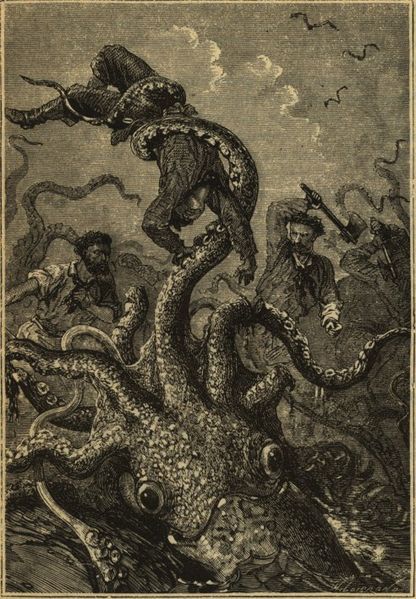 Further to my previous post, I'm having one of those kinds of days - i.e., of the kind represented by this image. It seems illogical to go very deeply into the history of science fiction without first offering some sort of account of what it actually is. But of course, it is notoriously difficult to define, and all definitions are controversial. Just why is very difficult to explain to someone who lacks a fairly detailed knowledge of the history of the field. This seems like a catch-22 situation. In the more leisurely space of a book, it would be possible to deal with it by writing chapters that tackle the problems from different angles. That's not possible in a relatively short article.
I suspect the solution will eventually involve writing something much simpler than I'd really like.
Sunday, September 10, 2006
Science fiction in 3500 words
Yes, that's my current task - produce the definitive 3,500 word article on science fiction for The Literary Encyclopedia (an on-line reference work). This is going to have to be a very carefully chosen 3,500 words - as I wrestle with it, I become even more aware of the magnitude of the field and the issues that I'm trying to sum up here.
Back to the grindstone. ...
Back to the grindstone. ...
Saturday, September 02, 2006
Short course on transhumanism
I've signed up with my School (at least I think it's all signed up now) to teach a short introductory course on transhumanism in October - aimed at honours-level philosophy students (and/or auditing by postgrads). The descriptive material that I prepared reads as follows:
"The transhumanist agenda - ambitions and critiques."
Convenor: Russell Blackford
Transhumanism is an intellectual and cultural movement that advocates the use of technology for such purposes as enhancement of human physical and cognitive capacities, alteration of moods or psychological predispositions, and radical extension of the human life span (possibly including a "cure" for the ageing process). Typically, the aim is to negotiate a transition from human-level capacities to capacities so much greater as to merit the label "posthuman" for those who possess them. Some transhumanist thinkers also advocate various other technologies that do not exactly meet this description, e.g. artificial intelligence of a very strong kind, molecular-level engineering and manufacturing, and technological methods for "uplifting" the cognitive capacities of non-human mammals to something approximating the human level. Finally, transhumanists analyse the possible risks, as well as potential benefits, of emerging or anticipated technologies, and formulate proposals that are intended to lessen risks without losing the claimed benefits.
An agenda such as this raises many questions for philosophical consideration. Some questions relate to the transhumanist agenda's practicality and coherence. For example, can a coherent definition be given of "enhanced", as opposed to merely "altered", capacities? If we were transformed into beings with vastly enhanced (or radically altered) capacities, would this be compatible with the preservation of our existing identities and/or with our survival of the transformation? Other questions relate more to how we should react, individually and collectively, to transhumanist proposals. For example, are the transformations advocated by transhumanists desirable for us as individual people? Are they socially manageable? Are they morally compulsory, permissible, or forbidden - assuming there is some real prospect that they can be achieved? Can we be discriminating in accepting some parts of the transhumanist agenda, while rejecting others? On what grounds? What methodologies can be employed to assess such "big picture", and possibly high risk, proposals? Can resistance to them sometimes be explained by invoking irrational features of human psychology?
All these questions and others straddle issues of interest to, at least, metaphysics, ethics, and political philosophy.
The readings below are all available online. A small number of additional readings will be selected and made available prior to commencement of the course. For students wishing to write on topics raised in this course, more detailed readings can be provided by the convenor. Those students are also advised to consult James Hughes, Citizen Cyborg: Why Democratic Societies Must Respond to the Redesigned Human of the Future (Westview Press, 2004) (on reserve in the Matheson Library), which offers one comprehensive version of the transhumanist agenda.
Readings
Bailey, Ronald. 2004. "Transhumanism: the most dangerous idea?".
Bostrom, Nick. 2002. "Existential risks: analyzing human extinction scenarios".
Bostrom, Nick. 2005. "A history of transhumanist thought".
Fukuyama, Francis. 2004. "The world's most dangerous ideas: transhumanism".
I'll be fascinated to see what interest this attracts. Meanwhile, I need to choose some further readings for the participants and to work out how best to conduct the course over three time-slots of an hour or two each.
Clearly, there's a great deal raised by transhumanist thought that young analytic philosophers could sink their methodological teeth into - whether they find the overall idea of "going posthuman" attractive or repellent (or just intriguing). The obvious issues range from the coherence of human beings wishing to be posthuman to the problems of distributive justice if the technology enabling them to do so becomes available in an unequal world. We'll see what happens. Ideally, it might encourage someone to do an interesting research paper.
Saturday, August 26, 2006
Greenwood Encyclopedia of Science Fiction and Fantasy
I just had a look at this page, which gives a breakdown of contributions to The Greenwood Encyclopedia of Science Fiction and Fantasy. It's not a terribly big deal, but I can count only four people who contributed a larger number of articles to the encyclopedia than I did: Gary Westfahl, Dave Langford, Darrell Schweitzer, and Andy Sawyer (all prodigious commentators on the SF genre, and Westfahl edited the encyclopedia while the others were on its advisory board). Maybe I missed someone, and there were other people who must have worked hard behind the scenes. A couple of the people I just mentioned wrote a helluva lot more entries than I did, and Gary Westfahl must have worked his guts out in the role of editor of the whole shebang, so let's keep things in perspective.
Even so ...
Yeah, not a big deal, but it did surprise me. Those theme entries were incredibly difficult to write - so no wonder, I suppose on reflection, there were not many people foolhardy enough to take on large numbers of them. It took me ages to write my 16,000 words for the encyclopedia.
Even so ...
Yeah, not a big deal, but it did surprise me. Those theme entries were incredibly difficult to write - so no wonder, I suppose on reflection, there were not many people foolhardy enough to take on large numbers of them. It took me ages to write my 16,000 words for the encyclopedia.
Friday, August 25, 2006
Yes, the cloning debate is over: we must allow therapeutic cloning
Since the cloning of Dolly in 1996, reported in Nature early the following year, we have lived in an environment of moral panic arising from the theoretical prospect of human cloning. The implications of that prospect have been thrashed out by philosophers, ethicists, and others ever since, and a clear outcome has emerged in the debate: subject to safety considerations, there is no reason to ban any form of human cloning.
It must be conceded that there is currently no obvious way to overcome the technological difficulties with reproductive cloning - at least not without conducting experiments that would clearly be unethical. Thus, there is no prospect of human reproductive cloning being used, for now, so long as ordinary ethical guidelines are followed by researchers. We have to accept that an impasse, whether temporary or permanent, has been reached with human reproductive cloning.
At the same time, there is no intellectually sound basis for criminalisation of the technique - all that is required is vigorous enforcement of ordinary research ethics. Furthermore, there is no rational basis for any restrictions on human cloning that is not intended for reproduction. I.e. there is no rational basis to oppose the creation of human embryos by somatic cell nuclear transfer for directly therapeutic applications (if these become available) or for biomedical research that might lead to such applications. (By convention, both of these are lumped under the expression "therapeutic cloning".)
The intellectual debate about human cloning is over, and the bioluddites lost. People like John Harris have debunked their arguments again and again. I've done some useful work on this myself.
However, you'd never know it from the political outcomes. Countries such as my own much-loved Australia continue to have draconian criminal penalties for reproductive cloning on their statute books, even though this is totally unnecessary while the technique is not safe and totally deplorable if the technique ever does become a safe reproductive option. Worse still, bans on human cloning are extended to cloning for the purposes of research or therapy. This is a nonsensical situation that we've reached. The cloning issue has given the forces of unreason a huge political success, one that creates a dangerous precedent for many other areas of our lives. In this area, there has been a political rejection of the Millian consensus that served us so well - the idea that the state should not be imposing contestable (and in this case irrational) moral views, even popular ones. This is a truly disturbing development in the public life of Western democracies such as Australia, and anyone who cares about it should be protesting vehemently.
I see that Dennis Shanahan, the Australian's political editor, has an op.ed. piece this morning claiming that the cloning debate is over in Australia because of the parliamentary ban long since enacted. Shanahan asserts that the possibility of allowing human cloning for therapeutic or research purposes should be dismissed, despite the contrary recommendations of an important government report that was issued in December last year.
Shanahan's line must be contested. Yes, a political debate in Australia was indeed won by the bioluddites a couple of years ago, but they have lost the wider intellectual debate. I don't see how those of us who believe in both liberty and the melioristic possibilities of science can ever rest comfortably until the values of freedom and reason have been restored to public policy in Australia and elsewhere. I, for one, intend to use whatever powers I have to keep the candle of freedom and reason burning.
I hereby dissent, and I call on you to join me. We must allow therapeutic cloning.
Tuesday, August 22, 2006
Why destroying embryos is not murder
Now and then I encounter the simplistic claim that destroying human embryos is murder because, well, they're human. I hardly know where to start in rebutting this, since it is so muddled, but I think it's worth repeating the basic points here.
Nobody can deny that a human embryo is "human" in the sense of having DNA belonging to the species Homo sapiens sapiens. Those of us who support biomedical research on human embryos are, of course, well aware of this - but it's not what the argument is about. When we deny that destroying human embryos is murder, we are denying various other things. In particular, we deny that human embryos have such characteristics as sentience, rationality, self-consciousness, and moral autonomy (the ability to reflect about decisions and life plans). We deny that they are yet part of any community into which they have been born. In these ways, embryos are very different from human adults, children, or babies. They are not the kind of thing that fears death, or that we can feel sorry for (they can't suffer, feel grief, be maddened by frustration, or have their life plans fall into ruin); they are not beings whose killing disturbs the peace within our societies or typically causes severe parental grief, as does killing someone's precious baby.
The law relating to murder, along with the moral baggage that goes with it, does not relate to the killing of just any living entity that belongs genetically to the species Homo sapiens sapiens. It's worth bearing in mind that abortion has never been considered murder at common law. The law of murder is about keeping the peace and protecting us from things we rationally fear - threats to our lives or the lives of loved ones - rather than about conserving entities with particular DNA sequences.
A good way to understand this is to do a thought experiment and consider the position of a sentient, intelligent, self-conscious alien that has become part of our community. Presumably if someone maliciously killed this being, that would be murder. Similarly, if someone maliciously killed one of the mutants in the X-Men media franchise, we would (as readers or viewers) interpret it as murder even though these beings supposedly have different DNA. If we lived in a community made up of more than one kind of intelligent species, killing individuals of either, or any, of these species would breach the peace, arouse our fears for our own lives, etc., and would have to be considered by the law to be an act of murder. In short it is not DNA-based species membership that matters, but something's actual properties (such as sentience, rationality, etc.) and social relationships.
Note that I don't have an overarching theory that says it is just one thing or factor that matters morally - perhaps personhood. I am happy to accept that personhood is neither a necessary nor a sufficient condition for something to be a potential murder victim, even though it is an important matter for consideration by legislators. I can readily imagine that there might be a species of malevolent, or just totally alien, beings who possess the characteristics we call personhood (e.g. rationality and self-consciousness), but have no propensity whatsoever to bond into communities with humans. They may be so radically different from us that their entry into the same social contract is out of the question. Killing such a being may be a matter of great regret, and may even be something that we have a moral reason not to do, but I don't necessarily want to count it as murder or expect the law to classify it as such.
On the other hand, newborn human babies are not yet persons, but we have good reason to view their killing as a very serious crime, at least in normal circumstances (forget cases of anencephaly, severe disability and so on). We bond and empathise with babies instinctively; they are typically immensely loved and valued by their families; they carry many of our hopes for the future. Whether we classify infanticide (in ordinary circumstances) as a sub-set of the crime of murder, or as a sui generis crime, is largely a matter of social convention. But categorising it as murder makes perfectly good sense as an option available to society as it develops its code of criminal law.
I actually have a very pluralistic view of what factors underpin our moral and legal systems. To the extent that we are tempted to think there must be just one single factor on which morality depends, that is one of the errors about the phenomenon of morality that it is easy to fall into. However, I can see no factor that compels us to treat the destruction of human embryos as a serious moral wrong of any kind. At most, the symbolic significance they have for many people, perhaps including ourselves, may make us feel the need to adopt a degree of solemnity whenever human embyros are destroyed, and to look with disapproval on anyone who treats such processes flippantly. This is analogous to the sensitivity and respect that we show in the presence of a corpse, but it is long way from the considerations involved in applying the concept of murder.
Often, when I make these points, I feel I'm bashing my head against the proverbial brick wall. One might think that, by now, such points would not need to be made yet again - and again, and again, and again. However, that is evidently not so. Yes, these points still need to be made, so here they are once again, at least for the record.
Sunday, August 20, 2006
Still partying

Foreground: Alison Goodman (back to camera), Jenny Blackford, Simon Higgins. Goth-theme party, August 2006.

Subscribe to:
Posts (Atom)